
The B2B influencer marketing examples that produced real numbers share one pattern: a credible practitioner used the product on a problem the buyer recognizes, and the brand made that proof findable later. Vector turned a $12,000 LinkedIn creator test into $1.1 million in pipeline. On YouTube, 62% of the top results for ten developer-tool brand names come from channels those brands do not own.
This blog breaks down 17 campaigns from SaaS and infrastructure companies, what each one did, what it returned, why it worked, and how to run the same play with your own budget.
TL;DR
- Most B2B influencer marketing examples fall into six plays: product proof, search-durable video, amplified expert posts, co-created assets, owned creator programs, and buying or hiring the audience.
- For developer tools, the creator's video often becomes the product's public record. Across 157 YouTube results for ten devtool brand names, 98 came from independent channels, and 8 of the 10 brands had a comparison or critical video in their top results.
- The strongest SaaS results came from small, niche creators. Vector's creators averaged about 13,000 followers.
- The measurable programs set up tracking before publishing: one link or code per creator, a "where did you hear about us" field, and a baseline.
- Repeat placements with the same creator outperform one-offs. In Infrasity's Rocket program, second placements averaged 41% more views than first ones.
What does creator content around developer tools actually look like today?
Before looking at campaigns, it helps to see what a technical buyer encounters when they search a product by name. Engineers check YouTube and GitHub before they read a pricing page, and 72% of US B2B professionals now use AI tools to research topics, which pull heavily from that same public content. So we measured it.
We pulled the top YouTube results for ten developer-tool and infrastructure brand names (Tailscale, Supabase, CodeRabbit, Clerk, Neon, Railway, Warp, Datadog, Snyk, and Pulumi) from a US location. Each result was classified as brand-owned or independent, and every independent video's description was read for a creator-specific link on a brand-controlled domain, such as coderabbit.link/sonny or snyk.co/johnhammond.
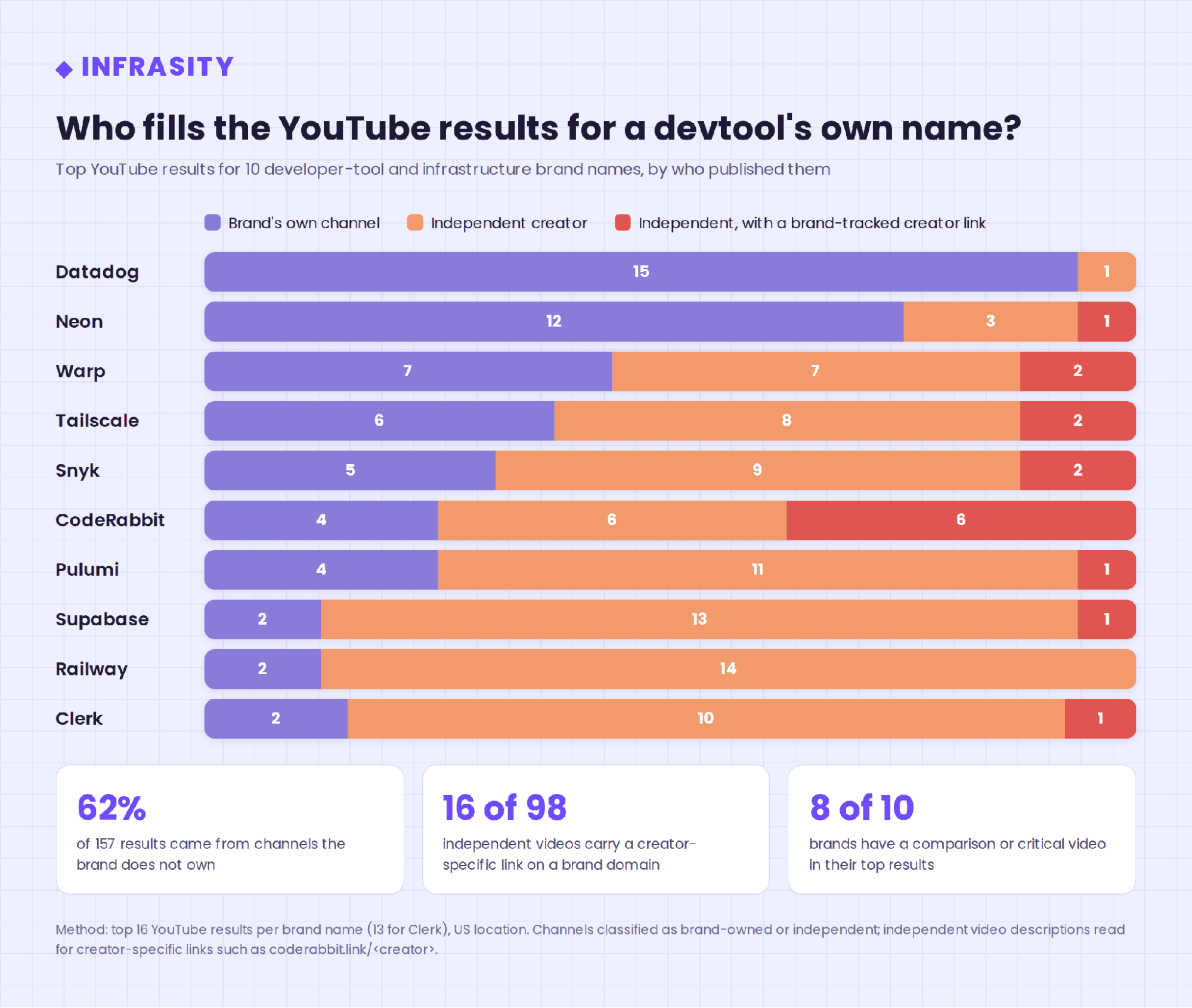
Top YouTube results for 10 developer-tool and infrastructure brand names, by who published them. Method: top 16 results per brand name (13 for Clerk), US location, channels classified as brand-owned or independent.
Independent creators fill most of the brand search results
98 of the 157 results (62%) came from channels the brand does not control. The split depends on how the product is sold. Datadog, which sells top-down to enterprise buyers, owns 15 of its 16 results with keynotes, demos, and customer stories. Railway, Supabase, and Clerk, which developers adopt bottom-up, own 2 results each. For those products, the public explanation of the product is written mostly by other people.
Paid creator programs leave a visible fingerprint
16 of the 98 independent videos carry a creator-specific tracked link on a brand domain. CodeRabbit runs the most systematic version: 6 of its 12 independent results use links like coderabbit.link/sonny, and some follow a naming pattern such as ad-bijan-bowen-001, which lets the team report per creator and per placement. Tailscale uses vanity paths; Snyk uses snyk.co short links, and Warp and Neon each have a flagship explainer from a large channel with its own tracked URL.
The 16 tracked videos had a median of about 37,700 views, against about 11,100 for other independent videos. That is a small sample, and some tracked videos are sponsored because the creator was already large, so treat it as a pattern worth testing.
Buyers meet the negative case on the first screen
18 of the 157 results are comparisons or critical takes, and 8 of the 10 brands have at least one. Tailscale's second result is Stop Using Tailscale. Use Open Source Instead, with more than 340,000 views. Supabase has Why I Stopped Using Supabase for My SaaS. Railway has five comparison videos in its top 16.
This changes how a devtool should brief creators. If the critical video already exists, the sponsored video has to answer it with a real build, including the setup steps and the limits. A polished endorsement that ignores the obvious objection reads as an ad next to a video that does not.
Independent is not the same as paid. Many of these creators make tutorials unprompted, and the census counts who published, not who was paid.
How were these influencer marketing examples chosen?
Each example below meets three tests. It comes from a SaaS, developer-tool, or infrastructure company. It has a result stated by the brand, the creator, or the people who ran it, or a mechanism visible in public. And it teaches a play another team can repeat.
The campaigns map onto the four strategies in the peer-reviewed study B2B influencer marketing: Conceptualization and four managerial strategies (Mero, Vanninen and Keränen, Industrial Marketing Management, 2023), which interviewed 12 B2B marketing leaders and 10 agency experts. The researchers found that content-based influencer marketing, where influencers co-create industry content, was the most common approach (7 of 12 firms), and that 5 firms combined two strategies. A separate study of 22 senior B2B marketers at the University of Strathclyde found that B2B teams describe the practice in terms of expertise and long-term relationships, with reach ranked lower.
Both findings hold across the influencer marketing examples here.
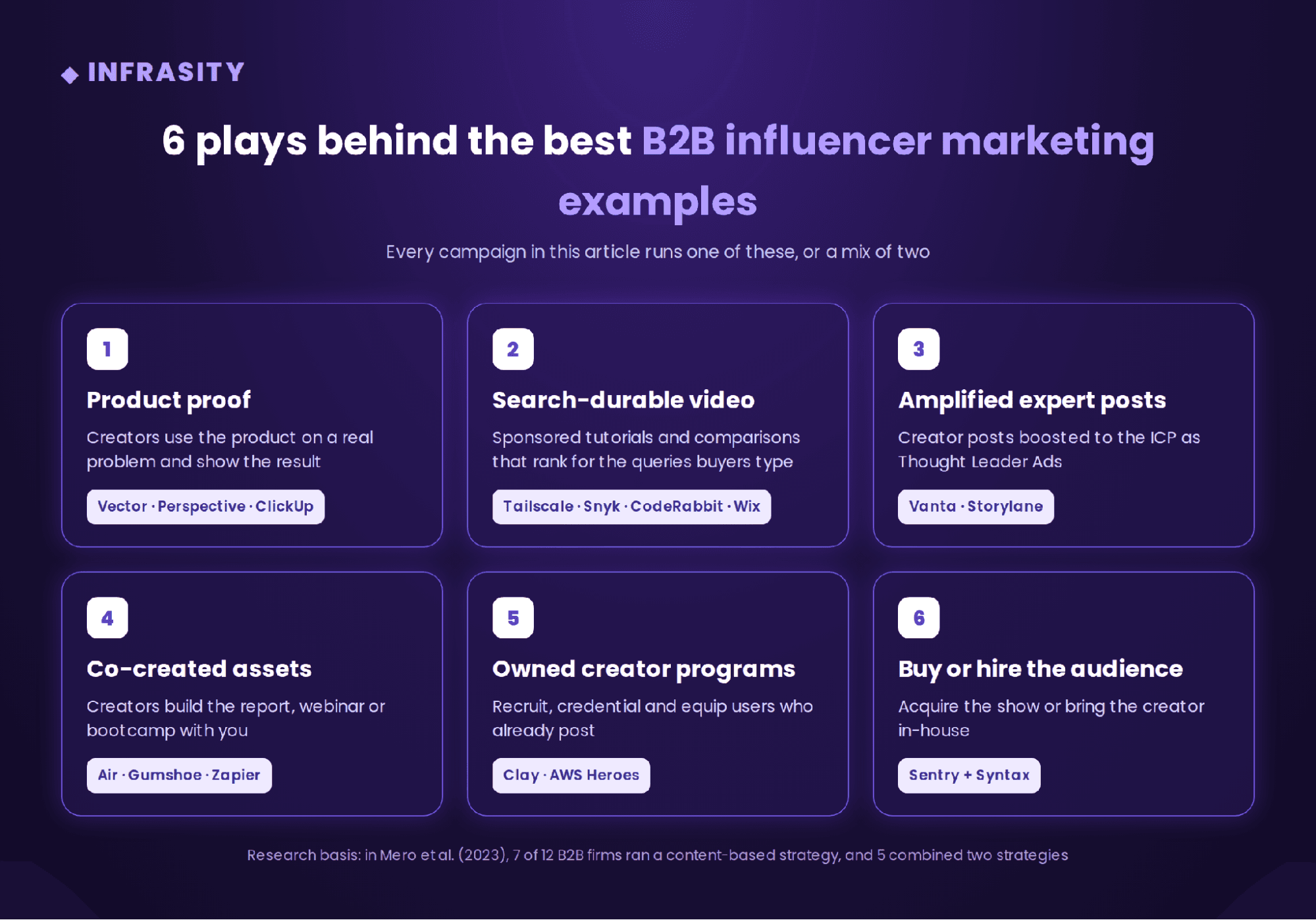
Every campaign in this article runs one of these six plays, or a mix of two.
Which SaaS companies have run B2B influencer campaigns with measurable results?
These ten B2B influencer marketing examples come from SaaS companies selling to marketers, salespeople, founders, and operators. The buyer usually decides on LinkedIn, in newsletters, or in a webinar, and the product result can be shown in a post.
1. Vector turned a $12,000 LinkedIn test into $1.1 million in pipeline
What they did: Vector, a B2B platform, ran a three-month LinkedIn creator test. According to a campaign breakdown on Favikon's YouTube channel, creators promoted a product launch in month one, shared their take on Vector's research findings in month two, and promoted the core product in month three.
The result: $12,000 in spend, $1.1 million in pipeline. The creators averaged about 13,000 followers.
Why it worked: Nothing about the concept was clever. The creators had narrow, trusted audiences that matched the buyer, and the three-month arc let the audience see the same product from three angles before the ask.
How to run it yourself:
- Pick creators by audience match and average impressions, and ignore follower count when sorting.
- Plan three posts per creator: a launch or news hook, a data or opinion post, then the product post.
- Hold the full test to 90 days before judging it.
2. Perspective built a creator program that drives more than 15% of revenue
What they did: Perspective, a funnel-building tool, started recruiting creators from its existing customers and affiliates, then moved to cold outreach. Its influencer marketing manager explained the full process in a step-by-step interview: a four-line first email with the word "paid" in the subject, a brief with product facts and angle ideas but no script, and no exclusivity clauses.
The result: The program went from nothing to more than 15% of Perspective's total revenue. Cold outreach to creators gets a 30% to 40% open rate.
Why it worked: Pricing starts from unit economics. The team knows what it can pay per signup (the example given was $100), estimates how many signups a creator can bring, and negotiates from that number. A creator expected to bring 10 signups is worth about $1,000 per post, so a $5,000 quote is easy to decline.
How to run it yourself:
- Email your customer base first and ask who creates content. Existing users need almost no briefing.
- Set your maximum cost per signup or per demo before the first negotiation.
- Ask every creator for results from past sponsored posts, ideally for similar brands.
3. ClickUp trains creators on the product before it pays them
What they did: ClickUp's influencer lead described the approach in the same Favikon breakdown: before any paid deal, a creator gets an hour with one of ClickUp's best trainers, who finds real use cases for the creator's own business. Only if the product fits does a campaign follow. ClickUp also funds creator comparison videos with affiliate links, so searches like "ClickUp vs Notion" return third-party breakdowns (Motion's analysis of ClickUp's video strategy covers this pattern).
Why it worked: The training call removes the biggest risk in paid creator content: a creator who doesn't use the product. It also produces a real workflow the creator can show. The comparison videos catch buyers when they are choosing between tools.
How to run it yourself:
- Offer a working session with customer success before any fee conversation.
- Fund comparison content against the two category leaders, with your product as the third option.
4. Storylane used corporate-humor skits to beat its own Thought Leader Ads
What they did: Storylane, an interactive demo platform, paired corporate-humor creators with sales-background creators. The skits mocked one pain its product solves: buyers who cannot see a product without booking a demo weeks out.
The result: Over six months, the program drove 3.3 million impressions at a $30 CPM. According to the agency that ran it, Storylane's team reported three times better performance than its LinkedIn Thought Leader Ads, and said 50% of its pipeline came from LinkedIn efforts overall. Storylane's head of marketing separately said the campaign month lined up with their highest month of new MRR, without direct conversion data.
Why it worked: The joke only lands for someone who has lived the problem, which filters the audience for free. Humor creators brought reach at the top, and niche sales creators showed the product lower in the funnel.
How to run it yourself:
- Write the pain point first, then find a creator who can dramatize it.
- Pair one reach creator with several niche creators, and judge them on different metrics.
5. Slate sent a digital detox kit to social media managers
What they did: Slate, a video editing tool competing with Adobe and Canva, sent 15 to 20 social media managers a gift box with a phone lock, a journal, and detox tea. The influencers invited their audience to nominate other social media managers, and Slate sent boxes to the winners.
The result: Over 90 days, 1.3 million LinkedIn impressions and more than 60 demo requests, plus engagement from target accounts. Slate's social media manager said LinkedIn influencer work had done more for them than any paid or organic strategy.
Why it worked: The gift spoke to the buyer's real problem (screen time) without being swag. The nomination mechanic turned the comments into a list of more ideal customers.
How to run it yourself:
- Pick an object that stands for the pain your product removes.
- Build a nomination or referral step into the post so the audience does the targeting.
6. Vanta promotes founders' own "lost deal" stories as paid ads
What they did: Vanta, a compliance automation platform, runs a large LinkedIn creator program alongside its brand ads. Analysis of its live LinkedIn ads shows promoted first-person posts from founders and operators, such as a founder describing lost enterprise deals over a missing SOC 2 report.
Why it worked: The founder's story states the buyer's pain better than any brand line could. LinkedIn's Thought Leader Ads let a company promote posts from people outside the company with the author's permission, so the post keeps the creator's name and face while the brand controls targeting and budget.
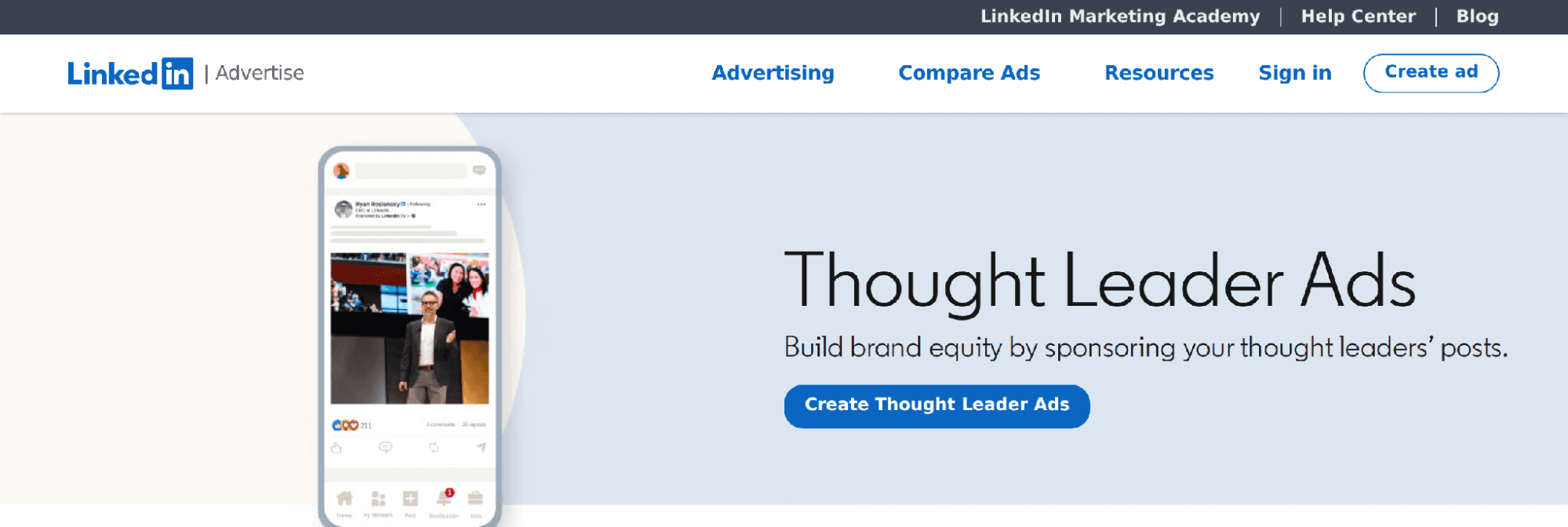
LinkedIn's Thought Leader Ads format lets brands sponsor posts from outside creators, which is how most amplified creator programs run on LinkedIn.
How to run it yourself:
- Pay creators for the organic post, then boost the winners. One LinkedIn agency founder who has run more than 2,000 sponsored posts said in an interview on Favikon's channel that his team only boosts posts above a 1.3% click-through rate and a 3% click-to-lead rate.
- Put usage rights for paid promotion in the contract from day one.
7. Air had creators help write its trend report, then distribute it
What they did: Air, a creative asset platform, released a 2026 trend report. Four creators each contributed a prediction to the report and made a video expanding on it, ending with a comment-to-receive mechanic on Instagram.
The result: According to the agency that ran the campaign, close to 700,000 impressions, more than 9,500 comments, and 6,200 report downloads from four creators, on about $15,000.
Why it worked: Creators promote a report more willingly when their name is inside it. The comment gate turned each view into a request for a link.
How to run it yourself:
- Invite creators into the asset before it ships, with a quote or a section each.
- Research partnerships work the same way: Gumshoe partnered with Rand Fishkin on a study about tracking AI visibility, and his authority made the data trusted by his audience.
8. Clay built a creator program from users who were already posting
What they did: Clay noticed users, many of them lead-gen agency owners, posting their Clay workflows on LinkedIn unprompted. It formalized this into a Creator Program, an Experts network for agencies and freelancers, and partner tiers. According to Exit Five's breakdown, creators get affiliate links, branded screen recordings, templates, and paid promotion of their best posts. Clay even published the internal workflow it uses to find and qualify creators.
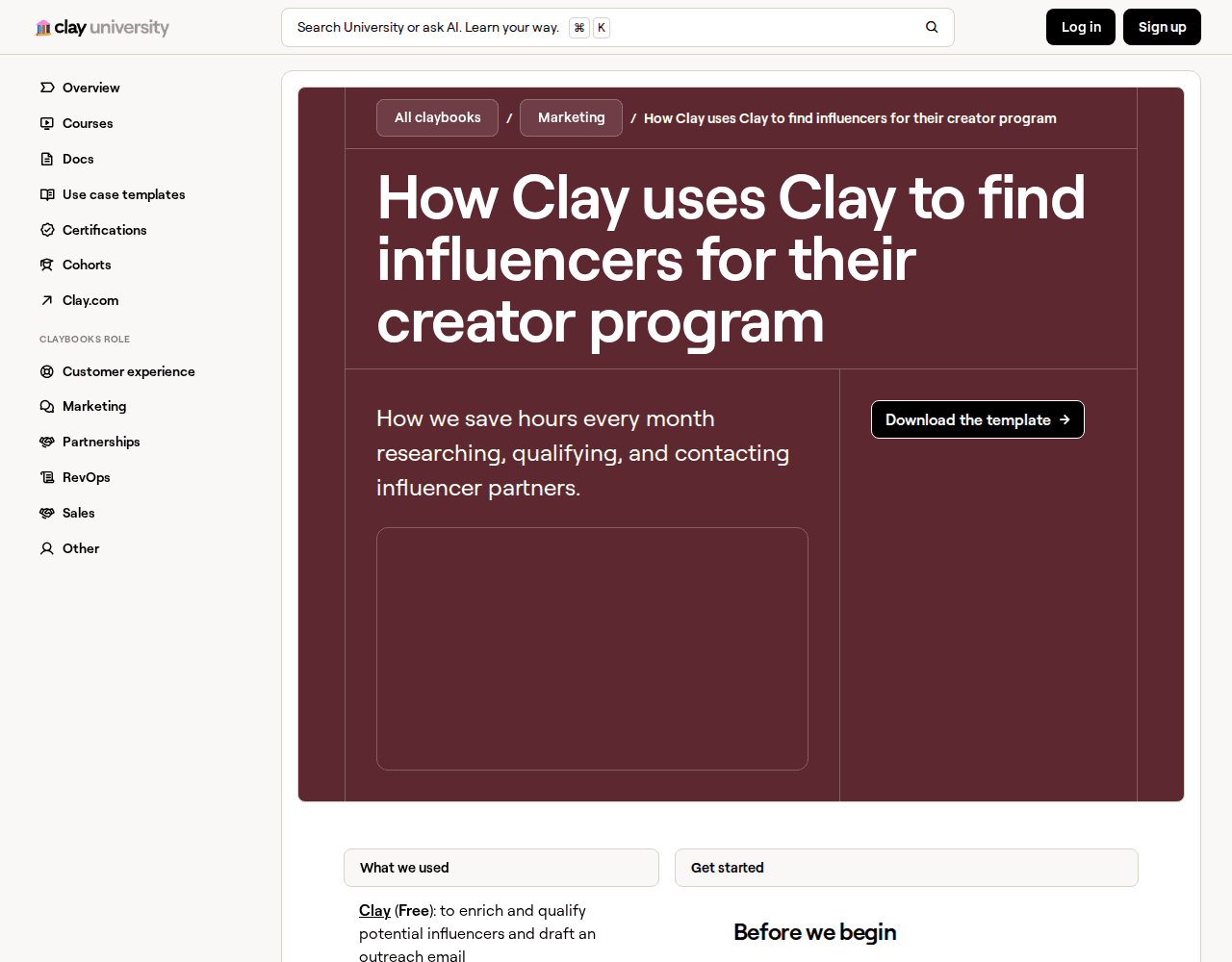
Clay's own Claybook. The team says qualifying a potential creator and drafting outreach dropped from 15 to 20 minutes to 1 to 2 minutes.
Why it worked: Clay's creators had two reasons to post that had nothing to do with payment: looking skilled and attracting clients. The program added tools and reach to an existing motive.
How to run it yourself:
- Search LinkedIn and YouTube for users already posting about you. Start the program with them.
- Give creators assets they cannot make alone, such as early access, branded recordings, or credits.
9. Zapier and Lovable used live events to create content that kept earning mentions
What they did: Zapier flew about 20 AI creators to Zion National Park for three days of hackathons and AI workflow sessions. Lovable paired 30 artists with 30 Lovable builders at a one-day event with will.i.am.
The result: Lovable's former influencer lead said that months later, an app built at the event reached the App Store, the team was raising money, and Lovable was still being mentioned. He compared it with a paid post that would be forgotten three days later.
Why it worked: Events give creators something they value, which is relationships with other creators, and give the brand customer research on how people actually use the product.
How to run it yourself:
- Plan every creator event in three parts: before (build interest), during (live content), and after (recaps that stay relevant for weeks).
- On a small budget, run a virtual session with food delivered to each creator and record it for clips.
10. Wix, Hootsuite and Gling sponsor YouTube videos that rank for buying keywords
What they did: Wix now asks YouTube creators to target specific high-intent keywords, and it picks creators who already rank for them. Its influencer lead said the team checks how the video ranks on YouTube for target keywords and in LLM answers for target questions, instead of views, likes, and UTM clicks. Gling sponsored videos targeting "best video editing software" and "how to edit a YouTube video". Hootsuite sponsored a video that ranks in Google's video results for "best social media management tools".
Why it worked: A search-ranked video keeps finding buyers after the creator's audience has seen it. It also reaches people who have never heard of the creator.
How to run it yourself:
- Brief creators on one of four keyword types: "best X tools", a pain-point how-to, "A vs B", or an outcome ("how I built X").
- Pay creators who already rank page one for the term, and measure rank alongside views.
Which developer-tool and infrastructure companies run creator programs, and how?
Developer tools and infrastructure products add two constraints. The buyer verifies everything, often in a terminal, and the content lives for years in search. The next seven influencer marketing examples show how companies selling to engineers design around both.
Our guide to developer influencer marketing covers sourcing and briefing in more depth.
11. CodeRabbit tracks every creator placement with its own short links
What they did: CodeRabbit, an AI code review tool, sponsors developer YouTubers across sizes, from large channels to small ones. Each creator gets a link on CodeRabbit's own domain. Sonny Sangha's video uses coderabbit.link/sonny with a promo code and states plainly that it is sponsored. Bijan Bowen's hands-on demo uses coderabbit.link/ad-bijan-bowen-001, a naming pattern that separates creator and placement number. CodeRabbit also runs its own interview show with engineers such as Kent C. Dodds on its channel.
The result: In our census, CodeRabbit had the highest share of tracked independent results of the ten brands: 6 of 12.
Why it worked: Per-creator links on a brand domain survive link shorteners and redirects, look trustworthy to developers, and make every placement comparable. The numbered suffix means a second or third placement with the same creator can be measured separately.
How to run it yourself:
- Buy a short domain or path for creator links and name them creator-plus-placement.
- Ask creators to show a real repository and a real pull request. Demo projects hide the limits developers look for.
12. Tailscale sponsors homelab tutorials and publishes creator-style videos itself
What they did: Tailscale sponsors setup tutorials from homelab and networking channels. Learn Linux TV's beginner guide opens its description with thanks to Tailscale for sponsoring and uses tailscale.com/learnlinuxtv. 2GuysTek's VPN video uses tailscale.com/2guystek. Tailscale's own channel publishes long, practical videos such as a one-hour self-hosting guide, in the same style as the creators it sponsors.
The result: Tailscale owns 6 of its top 16 YouTube results, and two of the independent ones carry its vanity links. The sponsored Learn Linux TV tutorial has close to 200,000 views.
Why it worked: A setup tutorial is the content a new user searches for. Sponsoring it puts the product inside the first thing a developer watches, and the vanity URL keeps attribution without a messy tracking string.
How to run it yourself:
- Sponsor the tutorial buyers already search for ("how to set up X on Y"). General reviews rank for fewer buying queries.
- Make your own channel's videos in the same format and length as the best creator videos.
- Plan a response to the critical video, because in Tailscale's case it ranks second.
13. Snyk and Pulumi sponsor education from security and DevOps teachers
What they did: Snyk sponsored Tech With Tim's vulnerability-scanning tutorial with snyk.co/tim and a thank-you in the description, and John Hammond's CTF walkthrough with snyk.co/johnhammond. Pulumi sponsored TechWorld with Nana's infrastructure-as-code explainer (129,000 views) and supported a freeCodeCamp Kubernetes course whose signup link carries a freeCodeCamp source tag.
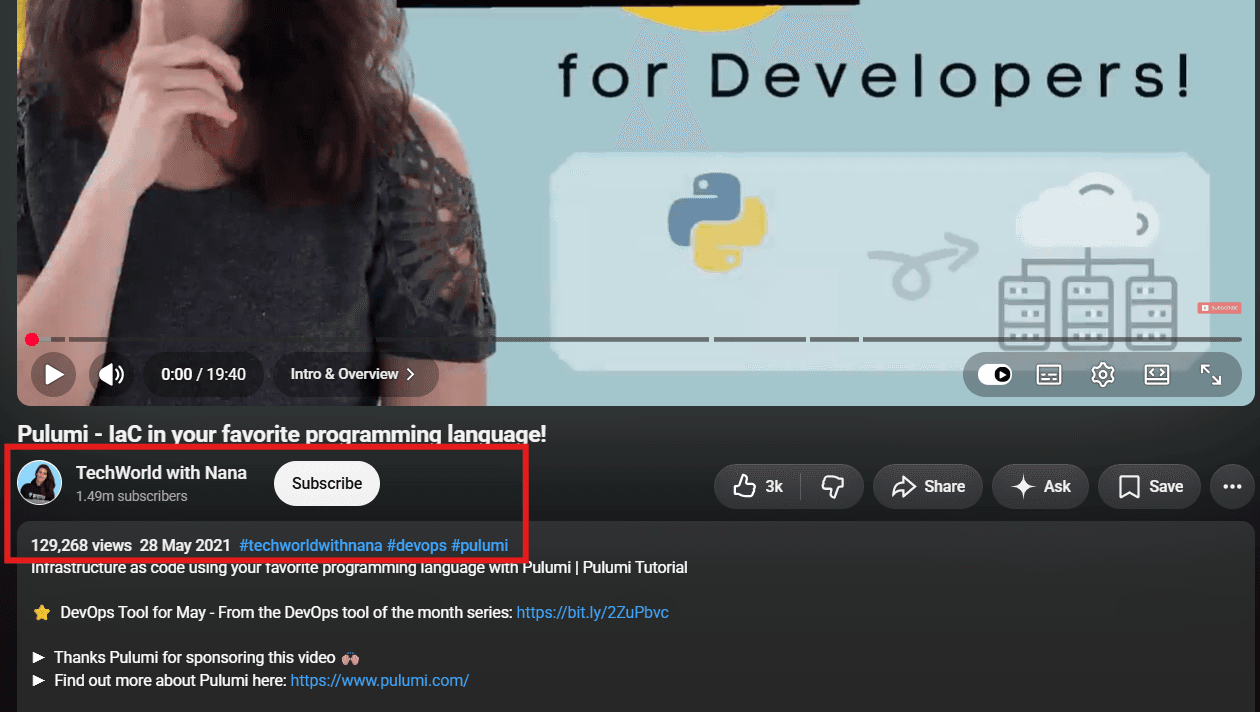
TechWorld with Nana's Pulumi explainer, sponsored, at 1.49 million subscribers and 129,268 views.
Why it worked: Security and IaC tools are hard to explain in a post. A teacher who walks through a real vulnerability or a real deployment shows the product at the moment it proves its value. The teacher's audience is also the next generation of engineers who will pick tools at work.
How to run it yourself:
- Sponsor a walkthrough of a real task (a CTF challenge, a deployment) with your tool inside it.
- Budget for long-form courses; they keep ranking for years.
14. Warp and Neon each got a flagship explainer from a large channel
What they did: Warp's terminal was explained by Dave Plummer, a retired Microsoft engineer, in a video with more than 380,000 views that uses warp.dev/daves-garage.
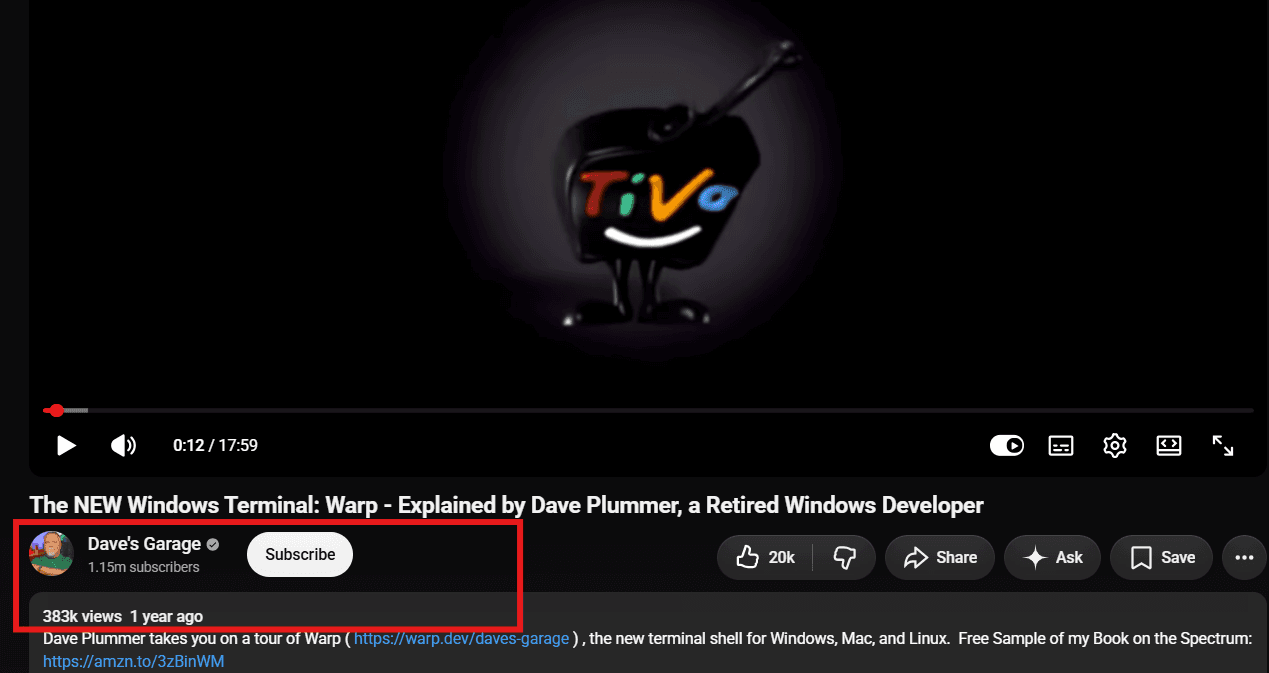
Dave Plummer's Warp explainer, at 1.15 million subscribers and 383,000 views on this video alone.
Neon appears in Fireship's video about replacing a tech stack with Postgres, with 1.58 million views and a fyi.neon.tech/fireship link.
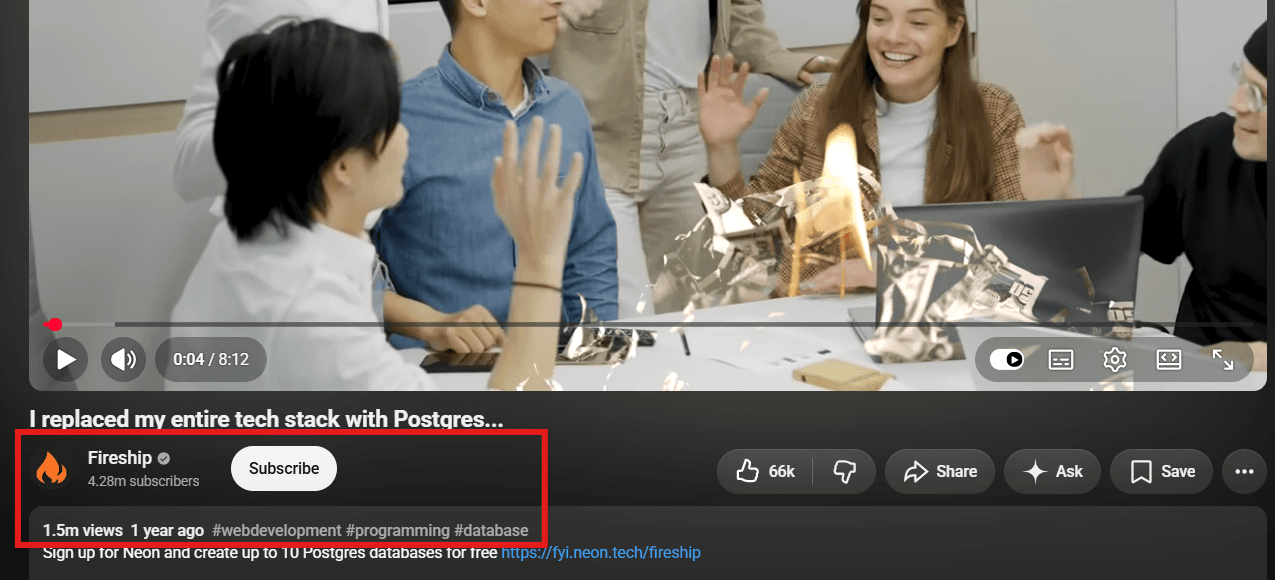
Fireship's Postgres video, at 4.28 million subscribers, carrying Neon's tracked sign-up link.
Why it worked: One large, credible explainer sets how the category talks about a product. Dave Plummer's Microsoft background gives a Windows Terminal endorsement weight a younger channel cannot. Neon's placement sits inside a broader argument about Postgres, so the product appears as part of an idea the viewer already agrees with.
How to run it yourself:
- Take one deliberate reach placement per quarter with a creator whose background matches the claim.
- Spread the rest of the budget across smaller creators, so no single placement decides the quarter.
15. Sentry sponsored the Syntax podcast for years, then acquired it
What they did: Sentry, an application monitoring company, sponsored Syntax, the web development podcast hosted by Wes Bos and Scott Tolinski, for years. Syntax was then acquired by Sentry in 2021. The hosts still handle ad reads their own way, and episodes carry a single "brought to you by Sentry" read.
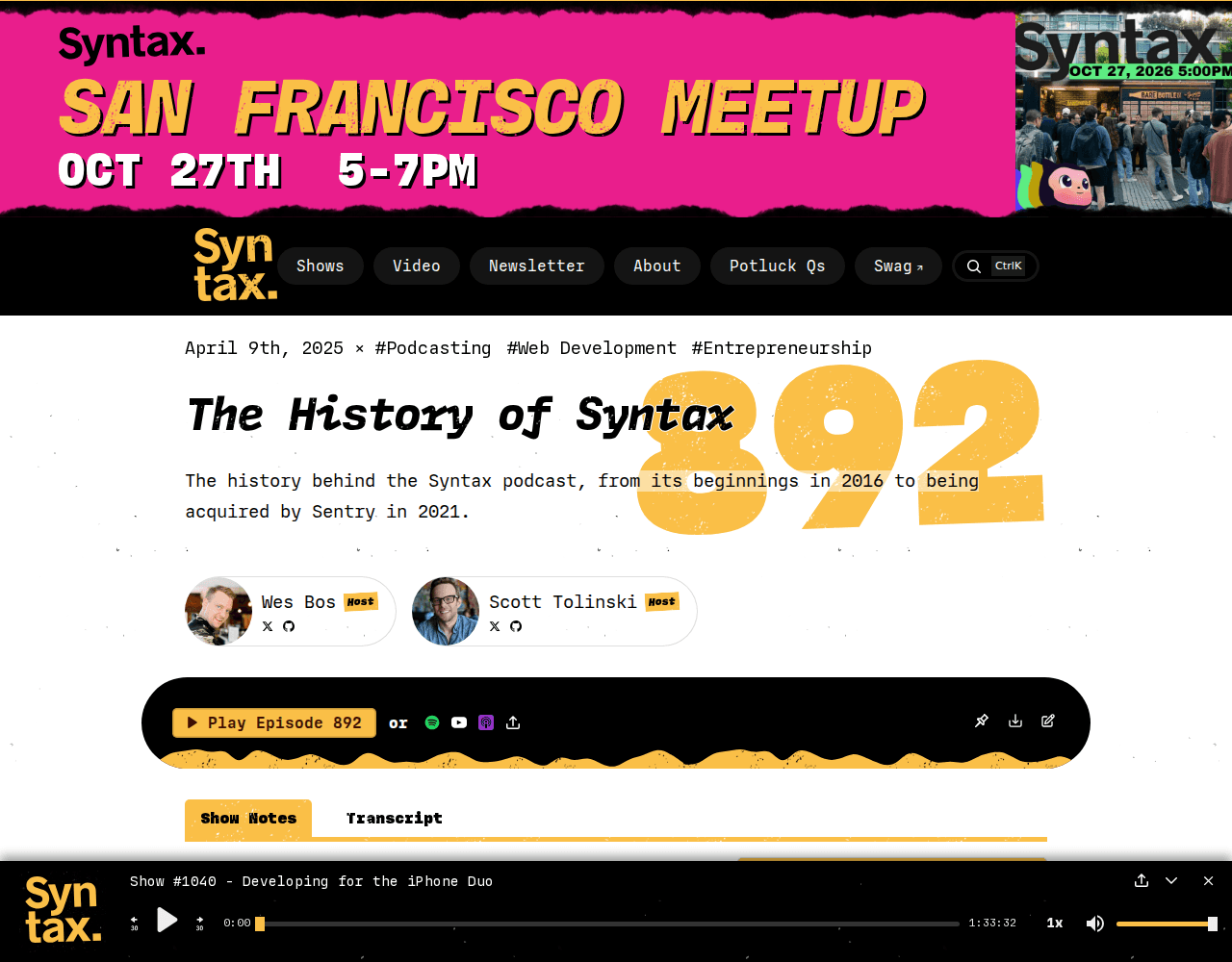
Syntax's own history episode describes the path from sponsorship to acquisition by Sentry.
Why it worked: Wes and Scott were trusted developer educators before anyone sponsored them. Sentry bought an audience that already trusted two people, and kept the show independent enough that the trust stayed.
How to run it yourself:
- Start with a long, consistent sponsorship of one show your buyers already listen to.
- If you ever buy or hire the creator, keep editorial control with them. The audience notices.
16. AWS turns its most active builders into credentialed advocates
What they did: AWS runs two advocate programs. AWS Heroes is invitation-only and lists 259 Heroes in its directory. AWS Community Builders accepts applications and offers access to product teams, content training, and networking.
Why it worked: Infrastructure buyers trust people who run the systems, not the vendor. A credential gives those people status and access, and gives AWS a steady supply of tutorials, talks, and user-group events without paying per post. Docker Captains, GitHub Stars, and MongoDB Champions follow the same model.
How to run it yourself:
- Start an application-based tier for active users, and a small invitation-only tier above it.
- Pay in access: roadmap previews, product-team time, and early features.
17. Rocket ran 90 creator placements and learned that follower count predicts little
What they did: Infrasity ran Rocket.new's creator program across YouTube, X, and Instagram over eleven months, with a distinct UTM per creator in every video description.
The result: 90 placements and between 1.16 million and 1.90 million in verified and modeled reach. Subscriber count explained only 29% of the variation in views (r² = 0.288), and it explained 0.1% of the price creators quoted. Second placements with the same creator averaged 20,355 views against 14,454 for one-offs, a 41% lift. By the end, 14 of the top 20 YouTube results for "rocket.new" were creator placements.
Why it worked: The program was run as a portfolio. No single placement carried it, so being wrong about one creator was cheap, and the data showed which creators to hire again.
How to run it yourself:
- Buy five to seven placements before one big one.
- Default to a two-placement commitment with every creator who performs.
Why do devtool and infrastructure campaigns need a different design from SaaS campaigns?
The SaaS examples above mostly win on LinkedIn, where a buyer reads a post, trusts the person, and books a demo. Developer tools and infrastructure products are bought through a longer loop, and a campaign designed for a marketing buyer breaks in three places.
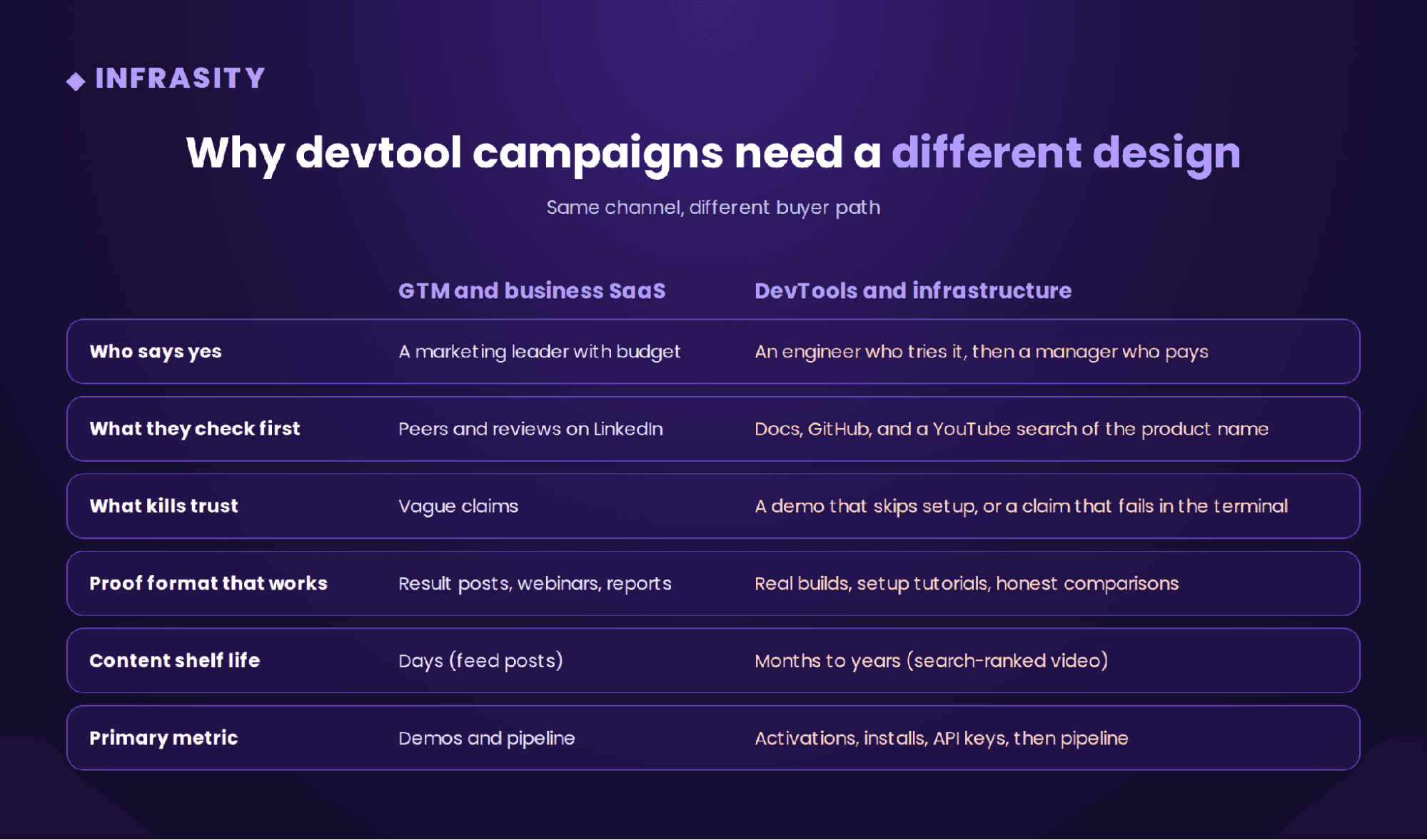
The same channel serves a different buyer path. Devtool proof has to survive a hands-on check.
The buyer verifies the claim before believing the creator
An engineer who sees a sponsored video will usually install the tool, read the docs, and search the product name on YouTube and GitHub. If the creator skipped setup, or showed a demo repository that hides real limits, the buyer finds out within an hour. That is why the devtool examples above are tutorials and real builds (Tailscale, Snyk, CodeRabbit), and the SaaS examples are result posts and skits. Brief devtool creators to show installation, configuration, and at least one limit.
The critical video already exists, so the sponsored one has to answer it
Our census found comparison or critical videos in the top results of 8 of 10 devtool brands. A creator who compares your tool with the open-source alternative, honestly, is worth more than one who ignores it. Developers also accept disclosure: Sonny Sangha's CodeRabbit video states it is sponsored in the description, and in the Rocket program, placements labeled as paid partnerships still reached a 0.4% to 0.6% engagement rate on X.
The content has a shelf life of years, and AI assistants read it
A LinkedIn post fades in days. A setup tutorial on YouTube can rank for years, and it becomes part of what AI assistants summarize when someone asks which tool to use. This is why the devtool examples cluster around search-ranked formats, and why brand-owned channels like Tailscale's copy the creators' format. It is also why a devtool campaign should be measured partly on who owns the branded search results six months later.
Adoption starts with one engineer and ends with a committee
The first user is rarely the signer. Infrastructure purchases pass through a platform lead, security, and finance. For that reason, the first metric for a devtool campaign is activation (installs, API keys, connected repositories), and pipeline comes later. Programs that report only demo requests undercount devtool campaigns and overcount SaaS ones.
If your product is bought this way, the creator program has to be built around technical proof from the start. Infrasity's creator and influencer marketing for devtools team sources engineers who build on camera, briefs them on setup and limits, and tracks each placement with its own link.
Which influencer play fits your stage, budget, and buyer?
The right play depends less on budget than on how your buyer checks a claim. Use this table to pick one core play and one support play.
| Your situation | Core play | Support play | Example to copy |
|---|---|---|---|
| Seed to Series A devtool, bottom-up adoption | Search-durable video | Product proof | CodeRabbit, Tailscale |
| Series A to C SaaS selling to marketers or sales teams | Product proof on LinkedIn | Amplified expert posts | Vector, Perspective |
| Enterprise security or compliance | Amplified expert posts | Co-created assets | Vanta, Snyk |
| Product with a strong user community already posting | Owned creator program | Amplified expert posts | Clay |
| Infrastructure platform with many power users | Owned creator program | Search-durable video | AWS Heroes |
| Launch or funding moment | Co-created assets or events | Product proof | Air, Zapier, Lovable |
| One show dominates your buyers' attention | Long sponsorship, then buy or hire | Search-durable video | Sentry and Syntax |
Two rules apply to every row. Go wide before going big, because you cannot predict which creator will work. And plan for three months, because the first month mostly produces data about which creators to keep.
What do B2B influencer campaigns cost?
No platform publishes standard B2B creator rates, and quotes vary widely even for similar audiences. In the Rocket program, cost per 1,000 subscribers ranged from $2.57 to $233.10, and price had almost no relationship to reach. The figures below come from people who have run these programs.
| Benchmark | Figure | Source |
|---|---|---|
| LinkedIn creator with 15,000 to 30,000 followers | $500 to $1,000 per post | B2B creator marketplace founder |
| Suggested minimum LinkedIn test | $10,000 per month for three months | Same interview |
| High-end LinkedIn creator (about 150,000 followers) | Around $8,000 per post | Same interview |
| LinkedIn pricing used by one agency | About $50 CPM on average impressions per post | Agency founder interview |
| Creators per LinkedIn campaign | 15 to 20, from about 5 times as many contacted | Same interview |
| Average LinkedIn creator post click-through rate | 1.3% (range 0.8% to 1.8%) | Same interview |
| YouTube market median rate | $61.27 per 1,000 subscribers | Infrasity Rocket case study |
| Cost per 1,000 YouTube views, one roster | $409 to $4,245 (modeled) | Same case study |
| First tests in this article | $12,000 (Vector), about $15,000 (Air) | Examples 1 and 7 |
The cleanest way to set a ceiling is the one Perspective uses: decide what a signup or demo is worth to you, estimate what a creator can deliver, and negotiate from there. Our breakdown of nano influencers for DevTools and B2B SaaS covers pricing for smaller creators.
How do you measure a B2B influencer campaign when most buyers never click the link?
Most buyers who act on a creator post do not click its link. Perspective's influencer manager estimated that direct links capture about half of the people a post influenced, and that no one can attribute influencer marketing completely. Getting to 70% or 80% is realistic with the right setup. The examples above point to five layers.
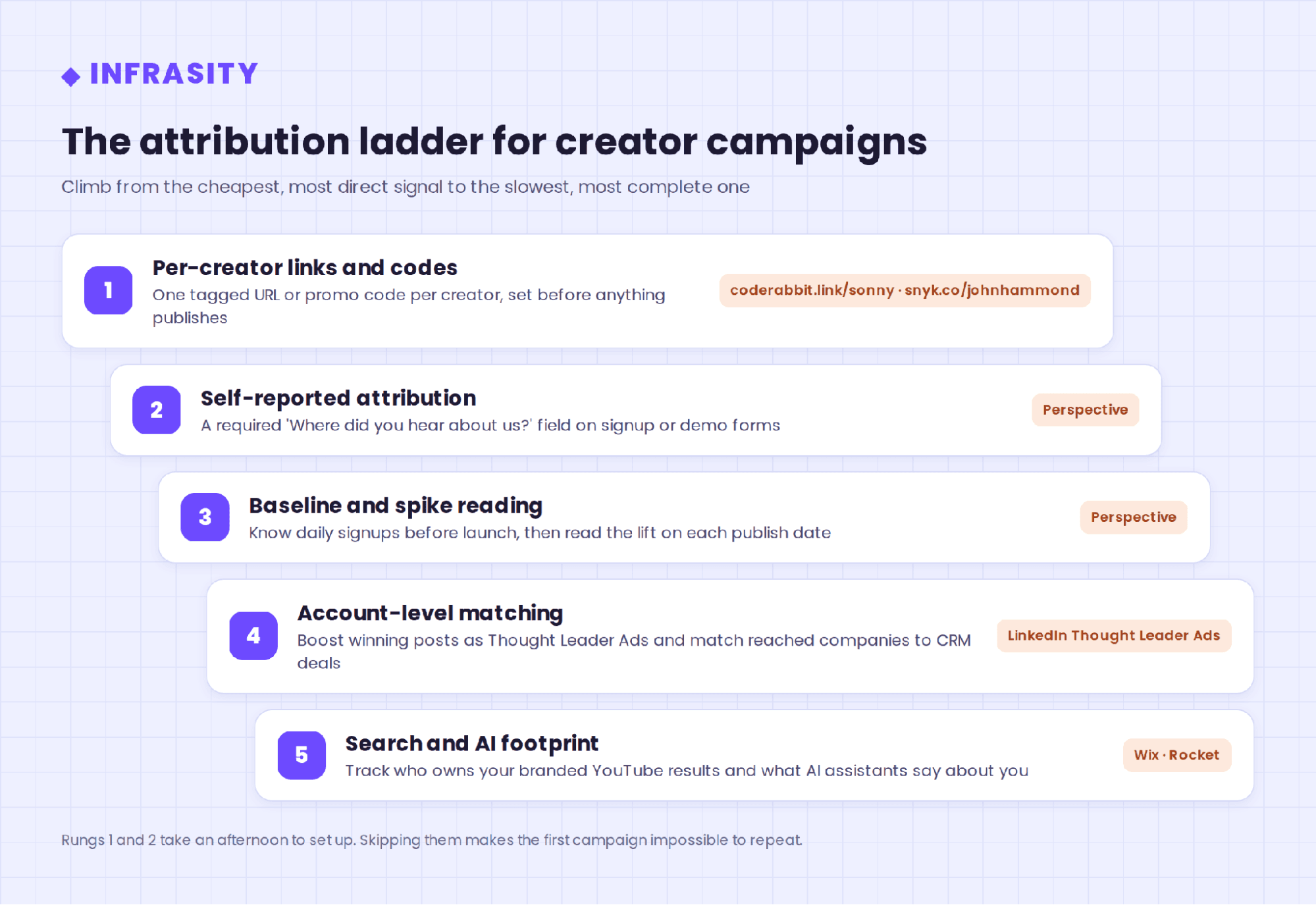
Each rung adds signal the one below it misses. Rungs 1 and 2 take an afternoon to set up, and skipping them makes the first campaign impossible to repeat.
Per-creator links and codes
One tracked link or promo code per creator, live before publishing. The CodeRabbit and Snyk link patterns in our census are the public version of this.
Self-reported attribution
A required "where did you hear about us" field on signup or demo forms. It will not name the post, but a jump from 20 LinkedIn mentions a month to 65 in a campaign month tells you the campaign worked.
Baseline and spike reading
Record daily signups before the campaign. Rotate creators so each publishes on a different day, then read the lift per date, checking that nothing else launched that day.
Account-level matching
Boost the best organic posts as Thought Leader Ads, then match the companies reached to deals in your CRM. Label the result as influenced pipeline, since sales outreach and other channels touch the same accounts.
Search and AI footprint
Check quarterly who owns the top YouTube results for your brand name and category terms, and what AI assistants say when asked for tools in your category. Wix now treats this as a core KPI.
Infrasity's free B2B Influencer Marketing Playbook includes the rate-lock message, the attribution ladder, and a 30-day run sheet used in the Rocket program.
What goes wrong in B2B influencer campaigns, and how do you avoid it?
The failures repeat across programs. The most common ones, each with its fix:
- One big placement carries the budget: In a competing DevTool program audited for the Rocket case study, one video delivered 85.6% of all views. Spread spend across five to seven placements.
- The roster is sorted by follower count: Size explained 29% of Rocket's results and 0.1% of price. Score on audience fit and past results.
- The brief is a script: Creators and marketers in these examples agree that scripted posts underperform. Give facts, angles, and examples of good past posts, then review for accuracy only.
- Tracking starts after the content goes live: Set up links, codes, and the form field before the first post.
- The campaign ends after one placement: Repeat placements beat first ones by 41% in the Rocket data.
Our full breakdown of why B2B influencer campaigns fail covers eight failure modes with fixes.
Conclusion
You now have 17 campaigns, the six plays behind them, what each costs, and how to measure it.
Start small: search your own brand name on YouTube and LinkedIn and count how many results you do not own, then pick one core play from the table above.
If you want a team that has run 90 creator placements to build the roster, the briefs, and the tracking with you, talk to Infrasity's B2B influencer marketing agency.
Frequently Asked Questions
What is a good example of B2B influencer marketing?
Vector's LinkedIn test is one of the clearest: $12,000 across niche creators averaging about 13,000 followers produced $1.1 million in pipeline over three months. For developer tools, CodeRabbit's program, which tracks every YouTube creator with its own short link, is a good model.
Does influencer marketing work for developer tools?
Yes, when the creator builds something real on camera. In our census, independent creators published 62% of the top YouTube results for ten devtool brand names, so developers already learn about tools this way. See our influencer marketing playbook for DevTools for sourcing and briefing.
Which platform is best for B2B influencer marketing?
LinkedIn for buyers in marketing, sales, finance, and operations, and YouTube for developers and infrastructure teams. Newsletters and podcasts work as long-term sponsorships in both. Our guides to LinkedIn influencer marketing and YouTube for B2B cover each.
How many followers does a B2B influencer need?
Fewer than the follower counts teams usually shortlist. Vector's creators averaged about 13,000 followers, and LinkedIn campaigns in this article used creators with 8,000 to 40,000 impressions per post. Audience fit predicts results better than size.
Should sponsored B2B creator content be disclosed?
Yes. LinkedIn requires a partnership label when a paid creator's post is promoted as an ad, and platforms such as YouTube have their own paid-promotion settings. The examples here show disclosure did not hurt performance, and developers expect it.
How long before a B2B influencer campaign shows results?
Plan for three months. The first month mostly shows which creators to keep, and repeat placements perform better than first ones. YouTube content keeps earning views after the campaign ends.