
Brief creators for a developer product launch around one developer problem, a working demo and one clear next action. Give them verified technical facts and hands-on access, then let them tell the story in their own voice. Clerk, the authentication platform, saw what this changes: its first Clerk-only YouTube videos barely moved signups, while creator videos that built full apps with Clerk inside them drove a 30% increase in YouTube-attributed signups.
The brief is where most of that difference gets decided. This blog covers what a developer creator brief must contain, how to build one in seven steps, what breaks when a step is skipped, and a template you can copy for your next launch.
TL;DR
- A developer launch brief needs one problem, one proof point the creator can reproduce, and one conversion goal. A feature list leaves the creator to pick the story, usually the wrong one.
- Give creators working access and a named engineer before filming. The FTC says a creator cannot describe a product they have not tried.
- Lock the facts, free the format. PostHog writes down what creators must get right and lets them decide how the ad read sounds.
- Disclose at the start of the post, on every platform. A platform's paid partnership label alone may not be enough for the FTC.
- Judge the brief by the first three videos. If several creators repeat the same error, fix the brief before the rest of the roster publishes.
What to Include in a Creator Brief for a Developer Product Launch
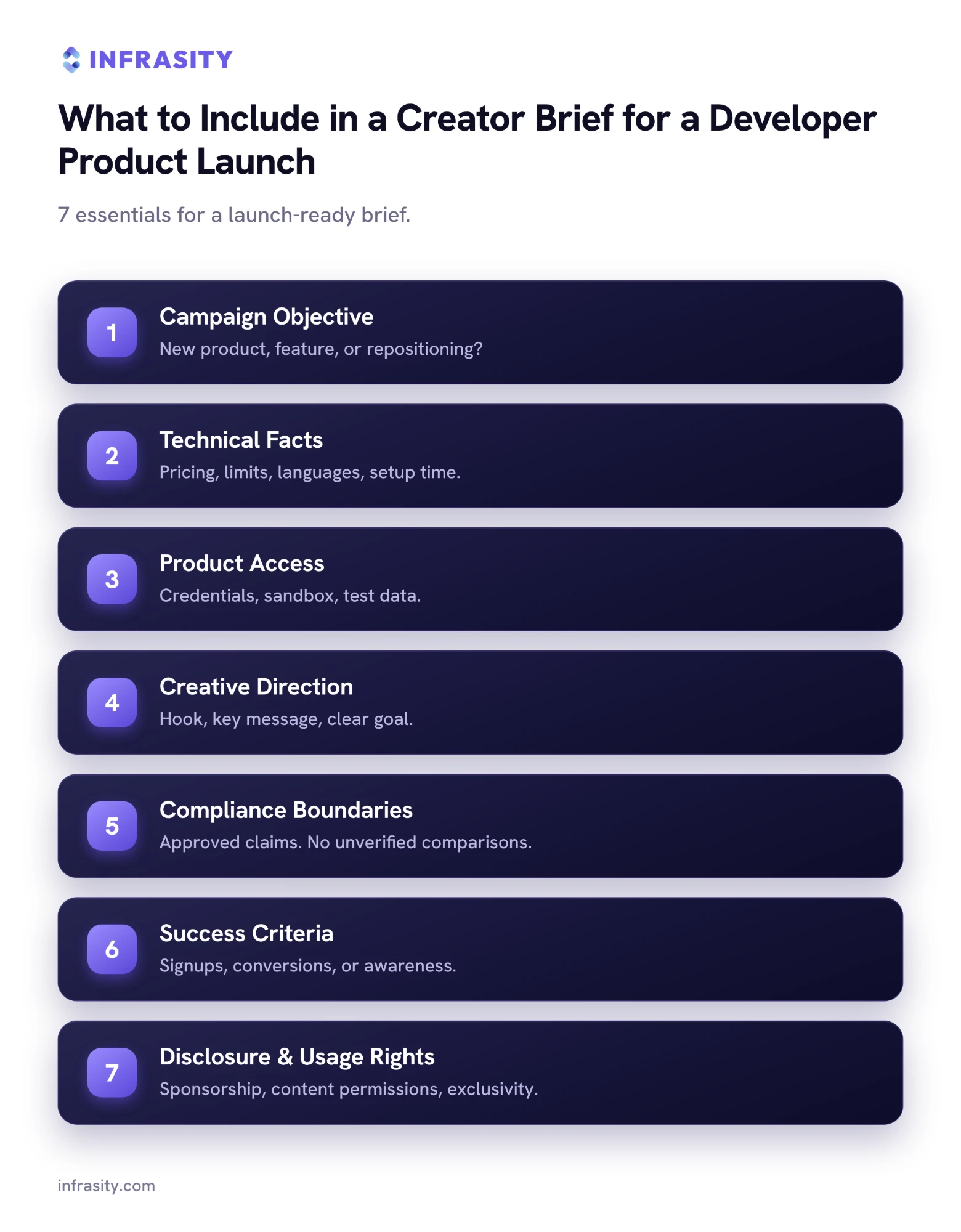
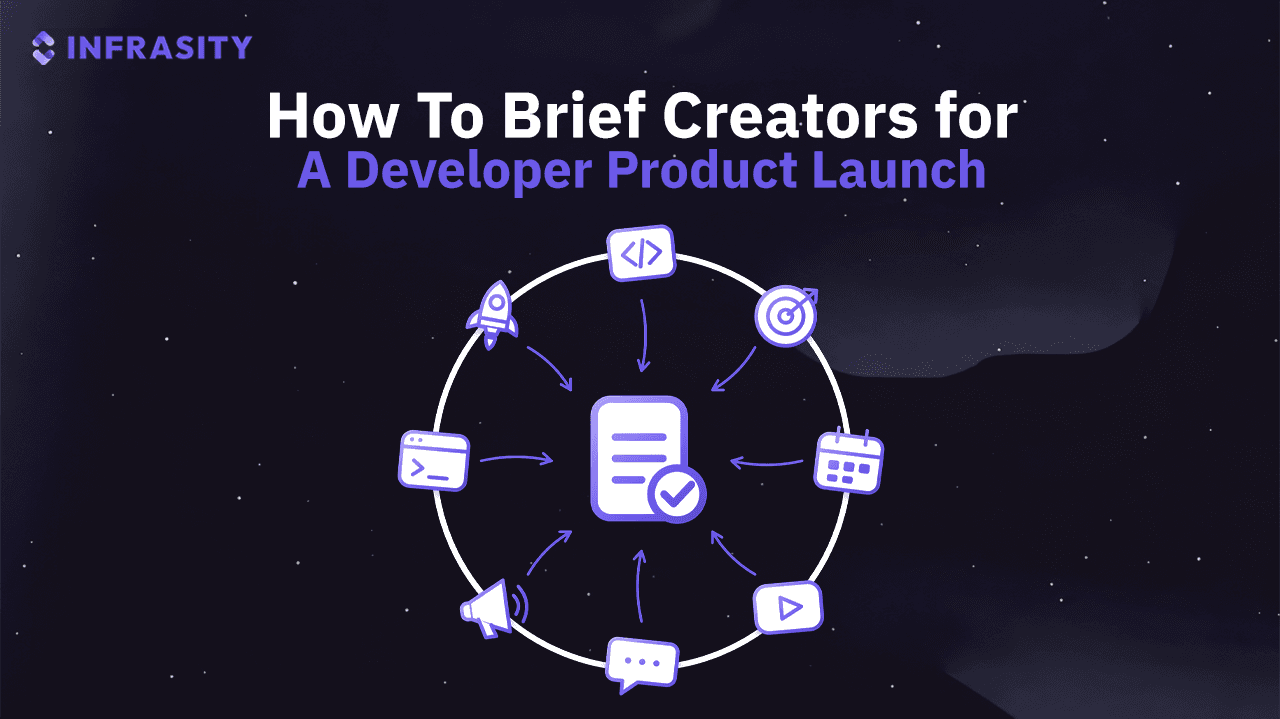
The seven sections every developer launch brief needs before it goes to a creator.
A developer creator brief has seven parts. Each one answers a question the creator will otherwise answer by guessing, and developer audiences check the guesses.
- Campaign objective: whether this is a new product, a new feature or a repositioning, and the one result the launch has to produce.
- Technical facts that must be right: pricing, free tier limits, rate limits, supported languages and frameworks, and setup time from signup to first result.
- Product access: working credentials, a sandbox with sample data and any credits the creator needs to run the demo more than once.
- Creative direction: the problem, the hook and where the product must appear, with the script left to the creator.
- Compliance boundaries: what the creator may claim, what needs a source, and what is off limits, such as unverified benchmarks or competitor comparisons.
- Success criteria: the business goal, such as free signups, paid conversions or category awareness, plus the tracking link that measures it.
- Disclosure, usage rights: how to disclose the sponsorship, where you may reuse the content, and any exclusivity window.
The last two parts get skipped most often because they feel like paperwork. They are also the two that cause public problems: a missing disclosure draws comments about undisclosed ads, and missing usage rights stop you from putting your best video behind ads or in your docs.
How to Create a Creator Brief for a Developer Product Launch
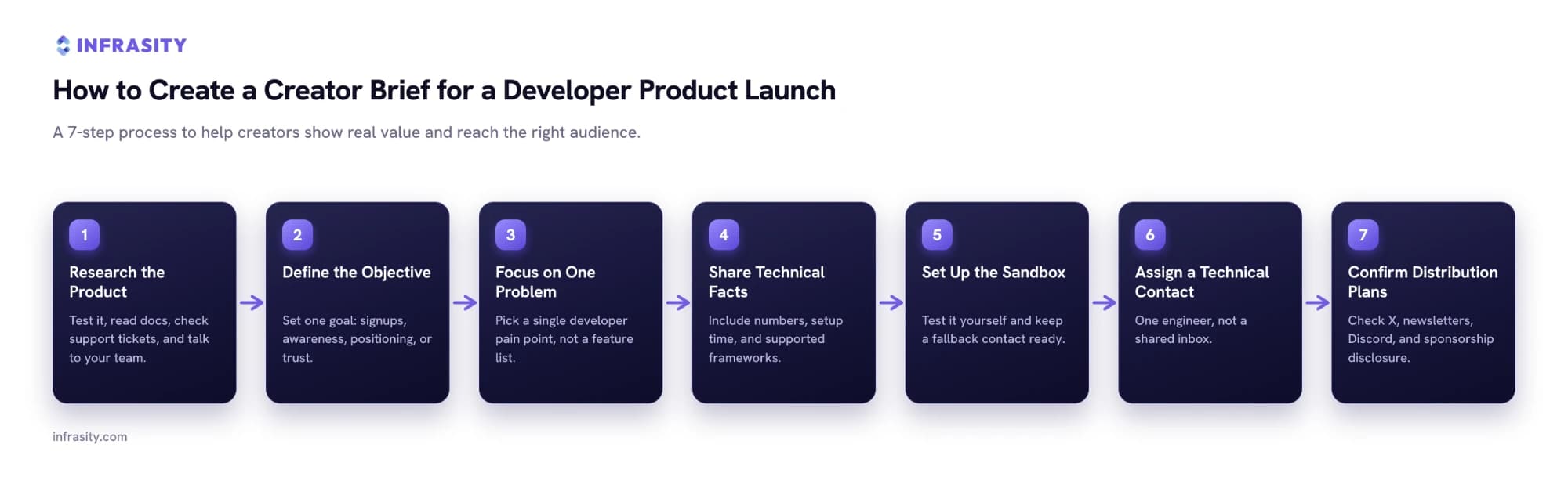
Each step removes one way the launch can fail after the video goes live.
Building the brief takes seven steps. Each step removes one way the launch can fail after the video is live, and each one costs far less to do before filming than to fix after publishing.
Step 1: Research the Product Before Writing Anything
Use the product yourself before you brief anyone. A brief written from the marketing site repeats the marketing site, and creators can tell.
How to do it:
- Sign up as a new user and time the path from signup to the first real result, such as a first API call or a first deploy.
- Write down every point where you hesitated, read the docs twice, or hit an error.
- Read the last 30 support tickets, GitHub issues or community questions about the product, and note the problems users describe in their own words.
- Ask one engineer on the product team what the product does better than the closest alternative, and ask for the proof.
Why developers care: creators who are trusted by engineers use the products they talk about. Theo, one of the largest developer creators on YouTube, said publicly in 2023 that he had used the services he promoted before they sponsored him and would keep using them after.
If you skip this step, the brief describes the product as you hope it works. The creator discovers the real setup friction on camera and either films around it or leaves it in, and their audience sees a launch that doesn't match the claims.
Step 2: Define the Campaign Objective Clearly
Pick one objective for the launch and write it as one sentence the creator can repeat back. "Get backend developers to make their first API call in the free tier" is an objective. "Drive awareness and signups for the launch" is two objectives that pull the video in different directions.
How to do it:
- Choose the primary goal: signups, activation, paid conversion or category awareness.
- Name the developer who should act, such as a backend developer, a platform engineer or a data engineer.
- Name the action and where it happens, such as starting the free tier from a tracked link.
- Set the number you will judge it on, such as signups per creator or activation rate from creator traffic.
Why it changes the video: the objective decides what the creator puts on screen. A signup-focused video shows the signup flow and the first result. An awareness video can spend longer on the problem and the architecture.
If you skip this step, the creator optimizes for what their own channel rewards, which is usually views. You get a well-watched video with no clear next step, and no agreed number to judge the partnership on when you decide whether to rebook.
Step 3: Define the One Problem the Product Solves
Give the creator one developer problem to solve on camera. A problem gives the video a story: the pain, the attempt, the fix. A feature list gives the creator nothing to show.
How to do it:
- List the problems from Step 1 research and pick the one your target developer hits most often.
- Write it in the developer's words, such as "our CI builds take 15 minutes on every push."
- Describe what the fixed state looks like, with a number if you have one.
- Let the creator choose the project they build around it, so the problem shows up in their own work.
Proof it works: Clerk's early creator videos focused on Clerk alone and drew "paying people to praise it" reactions from viewers. Clerk then gave creators full creative freedom to build whole apps, with Clerk as the authentication layer, and grew to 20 active partners.
If you skip this step, the creator tours features. Viewers see a sponsored segment rather than a developer solving a problem, and the video converts like a banner ad.
Step 4: Write the Technical Facts as Numbers
List the facts the creator must get right, as numbers and names. Developers test claims as soon as they hear them, and a wrong number in a sponsored video gets corrected in the comments within hours.
How to do it:
- Write pricing, free tier limits, and rate limits exactly as they will appear on launch day.
- List supported languages, frameworks, and environments, plus anything that is not supported yet.
- State the setup time you measured in Step 1, and how you measured it.
- Give the method behind any benchmark, so the creator can rerun it and explain any difference in their result.
- Mark which facts may change before launch and who confirms them.
PostHog's handbook sets the standard for this section. It tells creators what to call the product and what to avoid, and it explains why in one line.
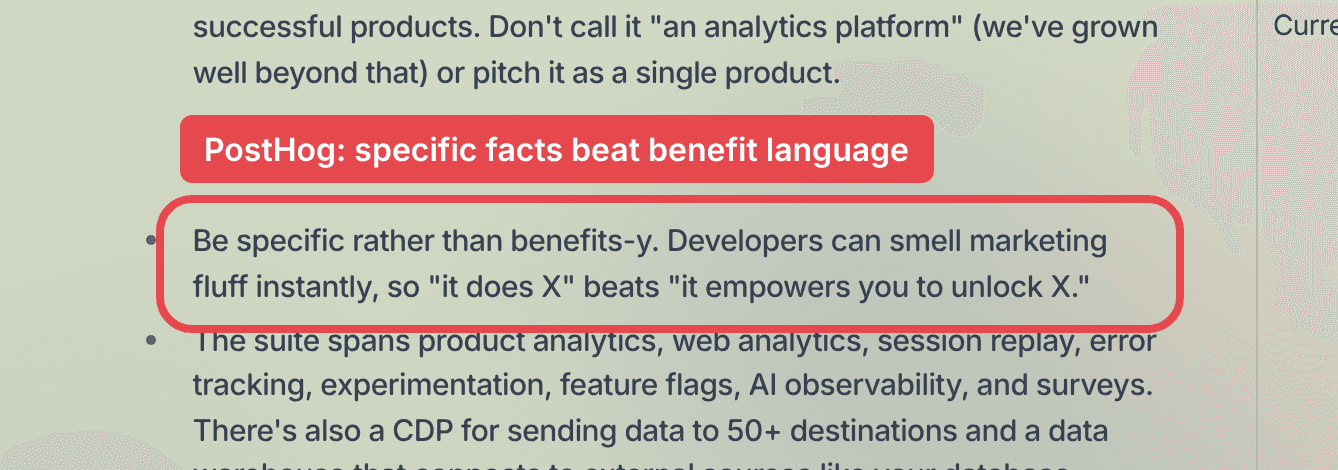
PostHog tells creators what to call the product, what to avoid, and why in a single line.
Why share the method: for one CI runner launch, a creator ran the same GitHub Actions workflow twice and posted 9m57s on the default runner against 3m24s on the sponsor's. The brand's own benchmark showed slightly different numbers. Because the creator ran the test himself and stated his setup, both results held up.
If you skip this step, the creator fills gaps with adjectives such as "blazing fast." Developers cannot check an adjective, so they discount the whole claim, and a creator who repeats an outdated price has to issue a correction on their own channel.
Step 5: Set Up the Sandbox Before You Brief the Creator
Test the sandbox yourself, then send it with the brief. The FTC is direct on this point: a creator cannot talk about their experience with a product they have not tried.
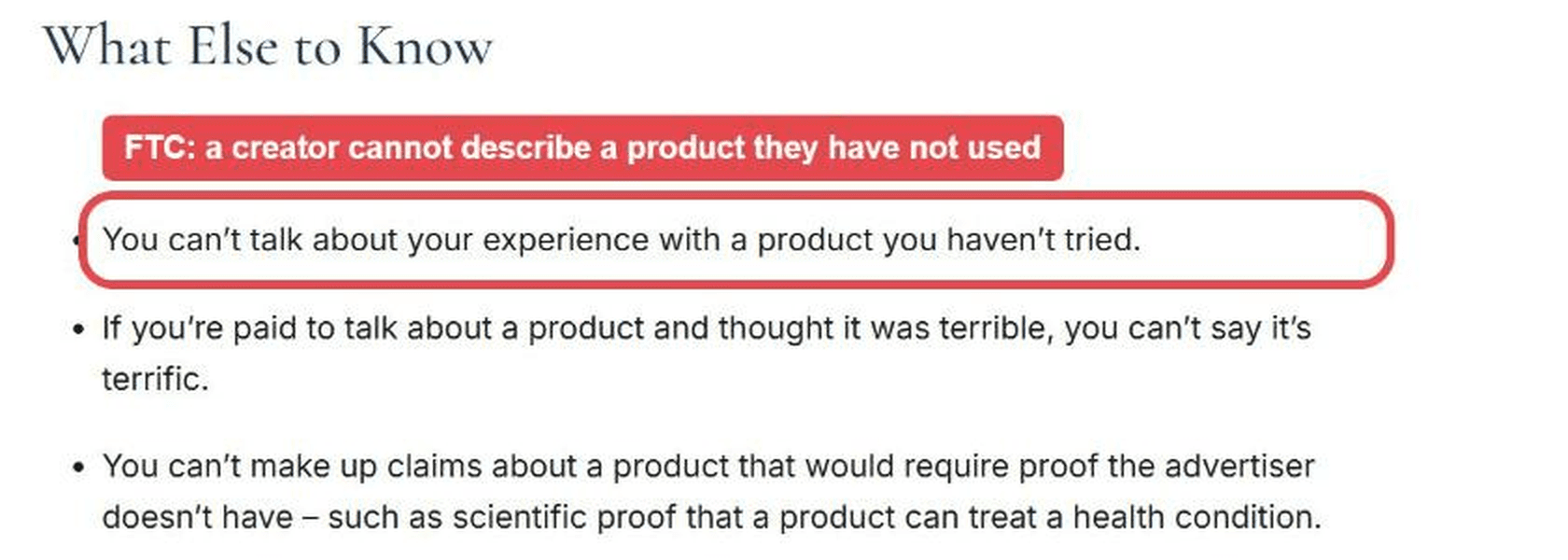
The FTC's rule is the reason hands-on access belongs in the brief, not after it.
How to do it:
- Create the creator's account with enough credits or quota to run the demo several times.
- Preload sample data or a starter project if the product shows nothing useful when it is empty.
- Run the full demo flow in that account yourself, on the same plan the creator will use.
- Send the sandbox at least a week before filming, so the creator can build before they record.
- Give a fallback contact who can reset the account the same day.
Why test it first: the creator's first build is your best test of onboarding. Problems they hit in private can be fixed. Problems they hit while recording end up in the video or get cut, along with the moment that made the demo convincing.
If you skip this step, filming stalls on an expired key, an empty dashboard, or a hit rate limit. Creators work to tight upload schedules, so a lost recording day often means a later slot, a rushed demo, or a creator who moves on to the next sponsor.
Step 6: Assign One Engineer as the Technical Point of Contact
Name one engineer, by name, as the creator's technical contact for the whole launch. A shared support inbox answers in days, and a creator building on camera needs answers within hours.
PostHog lists this as a launch requirement. Its influencer handbook asks product marketers to bring in the creator team a month before a launch, with product context, messaging, demo access, visuals, timelines, and someone available to answer technical questions.
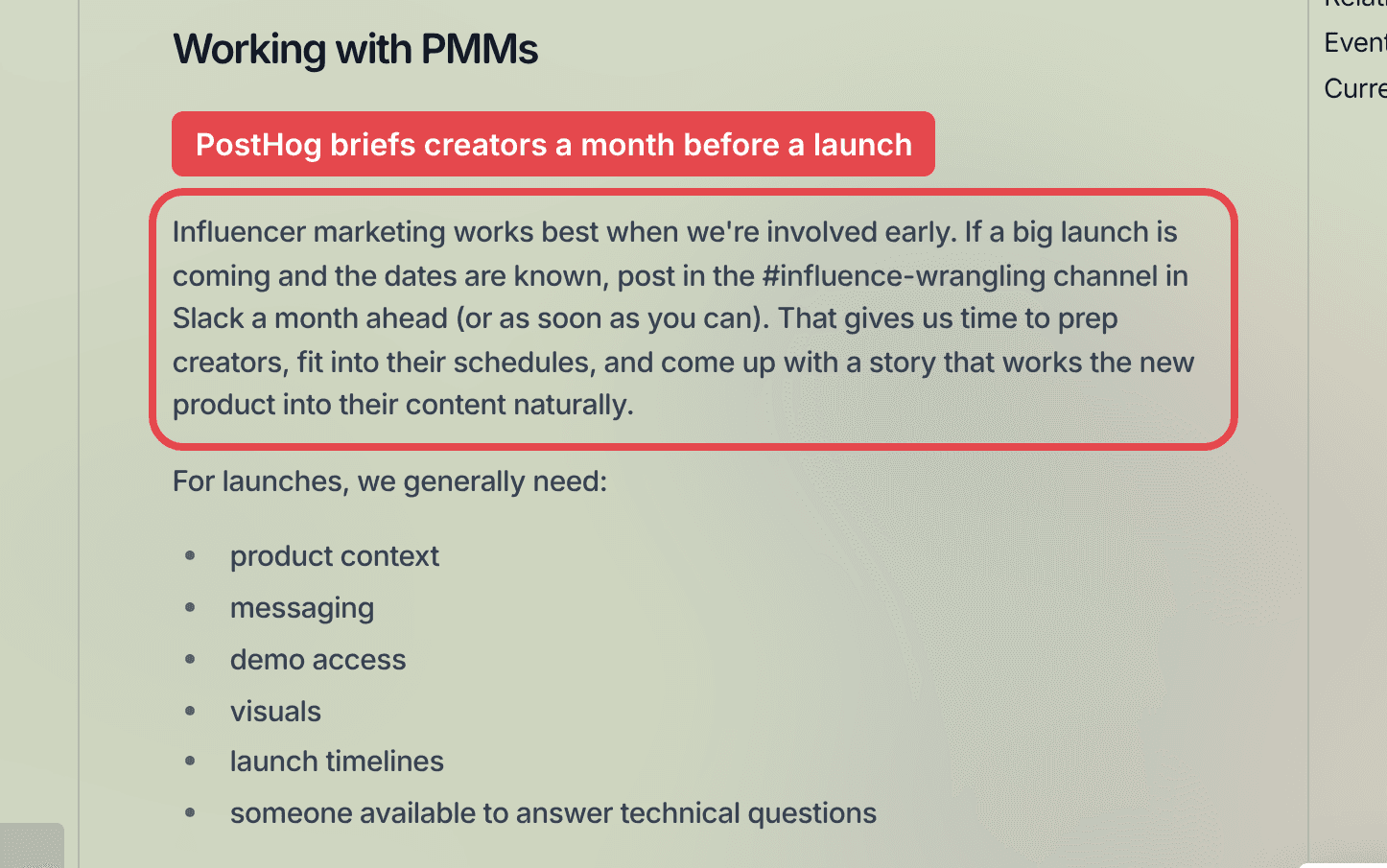
PostHog asks for a month of lead time and names a technical answerer as a launch requirement.
How to do it:
- Pick an engineer who knows the feature being launched and can spare a few hours across the launch window.
- Share a direct channel, such as a shared Slack channel or a direct message thread, with a stated response time.
- Ask the engineer to review the draft or rough cut for technical accuracy only, leaving tone and structure to the creator.
- Log every question creators ask, since repeated questions show gaps in your docs.
If you skip this step, the creator works around blockers alone. They either drop the hard part of the demo, which removes the proof, or state a guess about how the product works, which your engineers then see corrected in public.
Step 7: Confirm Distribution Plans Before the Video Is Final
Agree where the content will appear, in what form and with what disclosure, before the creator finishes editing. Distribution decides the format: a YouTube video, an X thread, and a newsletter mention each need different openings, links, and labels.
How to do it:
- List every placement: the main video, posts on X or LinkedIn, a newsletter mention, a Discord post or a live stream.
- Agree where the product appears in each. On X, name or show the product in the first post of a thread, since later posts reach far fewer readers.
- Give each placement its own tracked link, such as ?utmsource=youtube&utmcampaign=creator-name, and place the YouTube link in the top three lines of the description.
- Confirm disclosure for each placement: "Ad" at the start of the post, the platform's paid partnership label switched on, and a spoken disclosure in the video itself.
- Agree usage rights for clips, ads and docs before publishing, while the creator is still editing.
Why placement counts: in one sponsored developer thread on X that we tracked, the first post reached 82,239 views, while the post that named the product reached 9,122. For more on how X ranks sponsored posts, see our guide to Twitter influencer marketing for B2B tech.
If you skip this step: the product lands where few people see it, links point to a generic homepage with no attribution, and a disclosure added after publishing reads as an afterthought. The FTC's endorsement guidance says a disclosure in the middle or at the end of a post is easier to miss.
What breaks when a step is skipped
Run all seven steps with one creator before you brief the full roster. A gap in Step 3 or Step 4 costs one reshoot with one creator, and ten corrections with ten.
| Step skipped | What you see after launch |
|---|---|
| 1. Research the product | Setup friction shows up on camera |
| 2. Define the objective | High views, no clear next step, nothing to judge the creator on |
| 3. One problem | A feature tour that viewers read as an ad |
| 4. Technical facts | Wrong numbers corrected in the comments |
| 5. Sandbox | Lost recording days, rushed or cut demos |
| 6. Technical contact | Guesses about the product stated in public |
| 7. Distribution | Product buried, no attribution, late disclosure |
Creator Brief Template for a Developer Product Launch
A reusable template keeps every creator working from the same facts while each tells the story their own way. The example below shows how the product section reads in a real brief for an AI coding agent launch.
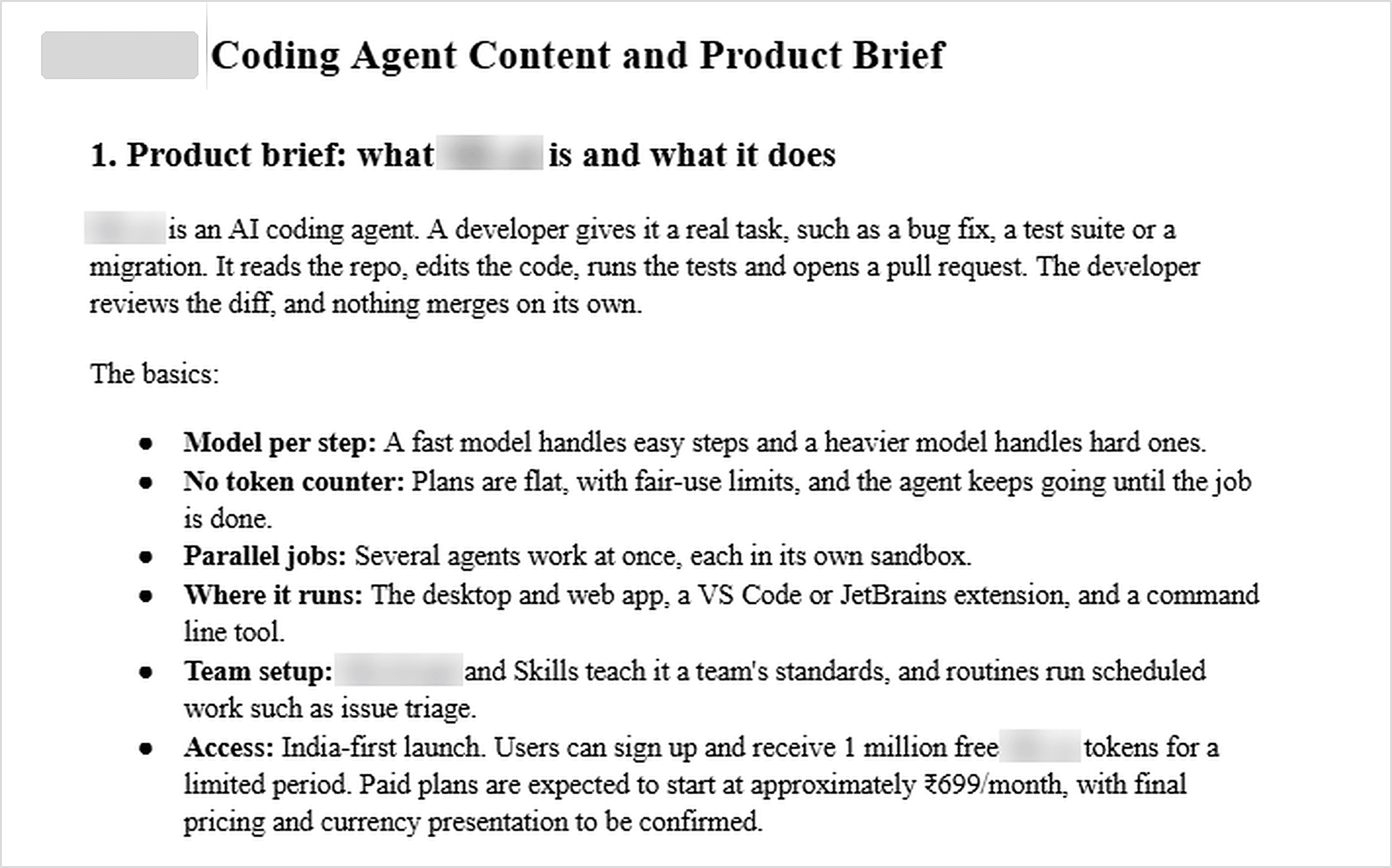
A real product brief with the client's name redacted: plain language first, then the facts creators must get right.
Each section of the template does one job:
Product Brief: What the Product Is
Explain the product in plain language and walk through the workflow from input to output, as the example above does. Follow it with short bullets on pricing, supported environments, team setup and access, so creators have one source of truth.
Search Terms with Suggested Titles
List 10 to 15 title ideas built from what developers search, such as comparisons, migration guides and "how to" tasks. Pull the phrasing from search data and community threads, since creators who title videos the way developers search get found long after launch week.
Campaign Communication Mandate
State the one message every creator must land, the product category you want to own and the conversion goal. This keeps a roster of ten creators consistent without forcing ten identical scripts.
Required Opening Lines with a Suggested Close
Give the hook that must appear in the first 30 seconds and a suggested closing line, and leave the delivery to the creator. HubSpot's creator team moved from fixed scripts to what Alana Joseph, who runs its creator partnerships, calls a "mad lib" format: key messages with gaps for the creator's own experience (HubSpot Live).
Platform-Specific Video Topics
Map a short list of topics to a core angle each, mixing build demos, comparisons and explainers. A ready list cuts the back-and-forth between brief and filming.
Platform Rules for YouTube, LinkedIn, X
Set separate rules per platform, since each needs different length, pacing and link placement. Keep them to short bullets the creator can check while recording.
Claim Guardrails
List what creators may claim, what needs a cited source and what is banned, such as absolute superiority claims or invented benchmarks. When ten creators cover one product, one unsupported claim can undo the credibility of the other nine.
Conversion Focus
Restate the business goal and the number you will measure, with the tracked link for each creator. Everyone then optimizes for the same result, making the post-launch review a like-for-like comparison.
Copyable creator brief template
| Section | What to fill in |
|---|---|
| Product name | |
| One-sentence description | What it does, for whom |
| Problem it solves | In the developer's words |
| Core mechanism | How it works, input to output |
| Pricing, free tier, limits | Exact launch-day numbers |
| Supported environments | Languages, frameworks, platforms |
| Access details | Sandbox login, credits, sample data, region |
| Technical contact | Engineer's name, channel, response time |
| Suggested titles | 10 to 15 search-led ideas |
| Primary message | The one point every creator must land |
| Category to own | How you want the product described |
| Required opening | Hook within the first 30 seconds |
| Suggested close | Closing line plus call to action |
| Video topics | Topic with core angle, three to five rows |
| YouTube rules | Link in top three lines of description, spoken disclosure |
| X rules | Product in post 1, "Ad" at the start, paid partnership label on |
| LinkedIn rules | Practitioner angle, disclosure at the start |
| Approved claims | With source for each number |
| Banned claims | Superiority claims, unverified benchmarks |
| Conversion goal | Free signups, paid upgrades or both |
| Tracking | Unique link per creator per placement |
| Primary KPI | Signups or activation per creator |
| Usage rights | Clips, ads, docs, duration |
| Exclusivity | Competitor categories, time window |
The structure stays fixed from launch to launch. Only the facts, offers and topics change.
How to Measure Whether the Brief Worked
A brief worked if creators explained the product accurately and developers took the next step. Views tell you neither, so track signals tied to both.
- Signups per creator: use a unique link per placement and a required "how did you hear about us" field. PostHog asks creators to tell viewers to mention them at signup, so attribution survives when a developer signs up later on another device.
- Activation from creator traffic: the share of those signups that reach a first real result, which shows whether the demo matched the product.
- Comment quality: technical questions mean the demo landed. Corrections to your numbers mean the brief's facts section failed.
- Branded search: searches for your product name in the week after each video, against a four-week baseline before launch.
For the full attribution model behind these signals, see our guide on how B2B teams measure influencer marketing ROI.
Review the brief after the first three videos go live. If two or more creators repeat the same mistake, the brief caused it, and one edit fixes it for the rest of the roster.
Conclusion
A developer creator brief does five jobs: it names one problem, states facts the audience can check, gives the creator real access, frees their voice and sets one measurable outcome. Skip one and the gap shows up in the comments, the signups or both.
Test the brief with one creator, fix what breaks, then scale. For more on choosing the creators to brief, read our guide to working with programming influencers, and see how to launch a SaaS product with creators for the launch plan around the brief.
If you are planning a developer product launch and want the briefs, creator shortlist and tracking handled for you, talk to our B2B influencer marketing agency. We brief creators across YouTube, X and LinkedIn and report signups per creator after launch.
FAQs
Should creators follow a script?
No. Give them the problem, the facts, the required opening and the disclosure rules, and let them build and explain in their own voice. Clerk's creator videos converted after Clerk moved from product-focused content to builds the creators chose.
How much creative freedom should creators have?
Give full freedom on tone, structure, examples and honest criticism. Lock down factual claims, launch timing, tracked links, legal language and disclosure.
When should I send the brief?
Send it about a month before launch, which is the lead time PostHog asks for. Developer products need time for the creator to test the sandbox, ask technical questions and build a real demo before filming.
How do I avoid an overly promotional launch?
Ask for a build instead of an announcement. The creator should solve a real problem, show the code or workflow and share an honest view, with the launch as context.
What proof should I give creators?
Give benchmark methods, sample repositories, migration guides, screenshots and approved customer examples, plus a technical contact. Share only proof that is accurate and approved for public use.