
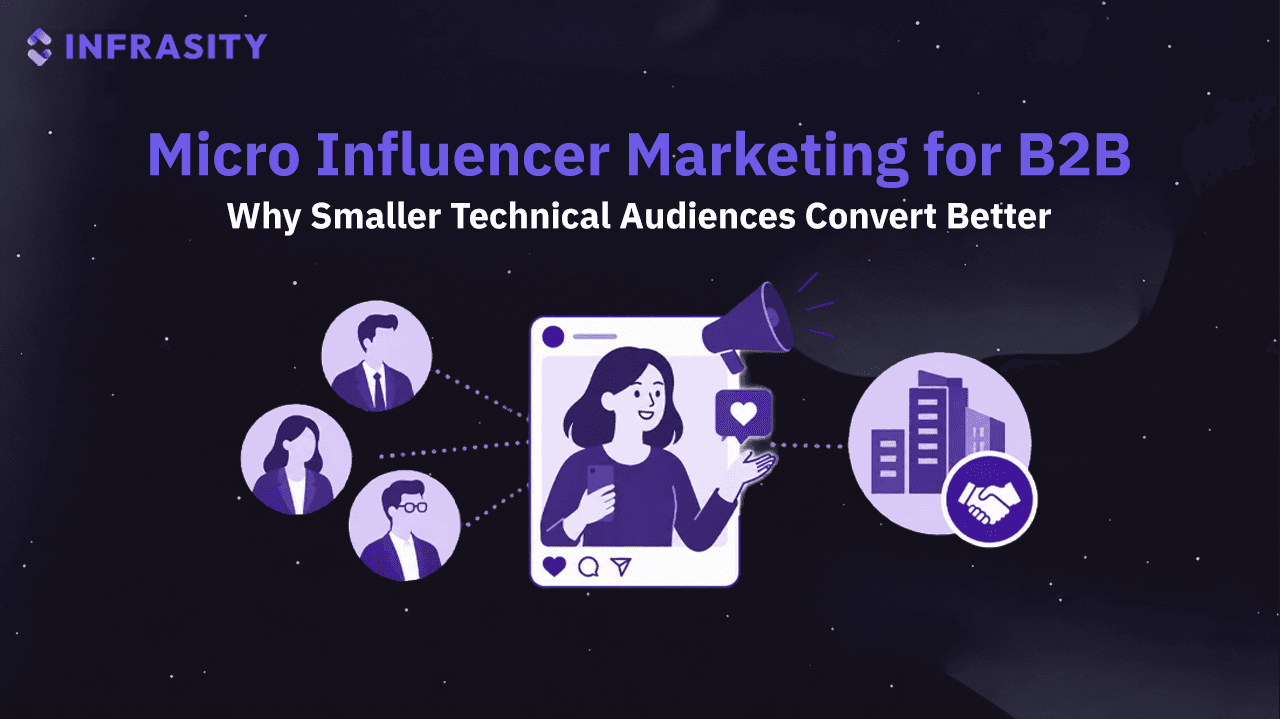
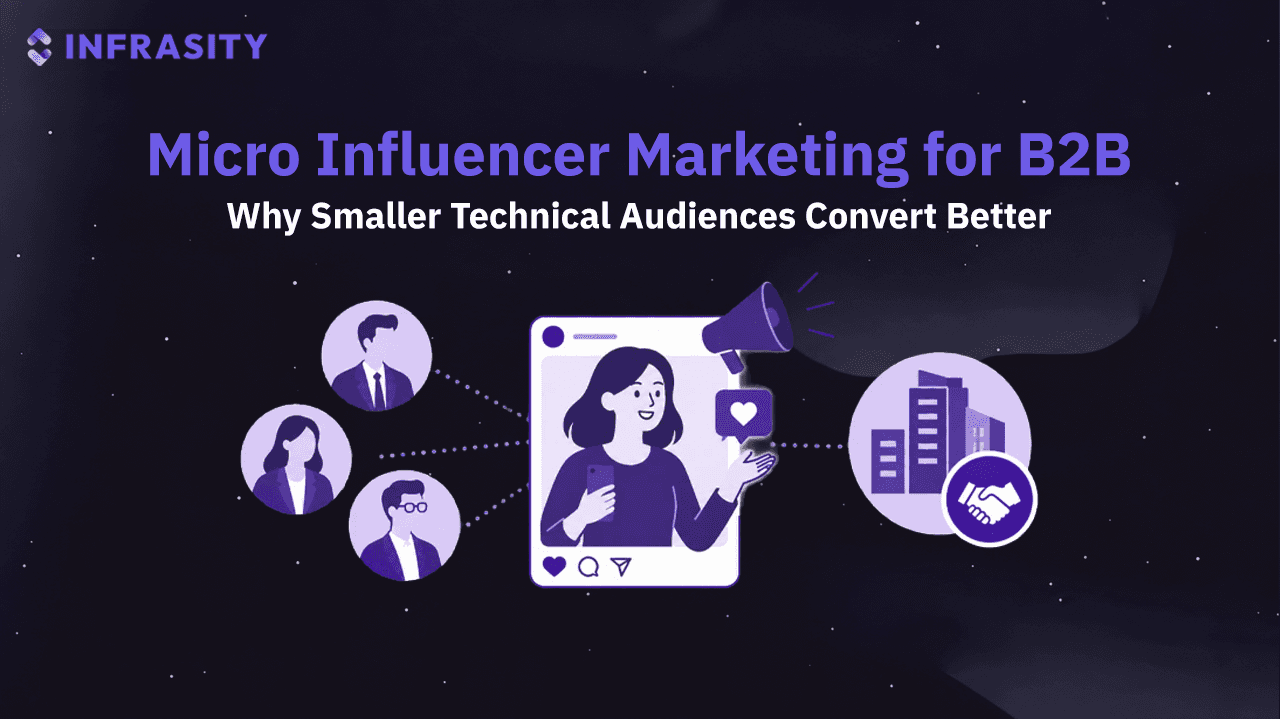
Micro influencer marketing works in B2B because a creator with 10,000 to 100,000 followers usually speaks to people who do one specific job, so more of each view lands on an actual buyer.
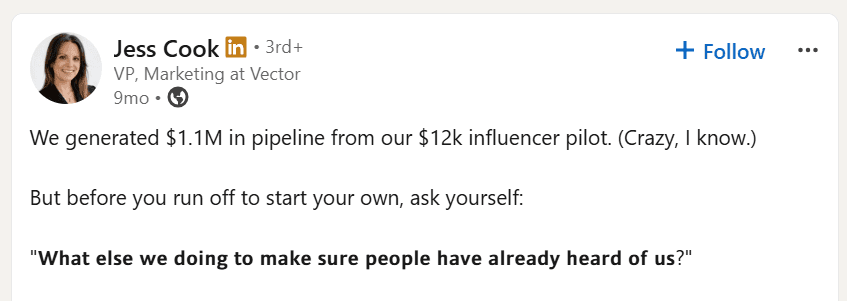
Vector's seven LinkedIn creators averaged about 13,000 followers, and a $12,000 test produced $1.1 million in pipeline in three months.
In a developer relations engagement for a DevOps platform, a single post from a practitioner with 53.4K followers hit a 61% click-through rate. The sponsored post beside it in the same feed got 3%.
Size alone doesn't always produce that result. We read the top comments on seven ranking DevTool tutorials. Channels under 100K subscribers showed practitioner signals in 19% of comments, against 17% for channels over 1M. Within the small channels, the rate ran from 0% to 32%.
The advantage comes from fit between the creator's audience and your buyer's problem, and you confirm that fit by reading the audience rather than counting it. This blog covers the mechanism behind the higher conversion, the campaign evidence, a selection scorecard, the budget math, and how to measure a program that mostly influences deals you will never see attributed.
TL;DR
- Nano creators give you a ranked answer to a search. Micro creators give you a feed of peers who trust the person posting. Macro gives you a launch-day moment.
- For example: a 4K-subscriber engineer whose Terraform walkthrough ranks for the exact task your product solves is nano. A 30K platform-engineering creator posting weekly on LinkedIn is micro. A 1M-subscriber developer channel on YouTube is macro.
- A 30K platform-engineering creator's followers are mostly working SREs. A 1M developer channel's followers include students, hobbyists, and job seekers.
- Read 20 comments before you pay anyone. In our census, one 179K channel had 9 of its top 20 comments from three accounts, mostly emoji.
- 15 to 20 creators rotating over at least three months beats three creators on launch day.
- One B2B deal pays for the program. At a $25K+ ACV, the math works long before attribution catches up.
What counts as a micro influencer in B2B, and how this tier differs from nano and macro
A micro influencer is a creator with roughly 10,000 to 100,000 followers who publishes consistently on one professional subject. In B2B, the follower number matters less than what the audience comes for.
On LinkedIn, follower count is especially unreliable. David Walsh, who runs a B2B creator marketplace and screened 30,000 LinkedIn profiles to find about 4,000 active creators, put it this way: "Follower count does not mean anything on LinkedIn." Many large LinkedIn accounts were built by mass-connecting a decade ago, not by publishing.
What you buy changes by tier:
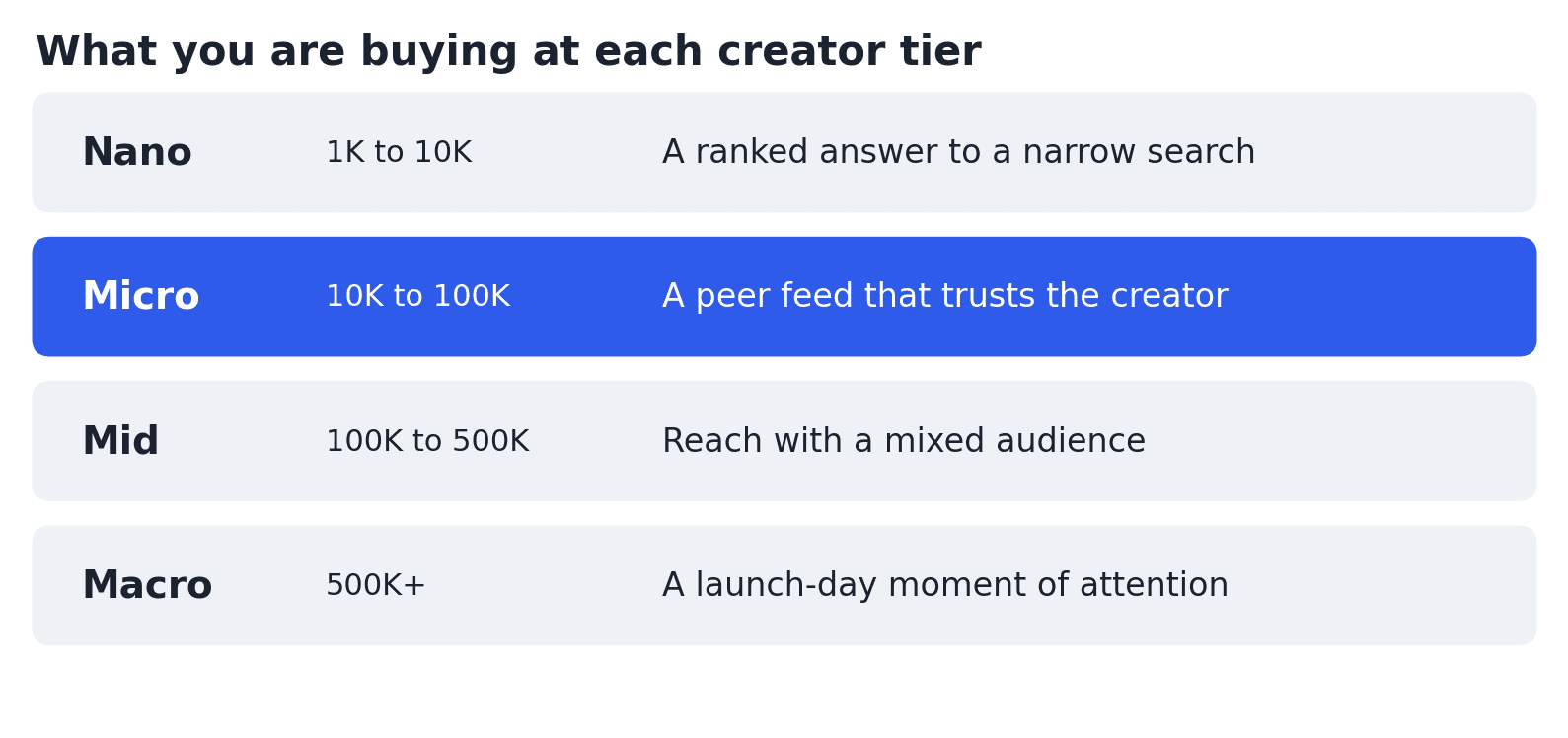
| Tier | Followers | What you are buying | Where it pays off |
|---|---|---|---|
| Nano | 1K to 10K | A ranked answer to a narrow search | Implementation queries, long tail |
| Micro | 10K to 100K | A peer feed that trusts the creator's judgment | Evaluation, shortlist, internal sharing |
| Mid | 100K to 500K | Reach with a mixed audience | Category awareness in a defined niche |
| Macro | 500K+ | A moment of attention | Launches, funding news, category creation |
If your buyer searches for a specific task and small channels already rank for it, start with nano creators for DevTools and B2B SaaS. If your buyer forms opinions in a feed, where a staff engineer sees what a respected peer used last week, micro is the tier that moves the shortlist.
Micro fits you if your buyers are practitioners who sit in a feed all day, a developer or engineer can reach a working demo without talking to sales, and your ACV is high enough that one closed deal covers the program. In practice that means Series A and later, $10K+ ACV, and a product someone can install or trial the same afternoon. If buyers cannot get hands on the product, creators have nothing honest to show, and the section on when this is the wrong call applies to you instead.
Each creator tier sells a different asset. Micro is where trust and reach overlap.
Why smaller technical audiences convert better: the four mechanisms
Four things happen in a small technical audience that do not happen in a large one. Each changes how much of a post's reach turns into pipeline.
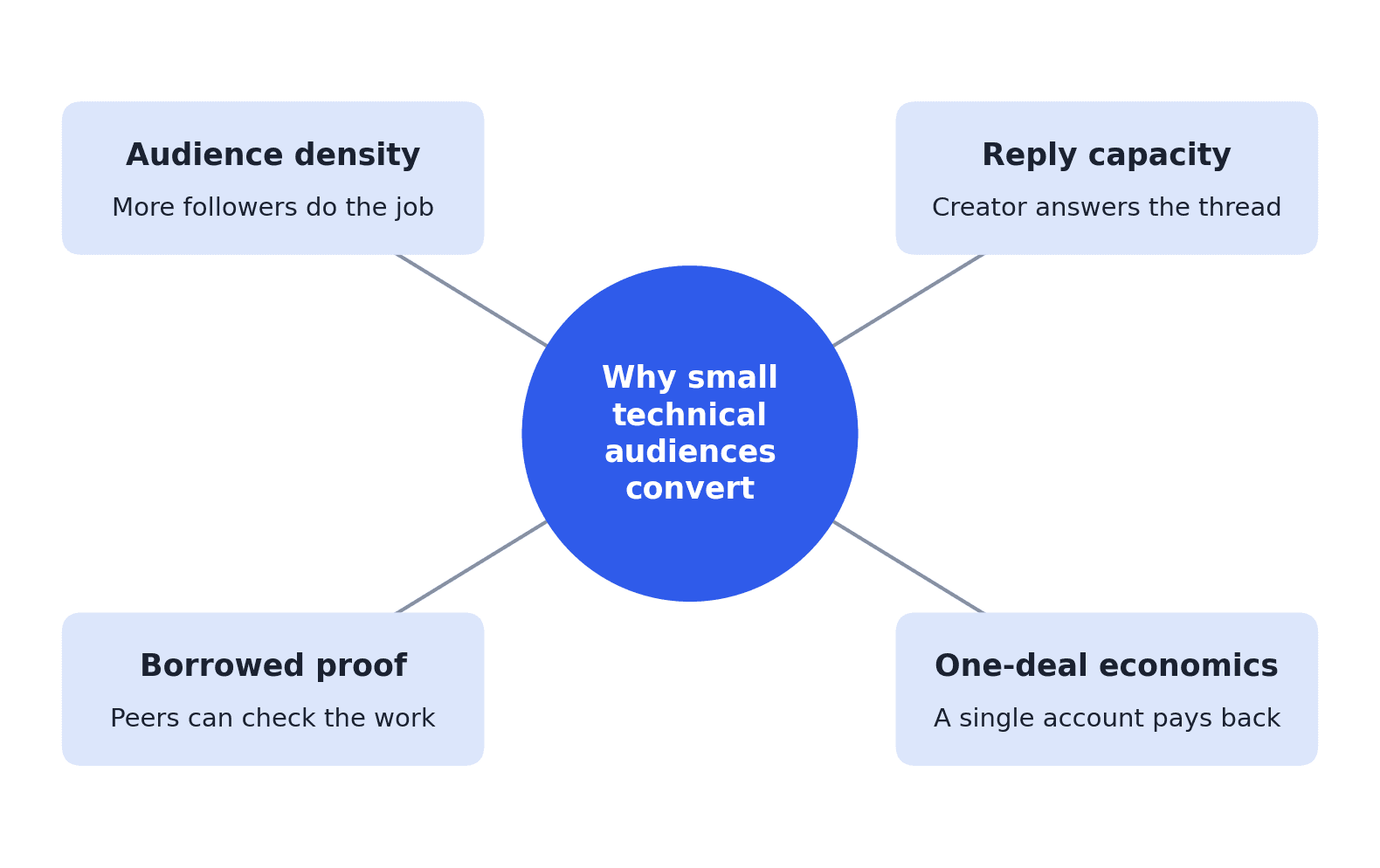
Four mechanisms, none of which depend on follower count alone.
A higher share of the audience does the job your product serves
A creator who only posts about Kubernetes cost control attracts people with that problem. As an audience grows past 100K, it fills with adjacent viewers: students, career switchers, and people who follow for personality.
The Trade Hounds team, who have run campaigns with more than 100 electrician creators, described the same effect in a trade that has nothing to do with software. Their smaller creators had a higher density of fellow professionals, while the largest creator's audience included enough homeowners that she worked for consumer campaigns too.
The DevTool version is the same. A 1M developer channel is a fine place to reach students. It is an expensive place to reach 4,000 platform engineers.
Small creators can still reply, and evaluation happens in the replies
Nick Bennett, co-founder of a go-to-market firm and author of a book on B2B influencer marketing, said he would take a 15,000- to 20,000-follower specialist over a 100,000-follower generalist, because large creators often cannot answer their own comments.
In a technical buy, the comment thread is where the evaluation happens. "Does it support Helm?" "How does it compare to Pulumi?" "We tried this and hit X." A creator who answers those questions is doing presales work in public.
Trust is borrowed from demonstrated work, and small audiences can check it
Technical buyers discount claims and credit demonstrations. In the 2025 Edelman-LinkedIn B2B Thought Leadership Impact Report, 71% of hidden decision-makers said thought leadership is a more trustworthy basis for evaluating a vendor than product sheets or marketing materials.
A micro creator's audience knows their track record, so a vague post gets caught quickly, and that pressure is what makes the recommendation credible. Bennett's rule for his own partnerships is that he uses the product before he posts about it. Ogilvy's 2026 social report calls this trust in human filters, and notes that AI answers now draw on Reddit threads, LinkedIn posts and expert articles.
One deal pays for the program
Consumer creator math has to sell thousands of units. B2B math has to close one account. Dave Gerhardt, who runs a marketing community with sponsors, described a sponsor that saw nothing for months and then closed a $150K dream account and asked to do more.
Walsh reports working with companies from about $10K to $150K ACV. At those deal sizes, a $30K program needs one closed deal to break even.
What the campaign evidence shows across B2B SaaS and DevTools
The public cases share a pattern: modest creator size, a tight niche, several creators, and the product shown in use.
| Campaign | Creator size | Spend | Result | What made it work |
|---|---|---|---|---|
| Vector (B2B SaaS, LinkedIn) | About 13K average | $12K | $1.1M pipeline in 3 months | ICP-matched niche creators, three-month arc |
| Capsule launch (video AI) | 3K to 5K each | $10K across 10 creators | Launch reach | Each creator made a video using the product |
| PathFactory AI launch | 15 creators | $5K | One of its strongest launches | Built and shipped in two weeks |
| Infrasity DevOps engagement | 53.4K (Rohit Ghumare) | Part of a $3K to $15K program | 61% CTR vs 3% sponsored | Practitioner voice, real migration story |
| Viasat (Ogilvy, B2B aviation) | Industry voices | Not disclosed | 1.8M impressions, 80K+ engagements | Three-episode podcast series |
The Vector detail worth studying is how small the numbers were. Favikon found the six creators it could identify averaged just 111 engagements per post, yet the posts generated $1.1M in pipeline. Engagement volume did not predict pipeline. Audience match did.
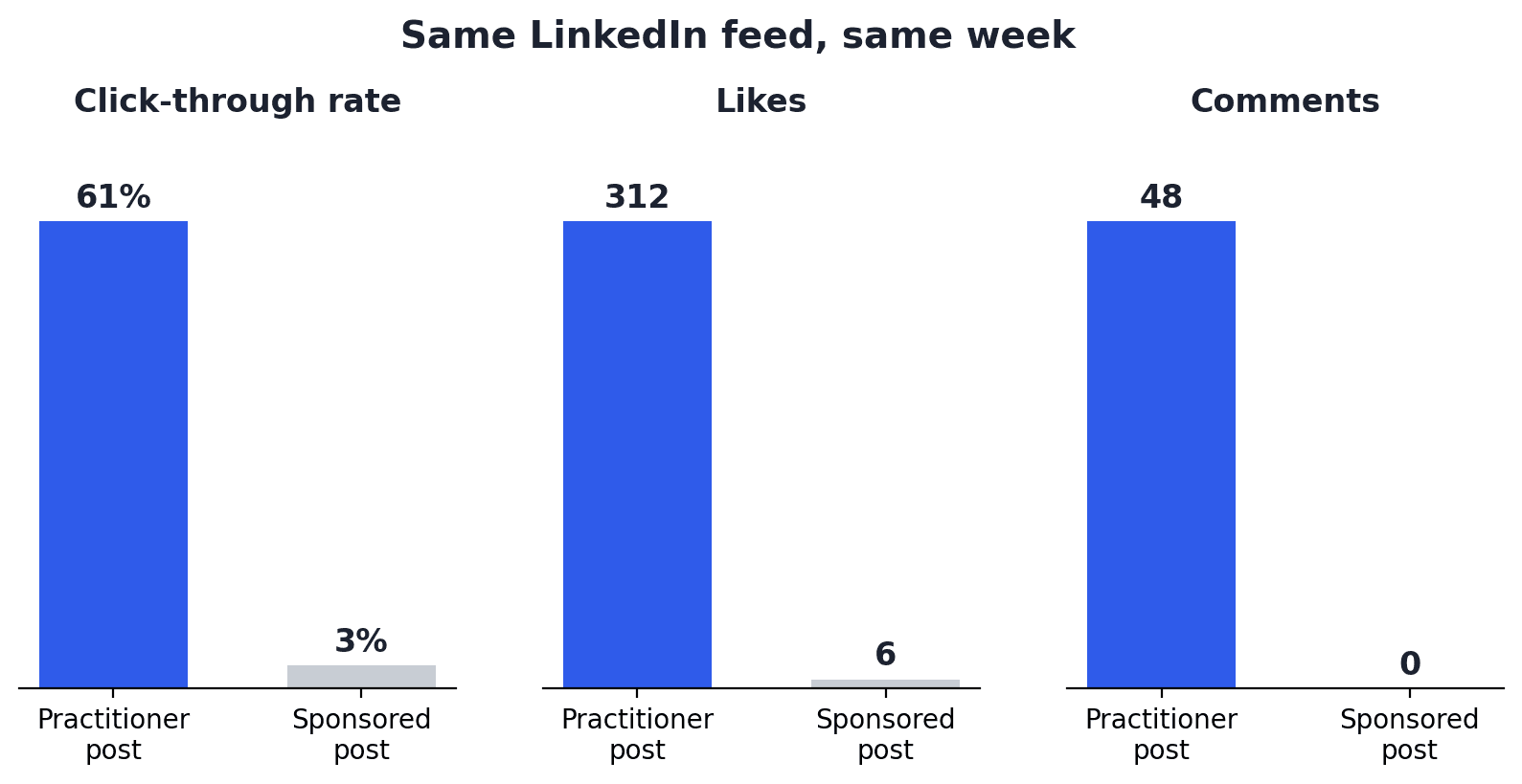
Same feed, same week: a practitioner's migration story against a sponsored ad.
The Rohit Ghumare post from that same developer relations engagement shows the same gap in one feed. The practitioner post drew 312 likes and 48 comments. The sponsored post beside it drew 6 likes and no comments. Eight months later, someone in r/devops linked the practitioner post as the answer to a question. Across the engagement, 218K monthly reach turned into 641 attributed signups.
What we found when we read the comments: size does not predict audience quality
Most micro influencer advice stops at "smaller creators have higher engagement." We wanted to know whether the people engaging are practitioners, because that is who converts.
Method. We took ranking tutorials for two DevTool searches, "opentelemetry tutorial" and "terraform tutorial for beginners," in US YouTube results. We pulled the top 20 comments on seven videos, excluding creators' own pinned comments, for 137 comments in total. A comment counted as a practitioner signal if it named the commenter's own task, project, job, exam or tool choice, or raised a specific technical point. "Great video" and "I'm learning Terraform" did not count.
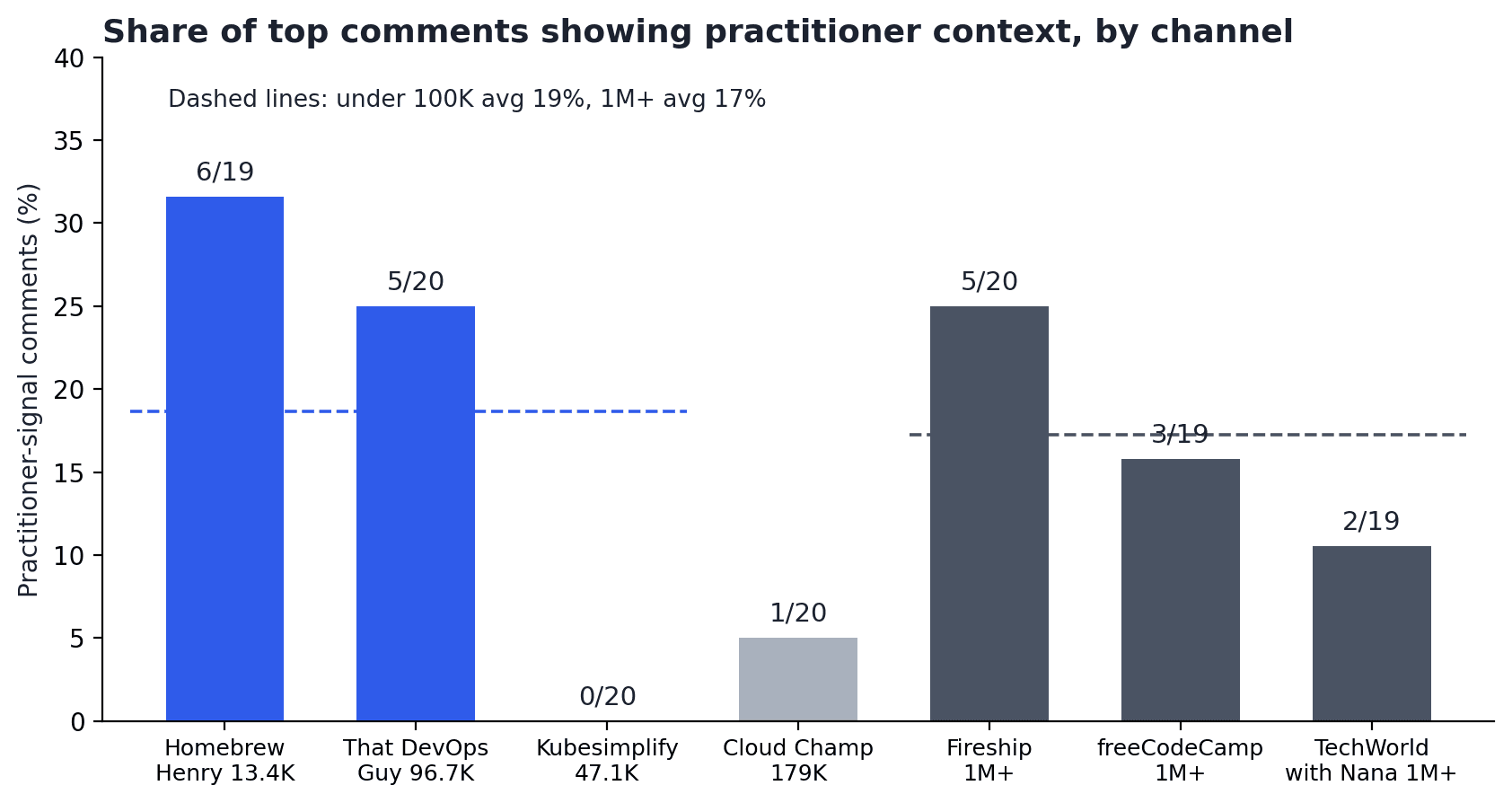
Share of top comments showing practitioner context, by channel. The spread inside each tier is larger than the gap between tiers.
Four patterns stood out:
- The tiers barely differed: Sub-100K channels came in at 11 of 59 comments (19%), and 1M+ channels at 10 of 58 (17%). The spread inside the small group, from 0 of 20 to 6 of 19, was far wider than the gap between groups.
- Problem-specific videos drew working engineers: On the OpenTelemetry logs video, commenters wrote about exporting metrics from e2e tests and getting a collector running after days stuck. One wrote, "Remaining Agnostic is a big thing for us!"
- Instructor-fronted beginner courses drew fans: On the 6-hour Kubesimplify course, 9 of the top 20 comments praised the instructor by name, and none described a work problem.
- One channel showed classic pod behavior: On the 179K channel, 9 of the top 20 comments came from three accounts, most of them emoji-only.
For a buyer of micro influencer marketing, this changes the selection process. The tier tells you where to look. The comments tell you whether to pay. David Walsh's own estimate for LinkedIn matches what we saw: after a 60-post campaign, roughly 80% of engagers are poor fits and 20% are real ICP. Your job is to find creators whose 20% is larger.
Why DevTools need a different micro-influencer design than general B2B SaaS
A SaaS creator can explain a workflow tool with screenshots. A DevTool creator has to install it, authenticate, hit an error and keep recording. That makes four design choices different.
Your onboarding is part of the campaign
Everything between npm install and first output happens on camera. Before any creator gets access, have an outsider run your quickstart cold on a clean machine. If they stall, fix it first. If the feature a creator wants to show sits behind a sales call, the video cannot be made. Weak product documentation sinks more DevTool creator campaigns than weak creative does.
The buying committee is split across platforms
The developer who evaluates, the platform lead who recommends and the CTO who signs rarely read the same feed. Edelman and LinkedIn report that more than 40% of B2B deals stall due to internal misalignment within buying groups. Map one creator format to each seat:
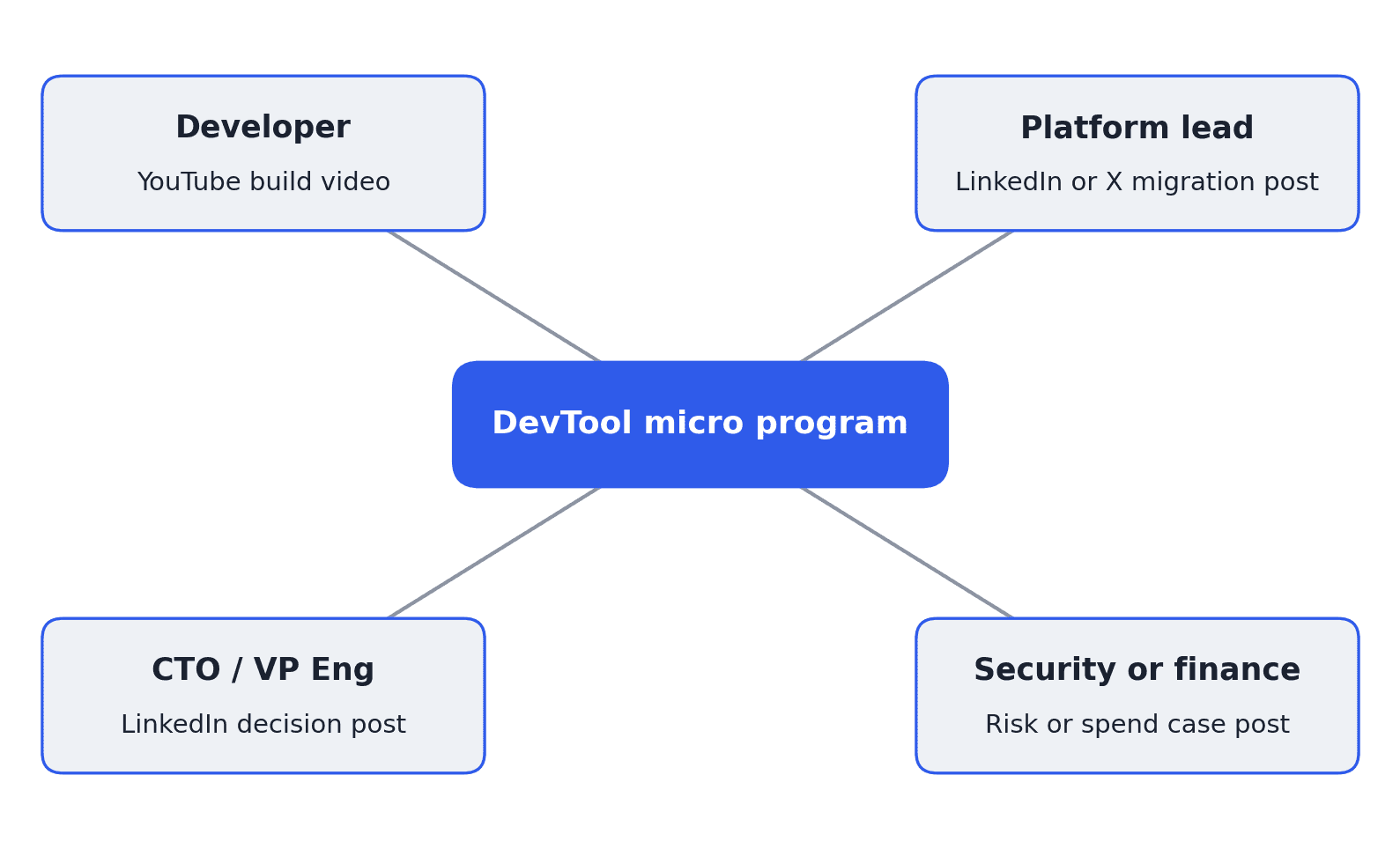
| Buying seat | Where they form a view | Micro format that fits |
|---|---|---|
| Developer or engineer | YouTube, GitHub, X | 8 to 12 minute build video |
| Platform lead or staff engineer | LinkedIn, X, Discord | "What I migrated last week" post or thread |
| CTO or VP Engineering | LinkedIn, newsletters | Decision post with tradeoffs and cost |
| Security or finance (hidden buyer) | LinkedIn, peer Slack | Case-style post on risk or spend |
Our LinkedIn influencer marketing rules for DevTools cover the decision-maker side in more depth.
One creator format per seat in the buying committee.
Opinion is the asset, so the brief only sets claim limits
Walsh says briefs come back with no edits nine times out of ten when the brand lets creators write, and the posts that fail are the ones where the brand dictated the words. A DevTool brief should cover what the product does, what it does not do, which comparisons would be unfair, and what is embargoed. Then stop.
Communities count as channels even without follower counts
On Reddit, Discord, and GitHub, standing is earned per community. Ogilvy found 55% of users prefer engaging with creators in private, curated spaces. Its social trends team describes the winning move as showing up in many small rooms instead of one big stage, and expects growth in large micro-creator programs.
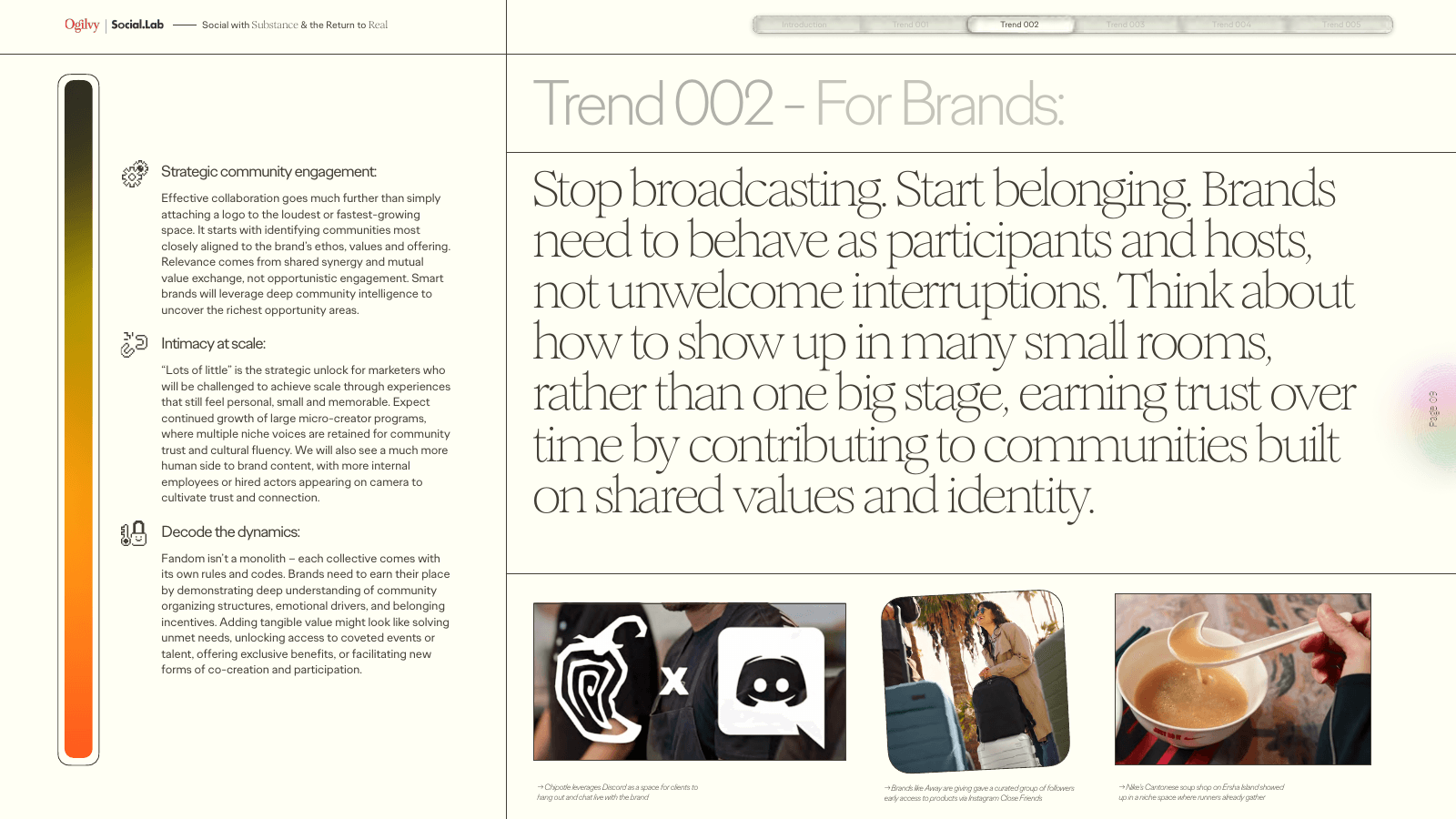
Ogilvy Social.Lab, Social Trends 2026: "lots of little" and the growth of micro-creator programs.
If your category argues on Reddit, our Reddit marketing work runs that side without burning accounts.
How to choose micro creators: a five-part scorecard
Finding the right creators is the hardest part of the job. In the TopRank survey reported by MarketingProfs, 48% of B2B marketers named identifying and qualifying creators as their top challenge, with measuring results close behind at 47%.
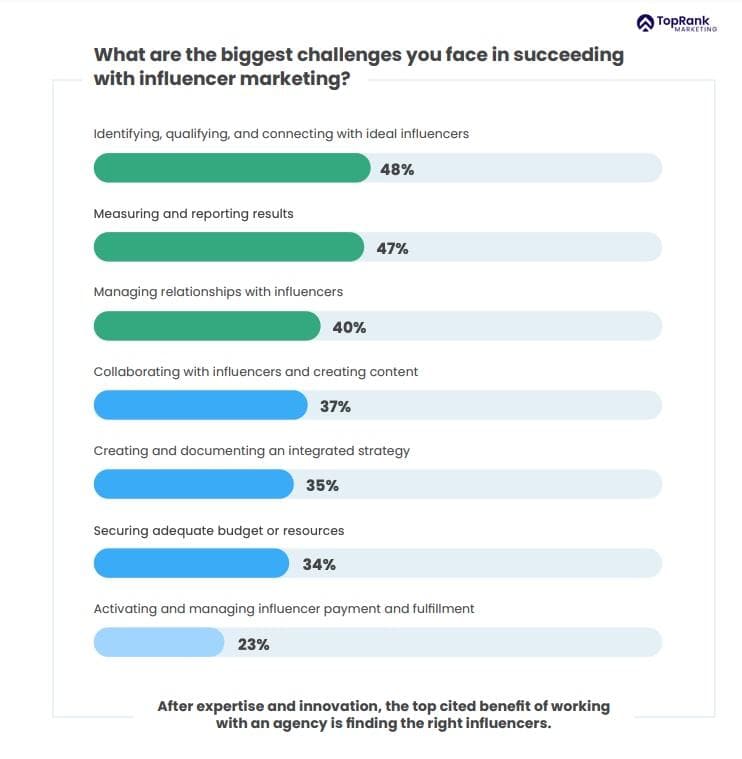
Top challenges in B2B influencer programs. TopRank Marketing survey of 404 US B2B marketers, via MarketingProfs.
Score each creator from 1 to 5 on each line, apply the weights, and drop anyone under 15 in total.
| Criterion | What to check | Weight |
|---|---|---|
| Creator-problem fit | Do 3 of their last 10 posts cover your buyer's problem? | x2 |
| Audience evidence | Practitioner signals in 20 recent comments (aim for 5 or more) | x2 |
| Problem-first format | Content leads with the task, not the personality | x1 |
| Sponsorship load | Paid posts in the last 30 days, and any competitor partnerships | x1 |
| Reachability | Replies within a week, and a clear rate card | x1 |
Red flags include repeated commenters posting emoji, engagement that arrives in the first ten minutes and then stops, and a feed where every second post is sponsored. Nick Bennett calls creators who post about products they have never used the biggest risk in the category.
Screening at this depth takes time. We screened more than 200 creators to build the roster for a single DevTool engagement. If you would rather not build that pipeline, Infrasity's B2B influencer marketing service sources and vets creators across YouTube, LinkedIn, X and Discord, and shares the full roster and budget before anything is briefed.
How Infrasity runs micro influencer programs end to end
That screening is the job our Influencer OS carries. We offer a roster that holds thousands of vetted creators with platform, niche, subscriber count, average views, and cost on every row, so you can see the spread inside a niche before you book anyone.
You start by picking your niche. Choose the one your buyers sit in, Software Dev, Data Analytics and Engineering, or AI and Agents, then filter to the micro band, and you get the shortlist of creators who already publish to that audience at that size.
From there, we run the rest of it: outreach and rate negotiation, product access and claim briefs, the posting rotation, per-creator UTMs, and a report at 90 days that says which creators produced pipeline. You approve the shortlist; we handle everything behind it.
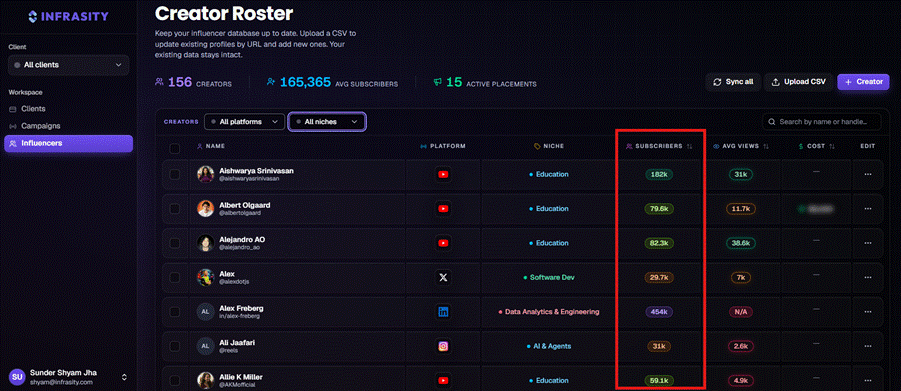
The Infrasity creator roster. Filter by niche, then by subscriber band, to build a micro shortlist for your category.
See the live roster at infrasity.com/InfluencerOS/influencers.
How to structure and budget a first micro influencer program
Go wide first, then concentrate on what works. Walsh's advice for a first program is more surface area, not bigger names.
A 12-week plan with rotation
- Weeks 1 to 2: source and vet: Build a long list of 40, score them, and book 15 to 20.
- Weeks 3 to 4: product access and briefs: Every creator gets a working account and a claims brief.
- Weeks 5 to 12: rotate: One creator posts per working day, so each posts about once a month and the brand stays in the feed. Walsh suggests a three-post arc per creator: the problem, a tactical walkthrough, then a follow-up.
- Week 12: amplify winners: License the two or three best posts and run them as paid ads from the creator's handle.
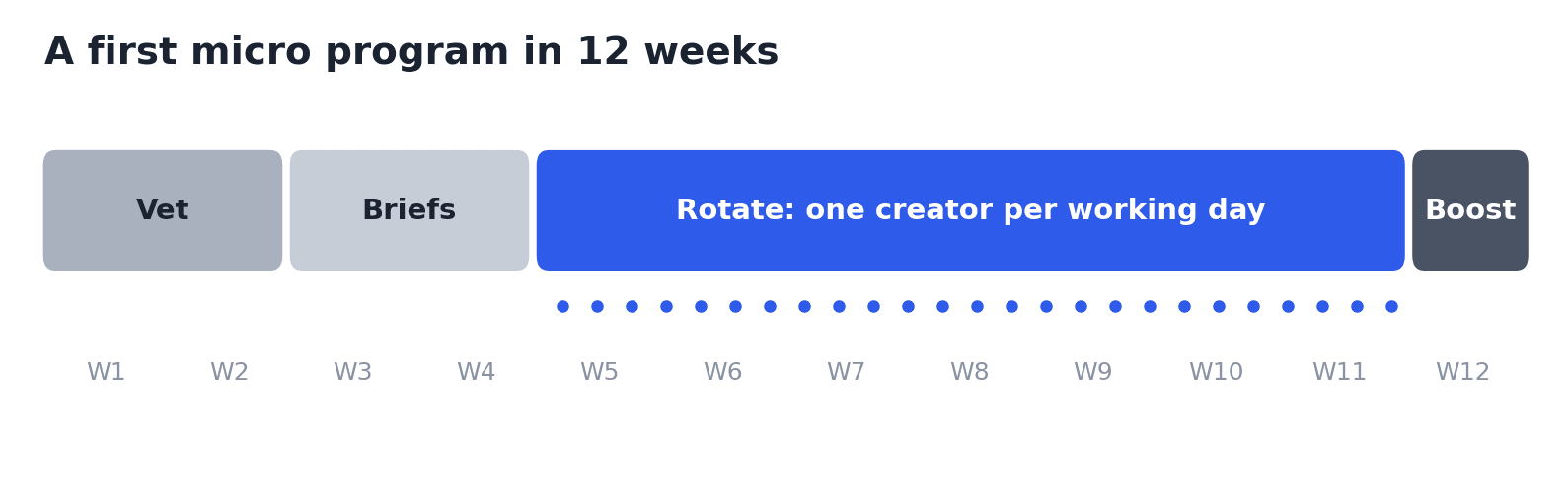
A first micro program: 15 to 20 creators, one post per working day, winners amplified in week 12.
Variety pays for itself. Ogilvy cites Meta data showing that campaigns with more than 20 creative executions can cut incremental CPA by 29%, and twenty creators give you twenty voices. What they post matters as much as who posts. Gerhardt's warning applies here: give the audience something worth clicking, such as a free tier, a template or a working repo. A link to your blog post is not enough.
What it costs
For LinkedIn creators with 15K to 30K followers, Walsh quotes roughly $500 to $1,000 per post, so sixty posts over three months run $30K to $60K. A smaller DevTool test with 8 to 12 creators fits in the $3K to $15K range we see most often for pre-seed to Series B teams. Licensing for paid use costs extra, so put it in the first message. The Trade Hounds team found that leaving it out causes most of the back-and-forth with creators.
Break-even check: program cost divided by (ACV multiplied by gross margin). At a $40K ACV and 80% margin, a $45K program needs 1.4 deals. That is why B2B micro programs survive weak attribution.
How to measure whether micro influencers converted
Most of the effect happens before anyone fills in a form. In 6sense's 2025 buyer research, 94% of buying groups ranked preferred vendors before first contact, and they bought from that favorite 77% of the time. Creator content works in that silent phase, so plan measurement in layers:
- Self-reported attribution: Add a "how did you hear about us" field with creator names as options.
- Per-creator UTMs and codes: One link per creator per post.
- Day-of traffic: With one creator per day, traffic spikes map to people.
- ICP engager lists: Pull who engaged, filter by title and company, and hand the 20% that fit to sales for a light follow-up.
- Pipeline influence at 90 days: Tag opportunities where a contact engaged with creator content, and report a range rather than a point estimate.
Nick Bennett calls funnel conversion rates the most underused metric in this category. Compare demo-to-close rates for creator-touched accounts against the rest. If you also care about how AI assistants describe your product, our AI answer visibility work tracks that alongside creator programs.
When micro influencer marketing is the wrong call
- Before product-market fit: Walsh sees Series A and later as the usual starting point. Creators amplify love for a product; they cannot manufacture it.
- Category creation: If buyers do not yet have a word for your category, you need larger voices or a concentrated launch day first.
- One-off posts: Bennett's warning holds: a single burst of posts fades within a day or so if nothing follows it.
- No self-serve path: If a creator cannot reach a working demo without a sales call, the content cannot be honest.
For the full list of how these programs break, see the eight failure modes we see most in B2B influencer campaigns.
What to do to start a micro influencer program?
You now have the mechanism, the evidence, a scorecard, and the budget. The first step takes just a few hours: list 20 creators your buyers already follow, read 20 comments on each creator's latest relevant post, count the practitioner signals, and book the five who score highest.
If you would rather hand off sourcing, vetting, and per-creator attribution, see how Infrasity runs B2B influencer programs, or read the case studies first.
Frequently Asked Questions
How many followers does a micro influencer have in B2B?
Roughly 10,000 to 100,000 on a single platform. Nick Bennett describes the B2B sweet spot as 10,000 to 50,000. On LinkedIn, check posting history and comments before trusting the follower number.
How much do B2B micro influencers charge?
For LinkedIn creators with 15K to 30K followers, expect roughly $500 to $1,000 per post. Rights to run the post as a paid ad cost extra. DevTool YouTube integrations vary more with production time.
Should I start with nano or micro influencers?
Start with nano if buyers search for specific implementation tasks and small channels already rank for them. Start with micro if buyers form opinions in LinkedIn, X, or YouTube feeds.
Do micro influencers work for enterprise deals with long sales cycles?
Yes, if you measure influence rather than last click. Buying groups usually rank vendors before contacting any of them, so track creator-touched opportunities over 90 days or more.
Should micro creators write their own sponsored posts?
Yes. Give them a claims boundary covering what the product does, what it does not do, and what is embargoed. Brands that dictate the wording get posts that fall flat with technical audiences.
How many micro creators should a first campaign use?
Eight to twelve for a small test, or 15 to 20 for a three-month rotation. Fewer than eight leaves too few experiments to tell a weak creator apart from a weak message.