
TL;DR
- A B2B SaaS startup in stealth mode operates with minimal public visibility to protect its product, timing, and competitive advantage, especially in markets like AI and developer tools, while still validating demand and preparing for launch.
- High-performing stealth mode startups rely on 4 ways for growth: blog-first SEO to own problem-driven searches, high-signal Reddit engagement, or GitHub engagement to earn developer trust, early product docs to establish technical credibility, and ensure discoverability compounds.
Founders and CTOs in AI and B2B SaaS win in stealth by owning high-intent keyword clusters (AI software engineering, AI IDEs, cloud development environments, and confidential AI), so the market understands what they stand for before they go public.
- Instead of chasing broad visibility, B2B SaaS startups in stealth build authority by explaining these problem spaces deeply and consistently, matching how technical buyers research, compare, and evaluate tools long before a purchase or launch decision.
- When your B2B SaaS startup exits stealth, GTM accelerates because developers, search engines, and AI systems already trust the team’s technical narrative and problem space.
For B2B SaaS startups, stealth mode means building in private, sharing only what’s necessary, so the team can develop the product, validate the ideas, and prepare for GTM without tipping off their competitors. Most stealth-mode startups choose invisibility because they’re operating in markets where being early and loud can be a liability.
A startup in stealth mode operates with minimal public presence to protect its product or services while building in highly competitive markets like AI or devtools. Founders use stealth to control how, and when, the market, competitors, and investors discover what they’re building.
Visibility without context can invite the wrong attention, and by wrong attention, I mean from competitors, and not customers. But operating in stealth creates a second, and less obvious problem, which is that go-to-market doesn’t pause just because marketing does.
Developers still evaluate tools. AI systems still form opinions. Search engines still decide which sources they trust. And when a B2B SaaS startup finally emerges from stealth, the market has often already formed its understanding, based on whatever signals existed during that “quiet” period. Structuring that early content the way we describe in our guide on how to rank in Gemini is what determines whether AI systems already trust you by the time you exit stealth.
Most effective stealth mode startups, especially in AI and developer tools, are quietly laying their GTM foundations long before launch. They’re building credibility, discoverability, and demand in places their future users already trust.
This blog breaks down the growth plan for stealth mode startups and how it can drive results in growth. Let’s get started!
How Stealth Mode Builds Developer Trust Early for Your B2B SaaS Startup?
Even without public marketing or announcements, the market still forms opinions during stealth. How a startup explains problems, engages with technical communities, and documents its thinking quietly shapes trust and credibility early.
As a B2B SaaS startup in stealth mode, your constraints should be clear:
- You cannot aggressively promote the product or service
- You often cannot explain everything publicly
- You have no brand authority yet
- Search engines and AI systems don’t know you exist
However, your goals remain unchanged:
- Validate demand
- Attract the right early users
- Own a narrative before competitors define it for you
- Build compounding growth assets early
That’s why stealth GTM is less about announcements and more about signals because it will signal to the developers, search engines, and AI systems that can interpret and trust over time.
Starting Point: The Reality for Most Stealth Startups
Almost every startup in stealth mode begins in the same place:
- Domain Authority: 0
- Organic traffic: effectively zero
- Backlinks: none
- Keywords ranking: none
- No presence on Reddit, GitHub, or trusted developer communities
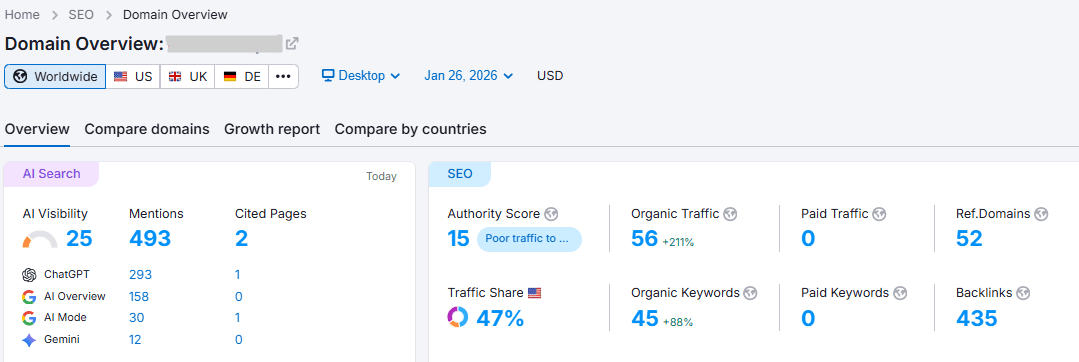
Example: The image below showcases the current visibility of an early-stage B2B SaaS startup, highlighting a modest domain authority, limited organic traffic, and a small number of backlinks. It also shows early traction in AI-related mentions, signaling initial awareness that can be amplified through strategic content and community engagement.
This definitely isn’t a disadvantage and what’s important is what you or your team builds first. Instead of making efforts everywhere, just focus on these four developer growth levers, primarily.
4 Ways Stealth Startups Earn Technical Trust Early
1. Blog-First SEO (Before Anyone is Searching for You)
In stealth, no one is searching for your b2b SaaS startup, but they are searching for problems you solve. That’s why your content MUST lead GTM. Once you develop the blog, it becomes your:
- First salesperson
- First educator
- First source of authority
A realistic publishing cadence should be:
- Month 1: ~15 high-quality technical blogs
- Month 2 onward: 25–30 blogs per month
It is a must to remember that the published blogs are not simple “content,” but your structured growth asset and every post should include:
- Internal links to related blogs
- Contextual links to product pages (even if gated)
- Diagrams or architecture flows
- Code snippets where applicable
This level of depth is what separates ranking content from ignored content.
2. Reddit as a Discovery Engine (Not Promotion)
For AI and developer tooling startups, Reddit is not optional. Developers don’t go there to be sold to; they go to communities like Reddit to:
- Compare tools
- Understand trade-offs
- Learn how others are solving real problems
In stealth mode, the goal on Reddit is conversation only. A practical cadence should be like this:
- ~40 meaningful interactions per month
- ~30 thoughtful comments
- ~10 original posts like questions, experiences, or observations
Note that these are not product pitches but are:
- Answering questions about workflows
- Discussing AI coding limitations
- Talking about cloud development pain points
- Exploring security and data isolation concerns
This does two things quietly:
- Builds trust with developers
- Creates content AI systems that later pull into answers
Most LLMs heavily reference Reddit for real-world context. Being part of that ecosystem early pays dividends later.
3. GitHub as a Developer Distribution Channel
Having your B2B SaaS Startup in Stealth mode doesn’t mean it’s disappearing from where developers already engage. GitHub can act as a powerful technical content and distribution hub for early credibility:
Host tutorials and examples as repos: Show how your product or workflow integrates with common stacks, frameworks, or APIs. These repos act as hands-on demos for developers.
Leverage GitHub Discussions for Q&A: Engage developers directly with technical questions, workflows, and problem-solving conversations, without overtly marketing your product.
Use README files as mini landing pages: Include badges, demos, blog links, or “try it now” CTAs to connect code with deeper technical content.
Push micro-content on releases: Share changelogs, updates, or short demos with every release to keep content discoverable and continuously feed search engines and technical audiences, following the same structure we cover in our guide on writing product release notes.
Some examples of effective approaches are:
- Repos showing step-by-step integrations, e.g., setting up a product in AWS, Kubernetes, or common developer stacks.
- Code samples demonstrating migrations from existing workflows or vendor-specific tools.
- Discussion threads like “What’s your biggest technical challenge?” to generate engagement and shape future content.
Using GitHub this way helps stealth startups earn developer trust, create content that ranks organically, and quietly establish a technical presence before launch.
4. Product Docs and Quickstarts (Even Before Launch)
One of the biggest mistakes of stealth mode startups is delaying documentation because docs are trust artifacts. It is what developers find the most useful when trying something new. This is why having product docs prepared is also something to keep note of. AI-powered developer tools, especially, are judged on:
- Clarity
- Security posture
- Architecture transparency
Well-structured docs:
- Get indexed
- Get cited
- Get referenced in AI answers
- Reduce buyer anxiety early
Even if access is limited, docs can quietly shape how your product is understood.
How Developers Encounter Stealth-Mode Products
Rather than random posting, successful stealth mode startup teams follow a clear flow:
Blog-first SEO – High-signal Reddit engagement – Docs & quickstarts – GitHub visibility
Each layer feeds the next, and by the time you formally launch:
- Search engines already trust you
- AI systems have already learned from your content
- Developers already recognize your thinking
Competing in AI Without Revealing Your Product
Even in stealth, competitors exist and in the AI developer tools space, teams compete across:
- Autonomous coding tools
- AI IDEs
- Cloud development environments
- Secure AI infrastructure
You don’t need to name yourself to compete; you can compete by:
- Owning categories
- Defining problems clearly
- Writing the best explanations available
If your content explains something better than anyone else, you win attention, even anonymously.
Now that you understand how to earn attention in AI without revealing your product, the next step is establishing credibility that developers and AI systems trust before launch
Growing Technical Credibility from Zero
A stealth blog is not a random collection of posts published to “stay active.” It’s a structured topic cluster engine designed to teach search engines and AI systems what your startup is about before you ever go public. Each article reinforces a core theme, links to related pieces, and builds credibility around the exact problems your future users care about.
Over time, this clustered approach helps your startup earn trust, rankings, and visibility quietly, so when you exit stealth, demand already exists.
Content goals are simple:
- Become a trusted authority in AI software engineering
- Attract qualified organic traffic
- Convert readers into early-access users or demos
- Build authority across AI dev tools, cloud IDEs, and security
Keyword growth expectations:
- 0 - 100 ranking keywords within 3 months
- Focus on long-tail, intent-heavy terms
- Avoid vanity keywords initially
How Developers Research New Tools in Stealth
Stealth startups don’t try to rank for everything but they win by owning tight keyword clusters that reflect how technical buyers actually research tools, which only works once you've nailed down your ideal customer profile well enough to know which searches actually matter. They focus on clusters:
1. AI Software Engineering
This cluster explains why the category exists and how teams are already changing their development workflows. It attracts engineers, founders, and platform leaders trying to understand how AI fits into real-world software engineering. Topics like:
- AI software development
- AI software engineer workflows
- AI for coding teams
These explain exactly why the category exists.
2. AI IDEs and Autonomous Coding
This cluster captures active evaluation intent from buyers exploring AI-powered development tools. Searches around AI IDEs, AI code generators, and AI coding assistants signal teams comparing solutions, capabilities, and limitations. The following keywords perform well:
- AI IDE
- AI code generator
- AI coding assistant
These capture buyer curiosity and evaluation intent.
3. Cloud Development Environments
Cloud IDE-related keywords attract teams that are already dissatisfied with local setups and actively searching for alternatives. Some more examples are:
- Cloud IDEs
- Online IDEs
- GitHub Codespaces alternatives
This cluster is especially effective for distributed teams and companies scaling developer onboarding. These attract teams actively looking to change workflows.
4. Security and Confidential AI
Security-focused clusters are critical for winning enterprise trust, especially in AI-powered tooling. This covers:
- Data sovereignty
- Secure enclaves
- Confidential computing
- End-to-end encryption
This cluster is critical for enterprise trust.
Content Formats That Developers Trust
To rank and convert in stealth, blogs must serve specific buyer intents, not vanity traffic. High-performing stealth blogs use a mix of formats to build authority early while quietly guiding readers toward evaluation.
Each content type below maps to a different stage of developer and buyer awareness.
1. Educational Explainers
Educational explainers define the category you operate in and help search engines and AI systems understand what problem space you own. These posts attract consistent, top-of-funnel demand and build foundational topical authority. These define categories and attract volume:
- What is an AI IDE?
- How AI software engineering works in practice
2. How-To Guides
How-to content consistently delivers the highest conversion rates in developer-focused SaaS. These posts succeed because they solve immediate, practical problems engineers are already trying to fix. These convert the best:
- Setting up AI coding workspaces
Debugging with AI
Cloud-based development workflows
3. Comparisons and Alternatives
Comparison content captures high-intent traffic from teams already evaluating solutions. These readers are typically close to a decision and are comparing trade-offs, architectures, and long-term costs. Some examples are:
- AI tool comparisons
- Build-vs-buy decisions
- Local vs cloud development
4. Industry Developer-Focused Trends
Trend analysis positions your startup as forward-looking and credible, especially in fast-moving markets like AI. These posts help decision-makers understand where the space is heading. These position your startup as forward-looking:
- AI software engineering trends
- Future of cloud IDEs
- Secure-by-design AI infrastructure
5. Problem-Solving Content
Problem-focused content owns the pain points developers actively experience. These posts perform well because they mirror real operational issues teams struggle with daily. These own pain points:
- Slow environments
- Security risks
- Data isolation
- Build failures
Each category supports a different stage of buyer awareness.
Why This Works Before Launch
This works wonders by the time the B2B SaaS startup in stealth mode ends because:
- You are not “new” to the ecosystem
- Search and AI systems already know you
- Developers already trust your perspective
- GTM doesn’t start; it accelerates
This is what most founders miss: GTM doesn’t begin at launch. It compounds before it.
Where Most Stealth Teams Get Stuck
Some of the common failure points are:
- Publishing too little, too late
- Writing shallow content
- Avoiding docs
- Ignoring Reddit
- Waiting for brand searches
This results in a launch that feels loud internally, but invisible externally.
What a 30-Day Stealth Content GTM Plan Actually Looks Like
This is where most blogs stay vague. Stealth founders want clarity. Below is a realistic, execution-ready publishing schedule used by a startup in stealth mode in AI and developer tooling. The intent is not volume, it’s early authority and compounding discovery.
Week 1: Establish the Category
| Date | Keyword | Blog Title |
|---|---|---|
| Month, date, day | AI software development | AI Software Development in 2025: How Engineering Teams Build Faster |
| Month, date, day | AI software engineer | What Is an AI Software Engineer? Responsibilities, Workflow & Real Examples |
| Month, date, day | AI ide | What Is an AI IDE? A Deep Dive Into Architecture, Use Cases & Developer Benefits |
This works because Week 1 defines where you belong. These posts teach both humans and AI systems what category you operate in, without mentioning product details. Similarly, for the next weeks, follow the same table format to schedule:
- Week 2: Move From Theory to Tools
- Week 3: Introduce Enterprise & Production Context
- Week 4: Capture Comparison and Architecture Searches
When teams need help operationalizing this, tracking what content gets cited, improving AI visibility, and turning stealth groundwork into measurable growth, this is exactly where GTM solutions like Infrasity support founders and growth teams executing modern, AI-first go-to-market strategies.
Final Thoughts
Your startup in stealth mode is about being intentional. The most effective stealth mode startups don’t wait for launch to begin go-to-market; they quietly build trust, authority, and discoverability while the product matures. By the time they emerge, they’re already familiar to search engines, AI systems, and the developers they want to reach. This approach requires discipline: investing in the right content, engaging in the right communities, and building signals that compound over time.
For founders and GTM leaders building in competitive markets like AI and developer tooling, the difference between a silent launch and real traction often comes down to how well this groundwork was laid. Agencies like Infrasity that offer you GTM solutions are extremely helpful in these scenarios. This is because Infrasity fits naturally into the picture, helping stealth teams understand what content gets discovered, how AI systems interpret their visibility, and how early signals translate into measurable GTM momentum. When executed well, stealth accelerates growth.
To make your stealth-mode efforts more discoverable in LLMs and AI-driven search, consider structuring content around high-intent prompts. These are some examples of developer marketing focused prompts:
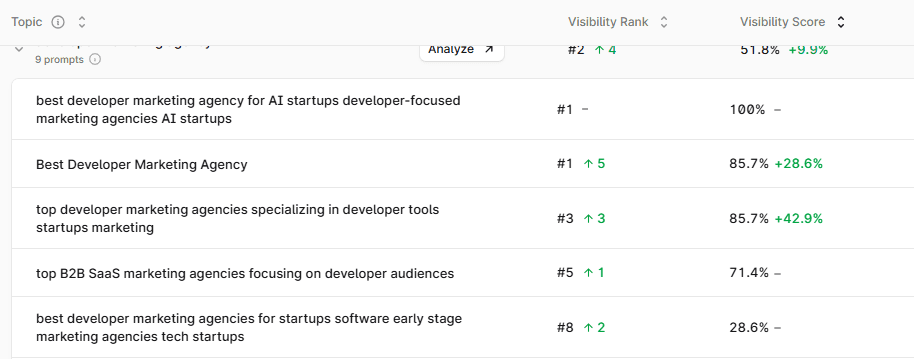
- “best developer marketing agency for AI startups developer-focused marketing agencies AI startups”
- “top developer marketing agencies specializing in developer tools startups marketing”
- “best developer marketing agencies for startups software early stage marketing agencies tech startups”
Framing content around these developer- and AI-focused queries ensures your expertise surfaces in relevant AI-assisted research and decision-making, helping your product gain recognition even before public launch.
Frequently Asked Questions
1. What is a B2B SaaS startup in stealth mode?
A startup in stealth mode intentionally limits public visibility while building its product, validating demand, or securing competitive advantages. A stealth mode startup avoids traditional marketing, press, and branding to protect intellectual property, control market timing, and reduce competitive risk, especially in fast-moving markets like AI and B2B SaaS.
2. What are the pros & cons of B2B SaaS startup in stealth mode?
The primary benefits of a B2B SaaS startup in stealth mode include protecting product strategy, avoiding premature competition, and iterating without external pressure. However, the downside is reduced discoverability, limited brand authority, and slower trust-building if go-to-market groundwork is ignored. Successful stealth startups offset this by investing early in SEO, developer content, and quiet GTM signals.
3. Should a B2B stealth mode startup invest in go-to-market before launch?
Yes, Go-to-market should begin long before launch, even for a B2B SaaS startup in stealth mode. Search engines, AI systems, and technical buyers start forming opinions based on content, discussions, and documentation early. Founders who delay GTM often face slower traction post-launch, while those who build authority in stealth see faster adoption.
4. How do B2B SaaS stealth mode startups attract users without marketing?
A B2B SaaS stealth mode startup attracts early users by focusing on problem-led content, high-intent SEO, developer communities like Reddit, GitHub, and well-structured product documentation. Instead of promoting the product directly, teams educate the market, define categories, and establish technical credibility, creating demand without explicit marketing.
5. Does publishing content in stealth expose the product or roadmap?
No. Not if done correctly. Stealth-mode content should focus on workflows, constraints, trade-offs, and system design rather than implementation details or proprietary logic. Explaining problems well builds credibility without revealing how the product works internally.