
TL;DR
- Developer-focused teams struggle with distribution: Even good documentation and technical content often fail to reach developers if the doc isn’t completed or clear to understand.
- Developers discover tools while solving problems on platforms they already trust, platforms like Dev.to, HackerNoon, Medium, Stack Overflow, Hackernews, Reddit, and GitHub.
- Successful marketing developers strategies focus on publishing top-rated developer marketing content that solves real engineering problems rather than promotional messaging.
- Long-term growth comes from using the right content distribution channels where tutorials, examples, and discussions can be discovered repeatedly.
- This blog breaks down the 7 most effective developer marketing channels and how B2B SaaS teams can use these content marketing distribution channels to reach developers and drive adoption.
Distributing developer content is no easy task, and reaching developers calls for a more unique method. Many marketers have even pointed to visibility or distribution challenges as obstacles to developer content marketing success.
When it comes to places developers hang out, they are picky, but in platforms like Reddit, Github, etc they spend a lot of time there. A recent study shows that 25% of developers visit a website daily and 82% visit the website at least a few times per month. It is only natural for your developer-focused content to be discovered in such platforms.
But before we go ahead with this blog and discuss the best platforms for developer marketing, first, let’s understand one thing: distributing content only works when
The content is clear and complete. Once strong documentation and technical content exist, distribution becomes the multiplier. It’s what helps your tutorials, SDKs, and product updates get discovered, reused, and shared in the places developers already spend time.
If this is clear, let’s get started.
Best Platforms for Developer Marketing Channels to Use
1. Dev.to
Dev.to is one of the largest developer blogging platforms, built specifically for developers to share technical tutorials, insights, and programming experiences.
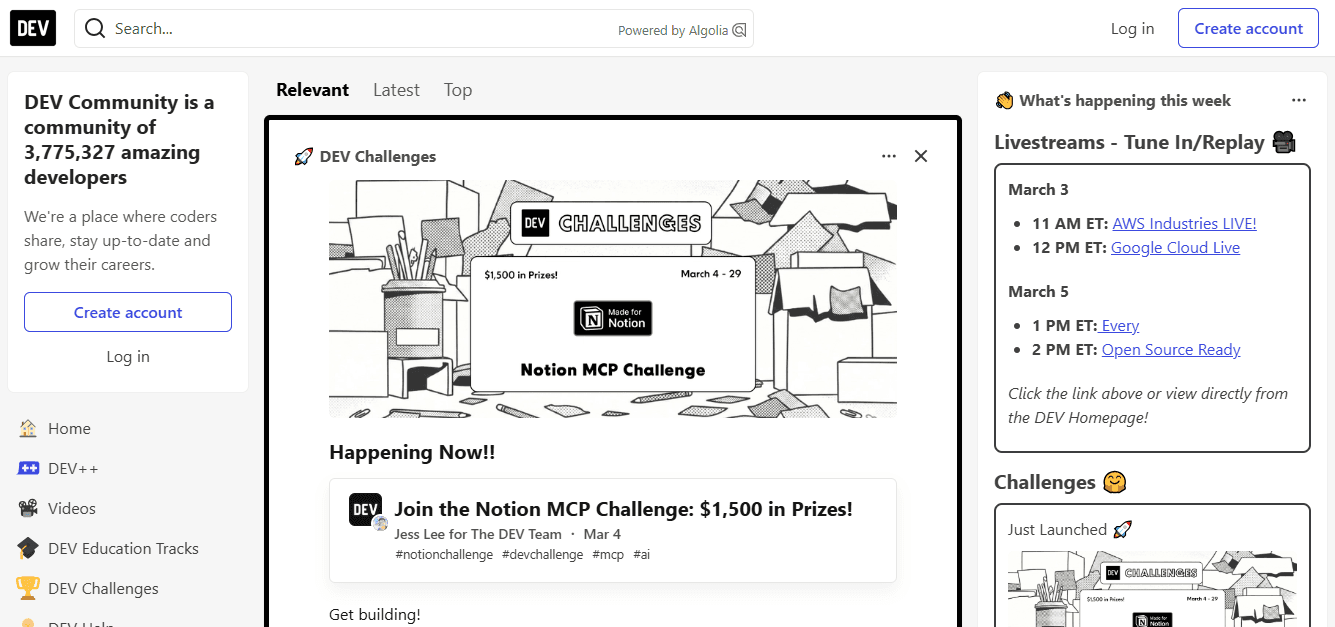
The platform has a strong discovery engine as posts are surfaced through tags, trending feeds, and newsletters, which helps technical content reach a large developer audience even if the author has no existing audience.
Many developer-focused SaaS startups use Dev.to to distribute tutorials explaining how to build something using their tools.
For example, Supabase regularly publishes developer tutorials on Dev.to showing how to build full-stack applications with their platform. These tutorials walk developers through practical use cases such as building authentication systems, APIs, or databases.
Because the tutorials solve real development problems, they naturally introduce the product as part of the solution.
As shown in the image below, posts like this that resonate with the community often receive thousands of views and significant engagement, helping companies reach developers who may not yet know their product.
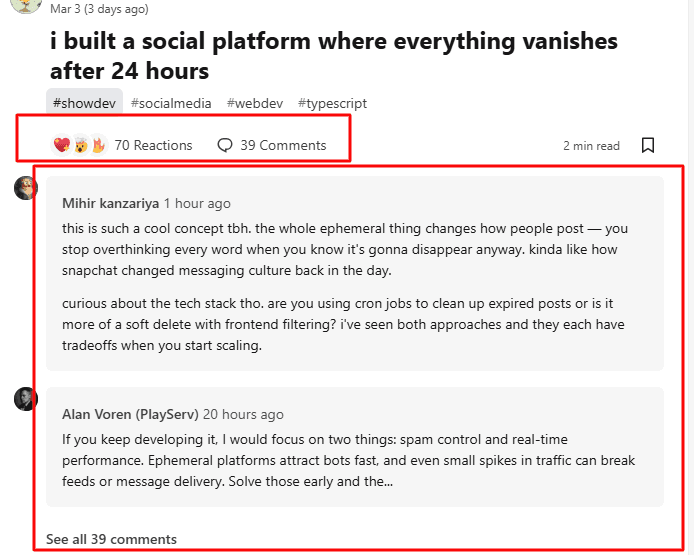
Another example is a code review platform, partnered with Infrasity and published tech content on Dev.to which, along with several other pieces of content, ended up ranking on SERP. The image below shows how the article was ranking in the 1st position on Google for the keyword “AI Code Review for Solution Architects”.

Pros:
- Built specifically for developer content
- Strong discovery through tags and trending feeds
- Technical tutorials perform very well
- Easy republishing of existing blog content
Cons:
- Highly competitive for attention
- Promotional posts perform poorly
- Requires technical depth to gain credibility
KPIs to Track:
- Article views
- Developer engagement (likes and comments)
- Followers gained
- Traffic to product documentation
- Developer signups
2. HackerNoon
HackerNoon is a developer-focused publication that distributes technical stories to millions of readers. Unlike community platforms such as Reddit or Hacker News, HackerNoon functions more like a curated technology magazine. Articles are edited, promoted, and distributed through newsletters and social channels.
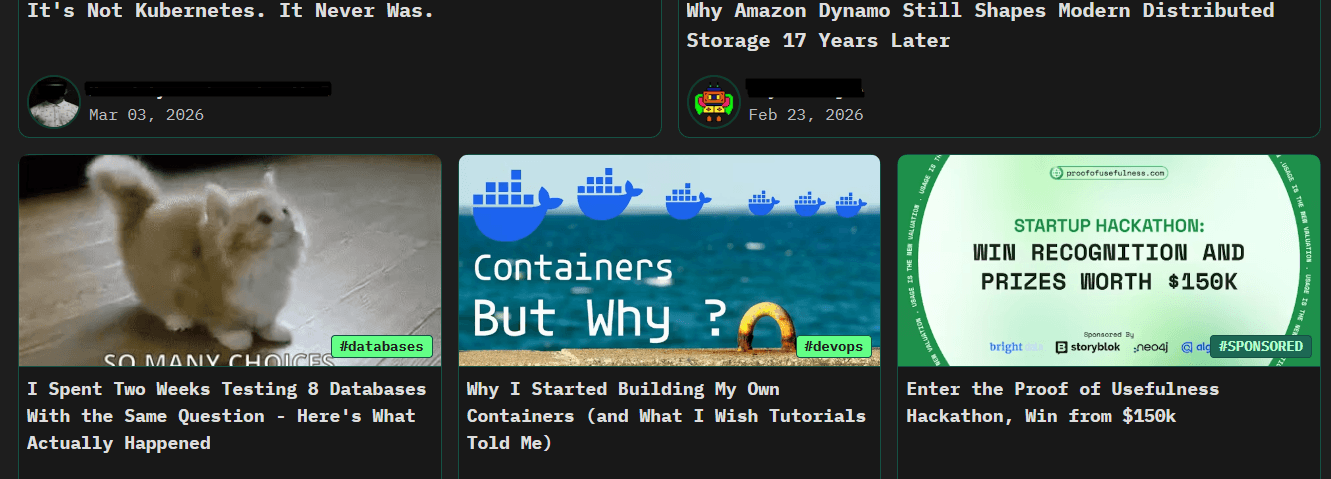
Many developer-focused B2B startups publish technical explainers, engineering stories, or product deep dives here. B2B SaaS startups building blockchain or developer infrastructure tools often publish technical breakdowns of how their product works, helping developers understand the underlying architecture.
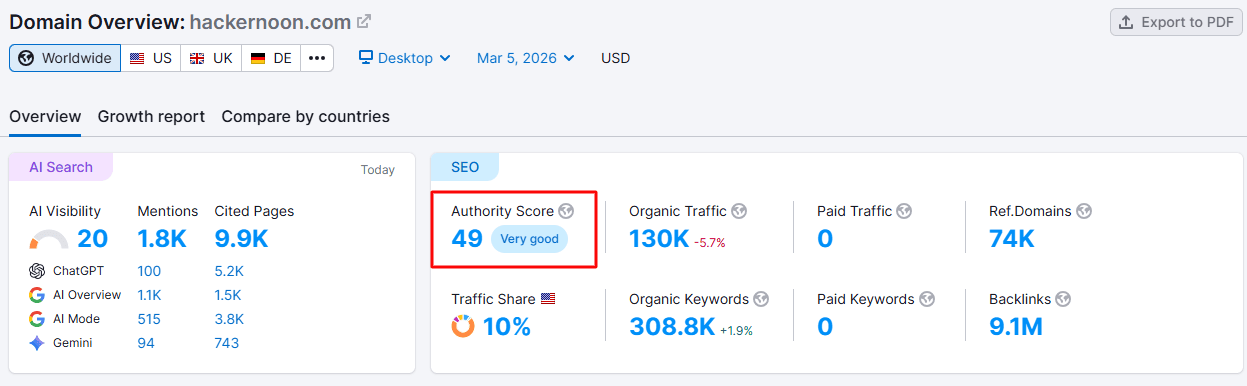
Because HackerNoon has strong domain authority, articles often rank in search engines and continue generating traffic long after publication.
Pros:
- Large technology readership
- Editorial promotion and curation
- Strong SEO visibility
- High credibility in developer communities
Cons:
- Editorial review process
- Less conversational than community platforms like Reddit
- Requires high-quality technical storytelling
KPIs to Track:
- Article reads
- SEO traffic
- Backlinks generated
- Newsletter engagement
3. Medium
Medium still remains one of the most popular content distribution platforms for distributing technical thought leadership and developer tutorials. Many B2B SaaS startups use Medium to publish dev-focused blogs, product development stories, and technical tutorials that explain how their technology works.
Because Medium has a Domain Authority of 97, articles can rank quickly in Google search results.
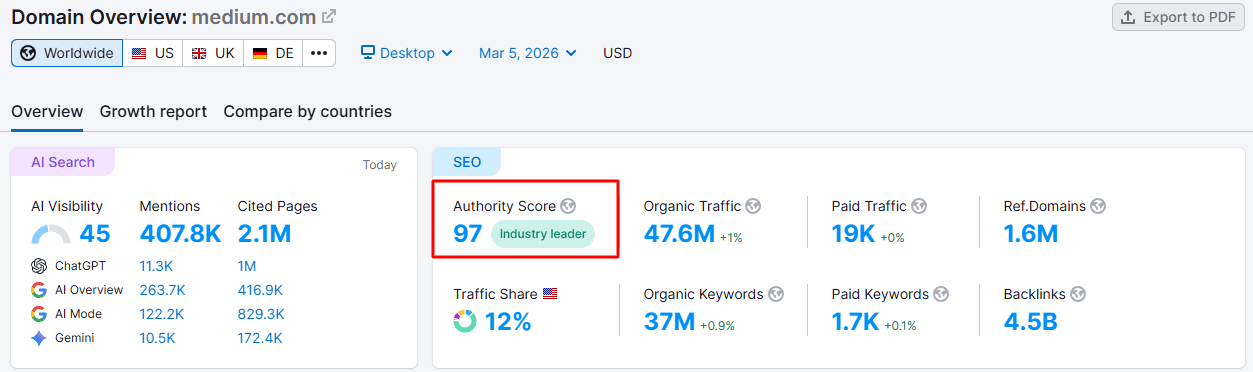
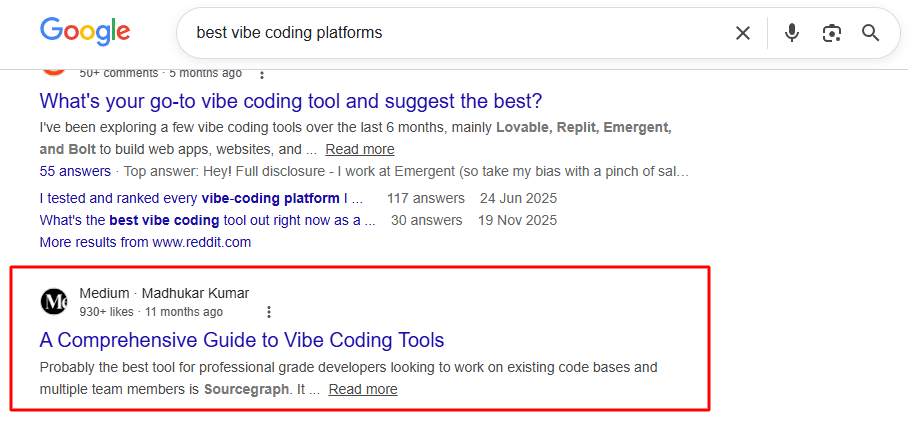
Example: Suppose you run a startup that focuses on vibe coding and want to kickstart your B2B SaaS startup’s visibility in both SERP and LLM platforms. Using platforms like Medium with an extremely high DA can help your startup gain the visibility it needs. The image below shows Medium ranking in 2nd position on SERP for the keyword “ best vibe coding platforms”.
Medium, therefore, works particularly well for:
- technical storytelling
- thought leadership
- SEO distribution
If you wish to start with Medium instead, make sure to personify your content to showcase your expertise in the topic. Share relevant personal stories and examples as well, so that readers can connect.
Pros:
- Strong search visibility
- Easy publishing
- Large built-in audience
Ideal for thought leadership
Cons:
- Limited analytics
- Harder to build a loyal following
- Frequent posting can get your account suspended
KPIs to Track:
- Article views
- Engagement in the articles
- Followers gained
- SEO and GEO rankings
4. Stack Overflow
Stack Overflow Developer Survey 2025 shows that 82% of developers visit the platform at least a few times per month, and about 25% visit daily. That makes Stack Overflow one of the highest-intent developer marketing channels available.
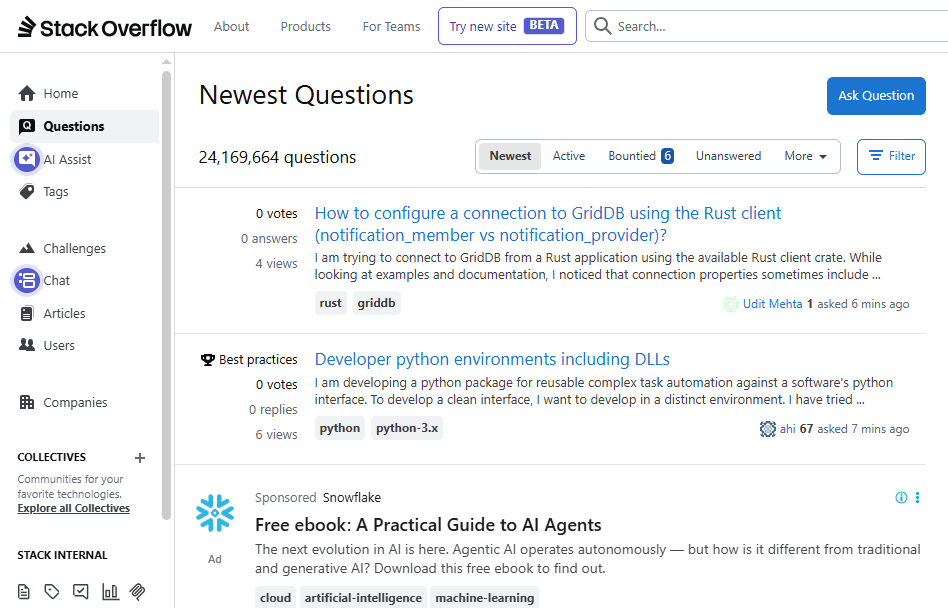
Developers arrive on Stack Overflow when they are actively blocked by an error, debugging an implementation, or possibly comparing approaches. This moment of intent is exactly when developer-focused content can have the most impact!
For early-stage B2B SaaS startups, the opportunity lies in providing authoritative answers that reference official documentation, SDKs, or repositories. When a developer encounters a recurring issue and finds a clear answer that links back to a startup’s docs, that answer can continue generating traffic for years because Stack Overflow threads rank highly in search results.
Microsoft uses Stack Overflow actively in discussions related to its technologies. Their developers and developer advocates provide detailed responses to questions tagged with technologies like Azure, AWS, or specific SDKs. These answers often include references to official documentation, which helps developers resolve issues while simultaneously driving traffic back to the company’s technical resources.
Over time, this approach builds technical credibility, long-term discoverability, and sustained developer adoption.
Pros:
- High-intent audience of developers solving real technical problems.
- Long-term visibility because well-answered questions continue ranking in search results.
- Builds technical credibility when engineers or DevRel teams contribute directly.
- Drives referral traffic to documentation, tutorials, and GitHub repositories.
Cons:
- Strict moderation against promotional or low-quality answers.
- Requires technical expertise and consistent engagement to be effective.
- Visibility depends heavily on upvotes, accepted answers, and correct tagging.
- Limited control over discussion direction or community responses.
KPIs to Track:
- Views on questions tagged with your product or technology.
- Click-through traffic from Stack Overflow to your documentation or site.
- Growth in questions and answers under your product tag.
Mentions or links from Stack Overflow that appear in search results.
5. Hackernews
Hacker News, operated by Y Combinator, is one of the most influential communities for developers, founders, and startup builders.
The platform surfaces content through community voting. If a post reaches the front page, it can generate massive visibility within the developer ecosystem. Many early-stage devtools startups have used Hacker News launches to gain early traction.
A good example to share is PostHog, an open-source product analytics platform. The team frequently shares product updates, technical write-ups, and launch posts on Hacker News. One of their launch posts reached the front page, generating a good number of organic visits, signups, and community feedback within hours. This type of exposure helps developer startups quickly validate ideas and attract early adopters.
Pros:
- Highly influential developer community
- Strong visibility if your developer content reaches the front page
- Excellent feedback from experienced developers
- Ideal for product launches
Cons:
- Extremely competitive platform
- Posts must be genuinely interesting or technical
- Promotional posts are often flagged
- Traffic spikes may be short-lived
KPIs to Track:
- Points per story
- Comment volume
- Ranking position over time
- Velocity of upvotes (time-to-front-page)
- Product signups from HN traffic
6. Reddit
Reddit, as everyone knows, is a place where anyone and everyone can discuss everything. It has quietly become one of the most powerful distribution channels for developers and B2B SaaS content. The platform is organized into thousands of niche communities or subreddits where developers actively discuss tools, share recommendations, and troubleshoot problems together. There are a lot of subreddits that devs use. So, yes, there’s a community for everyone.
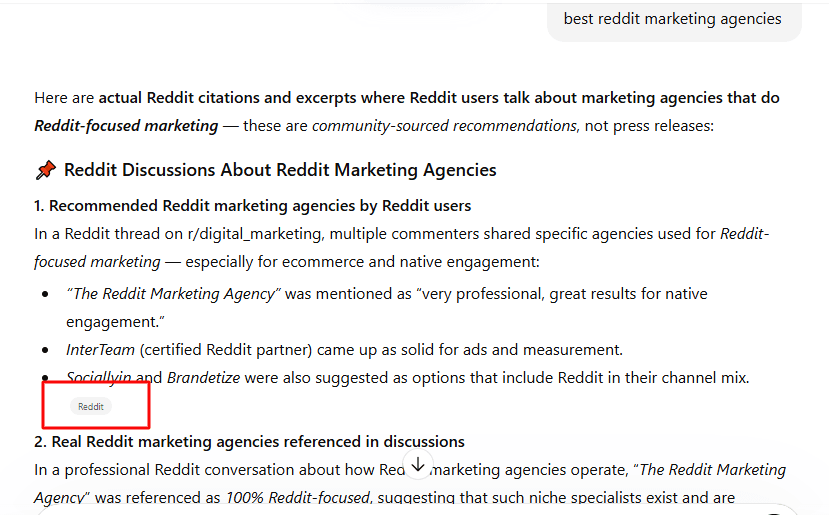
This platform lands in the first place because, along with diversity in subreddits, LLMs also cite from Reddit, as shown in the image below.
Example: TaskFlow built most of its early growth through Reddit. Instead of immediately promoting their product, the founder spent six months answering questions in communities like r/projectmanagement and r/remotework, sharing advice and templates without mentioning the product. Once credibility was established, they began publishing guides such as “How We Cut Project Delays by 40% (Free Template)”.
The post received 2,400 upvotes and 500 comments, which led to natural conversations where users asked about the tools used. These discussions drove product discovery and eventually helped the startup reach 50,000 users and $2M ARR, with customer acquisition costs around $12 per user.
Scaling this kind of engagement manually can be difficult because Reddit discussions move quickly and require thoughtful responses. Many developer marketing teams now use structured workflows or tools to generate contextual replies while still maintaining a human tone. For example, tools like Infrasity’s Reddit Comment Generator help teams draft technically relevant responses to community discussions, making it easier to participate consistently without sounding promotional.
The platform is still growing and is reported to have 121.4 million daily active users.
Pros:
- Highly targeted niche communities (subreddits) like r/programming, r/devops, r/webdev, r/OpenSource, etc
- Developers frequently ask for tool recommendations
- Posts can rank in Google search results and LLM platforms like ChatGPT, Claude, etc.
- High engagement discussions that build trust
Cons:
- Self-promotion is heavily moderated
- Accounts without history are often ignored
- Poorly written marketing posts get downvoted quickly
- Requires long-term participation to build credibility
KPIs to Track:
- Upvotes and comment engagement
- Traffic from Reddit threads
- Demo requests from Reddit referrals
- Brand mentions in subreddit discussions
- Sentiment in comments
7. GitHub
For developer marketing, GitHub, along with being a code hosting platform, is also a distribution channel. Developers regularly explore repositories, examples, and open-source tools when evaluating new technologies. This makes GitHub a powerful place to distribute SDKs, APIs, developer tools, and sample applications. Applying GitHub SEO principles to your repository name, topics, and README ensures your project surfaces in relevant searches and earns the visibility it deserves.
Many successful developer-first startups like Stripe treat GitHub as their primary distribution engine. Speaking of Stripe, instead of only publishing documentation on their website, they heavily invested in open-source SDKs, sample apps, and developer tools on GitHub. Their repositories include detailed examples, integrations, and documentation that developers can explore before adopting the product.
Because developers often search GitHub when learning a technology, Stripe’s repositories became a key discovery channel. Today, Stripe maintains hundreds of public repositories and tens of thousands of GitHub stars, creating a continuous stream of developer adoption through open-source distribution.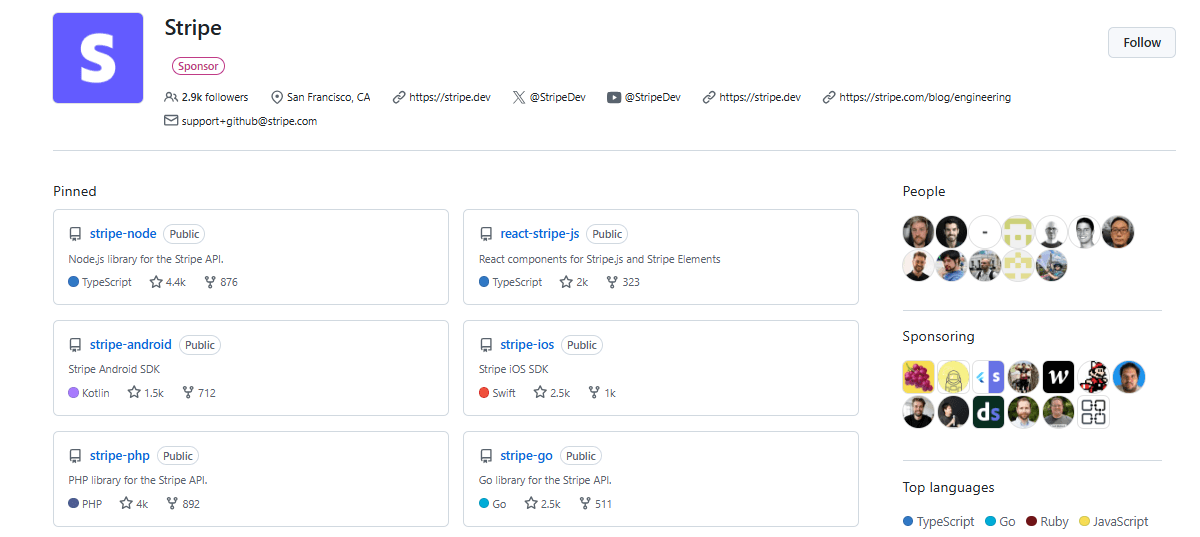
Pros:
- Developers actively search for tools and code examples
- GitHub repositories often rank in SERP and LLMs.
- Open-source contributions build credibility
- Stars and forks act as social proof
Cons:
- Requires ongoing maintenance of repositories
- Documentation quality must be very high
- Harder to promote commercial messaging directly
- Growth depends on developer adoption
KPIs to Track:
- GitHub stars
- Forks and contributions
- Repository traffic
- Issues and discussions
- Developer signups from GitHub
Quick Comparison of The Top Developer Marketing Channels
| Platforms | Best For |
|---|---|
| Dev.to | Tutorial distribution & developer education |
| HackerNoon | Thought leadership & tech storytelling |
| Medium | SEO-driven developer content |
| Stack Overflow | Problem-solving discovery |
| Hacker News | Product launches & discussion |
| Community engagement | |
| GitHub | Open-source adoption |
How to Choose a Developer Marketing Channel?
As already mentioned in this blog, choosing the right developer marketing channels is less about chasing reach and more about showing up where developers already spend time solving problems. Developers encounter products while reading documentation, exploring code examples, or participating in communities. This is why marketing developers strategies focus on placing useful content directly inside these existing workflows.
Start by identifying the channels where your audience searches for answers. When your tutorials, guides, or demos appear in those spaces, discovery happens naturally. That’s why strong developer marketing focuses on useful technical content instead of promotional messaging.
A helpful framework is compound-first, amplify-next:
- Compound channels build long-term value. Publishing guides on platforms like Dev.to, contributing examples on GitHub, or answering questions on Stack Overflow can generate traffic for months or years because developers repeatedly search for similar solutions.
- Amplification channels expand reach once strong content exists. Newsletters, partnerships, sponsored posts, and developer events help introduce your product to new audiences.
The most effective strategy combines both: build credibility through educational content and community participation first, then amplify that content through broader distribution channels.
Conclusion
The most effective marketing developers strategies focus on distributing top-rated developer marketing content where engineers already search for solutions and discuss tools. Platforms like Reddit, GitHub, Dev.to, Hacker News, and Stack Overflow function as powerful content distribution channels because discovery happens naturally inside developer workflows.
When used correctly, these content marketing distribution channels turn tutorials, documentation, and examples into long-term growth assets. For B2B SaaS teams, consistent participation and useful technical content are what ultimately drive visibility, trust, and developer adoption. A focused DevTools marketing strategy that maps your content to the right channels and developer personas makes every distribution effort more targeted and efficient. For teams that want expert guidance on channel selection and execution, a developer marketing agency with deep technical knowledge can accelerate results significantly.
Frequently Asked Questions
1. How can I target and engage developers across multiple channels?
Developers are easiest to reach when your content appears in the platforms they already use to learn, build, and collaborate. Communities such as GitHub, Stack Overflow, Reddit, and developer newsletters are often part of their regular workflow. By sharing practical tutorials, technical guides, and real implementation examples across these spaces, companies can participate in existing conversations rather than forcing attention. This approach helps build awareness organically while positioning your content where developers are already looking for solutions.
2. What is the best way to make technical content easy for developers to find?
Developers usually search for solutions when they run into a problem, so the best way to make technical content easy to find is to create content that directly answers real questions. Focus on practical topics that developers actively search for, such as troubleshooting guides, tutorials, and implementation examples. It’s also important to optimize the content for search engines so it appears in relevant results. Sharing the content in developer communities, such as forums, social platforms, and discussion groups, helps it reach the right audience.
3. What type of content works best for developer marketing?
The most effective top-rated developer marketing content focuses on solving real technical problems. Examples include step-by-step tutorials, implementation guides, sample applications, open-source repositories, troubleshooting posts, and architecture breakdowns.
4. Which platforms are best for distributing developer content?
Some of the most effective developer marketing channels include Dev.to, Hacker News, HackerNoon, Medium, Reddit, GitHub, and Stack Overflow. Each platform serves a different purpose, from community discussions and tutorials to open-source distribution and Q&A discovery.