
TL;DR
- Growth and marketing leaders struggle with a new visibility gap: a product may rank on Google but remains invisible in AI systems like Perplexity AI, ChatGPT, and Gemini Answers, where modern buyers research and validate solutions.
- Perplexity AI prioritizes clarity, technical depth, and credible sources over keywords, requiring content structured to be citation-worthy rather than just readable.
- Best practices include competitor citation analysis, source-worthy technical content, structured formatting, natural language queries, semantic URLs, and publishing on developer-first platforms like GitHub and Medium.
- Common mistakes that stop B2B SaaS startup to rank on Perplexity are optimizing for prompt phrasing, long, vague content, blocked crawlers, or relying solely on backlinks, which can prevent Perplexity visibility.
- This blog explains how to rank on Perplexity AI, how visibility differs from traditional SEO, tips to optimize content, and how to track Perplexity AI rankings to turn citations into measurable growth.
Growth and marketing leaders are facing a new visibility gap. Prospects no longer scroll search results because they ask Perplexity AI direct questions, trust the cited answers, and shortlist tools without ever visiting a SERP. If your content isn’t being cited, you’re invisible at the exact moment buying decisions are formed.
This shift is happening fast. Perplexity AI crossed 10 million monthly active users back in 2024, and growth hasn't slowed since. By 2026, Perplexity's latest usage data shows tens of millions of monthly active users on its core search product alone, with some reports crediting its full product suite, search, the Comet browser, and enterprise tools, with well over 100 million MAU. Whatever the exact number, the direction is clear: more of your buyers are researching through Perplexity than ever before.
At the same time, 73% of B2B buyers now rely on self-serve research before talking to sales, increasingly using AI tools to validate options. This is why growth teams are urgently trying to understand how to rank on Perplexity AI, how to rank in Perplexity, and how to track AI rankings on Perplexity using the right platform. Traditional SEO alone no longer guarantees visibility.
In this blog, we break down how Perplexity AI generates and ranks answers, why Perplexity visibility has become so important for B2B SaaS startups, what content actually gets cited, common mistakes to avoid, and how to use a track Perplexity AI rankings platform to turn AI visibility into a repeatable growth channel. Read along to find out.
How Does Perplexity AI Generate and Rank Answers?
Perplexity AI generates answers using a retrieval-augmented generation (RAG) system that pulls information from trusted sources and cites them directly. Understanding this is key if you want to learn how to rank on Perplexity or how to rank in Perplexity AI results.
Example: A code review platform was not visible in AI systems, let alone in Perplexity. Although the startup was ranking in SERP in “best AI code review tools”, it started to position itself in Reddit threads, which helped Perplexity to retrieve the code review platforms’ content. Reddit served as a high-signal validation layer, helping Perplexity confirm that the platform was actively discussed and trusted by practitioners.
They also positioned their homepage around a code review platform from Quality-first AI code generation. Reddit served as a high-signal validation layer, helping Perplexity confirm that the platform was actively discussed and trusted by practitioners. Take a look at the image below. When the prompt “top code review companies” was searched, this particular code review platform ranked on Perplexity’s list.
When a user asks a research-driven question, Perplexity retrieves content from across the web, including technical blogs, documentation, research articles, and authoritative publications, and then synthesizes an answer. It then selects sources that meet 3 criteria:
- Clear: The content presents direct answers using simple language, strong structure, and scannable sections.
- Technically accurate: Explanations are factually correct, aligned with real-world workflows, and free of exaggerated claims.
- Citation-worthy: The page can stand alone as a reliable reference and often includes data, examples, or external sources.
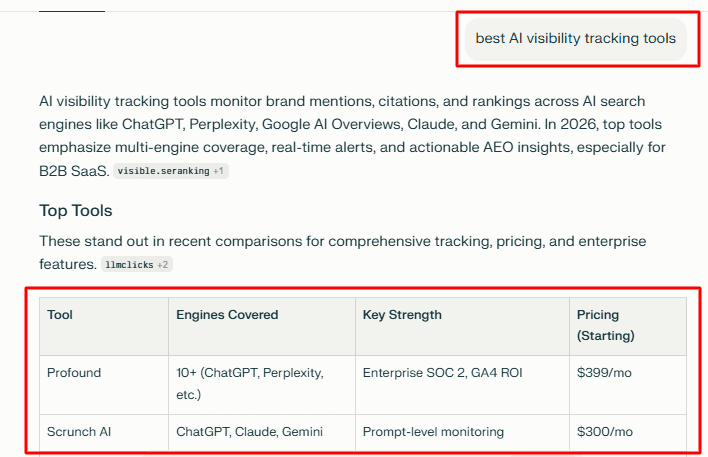
So unlike SERP search results, keyword density plays a minimal role compared to structure, clarity, and credibility. As shown in the image below, for example, we added the prompt “best AI visibility tracking tools,” and Perplexity listed websites that are clear, technically accurate, and basically check in everything that makes them rank on LLM platforms like Perplexity. We will discuss all the strategies and tips in the sections below.
For B2B SaaS early-stage startups, this means visibility depends on whether your developer content can be used as a source. To improve performance and track AI rankings on Perplexity, teams need to focus on how often and where their content is cited.
Why Perplexity Visibility is Important for B2B SaaS Startups?
For B2B SaaS startups, buying journeys increasingly start with research-heavy questions. Decision-makers use tools like Perplexity AI to compare platforms, understand technical trade-offs, and validate solutions. If your product isn’t cited in these answers, you’re invisible at the exact moment buyers are forming opinions. This is why understanding how to rank on Perplexity AI is becoming a growth priority.
Take B2B SaaS startups like Stripe, Datadog, etc. They consistently appear in AI-generated research answers because their content goes beyond marketing pages. Their blogs, documentation, and engineering explainers are detailed, structured, and written to educate, making them ideal sources for Perplexity to cite. Similarly, developer-first tools like Vercel and HashiCorp earn visibility because their technical docs clearly explain concepts, not just features.
For early-stage B2B SaaS startups, Perplexity visibility levels the playing field. You don’t need massive brand awareness; you only need source-worthy content. When your blog or docs are cited, your startup will gain instant credibility.
To scale this impact, your teams must also track AI rankings on Perplexity using a reliable platform, ensuring their content consistently appears where modern buyers are researching. If this isn't a full-time function your team has bandwidth for yet, working with an AEO agency that specializes in getting B2B SaaS content cited by AI search engines can shortcut the learning curve considerably.
CTA- See how your content ranks in Perplexity
6 Tips to Help Rank on Perplexity AI
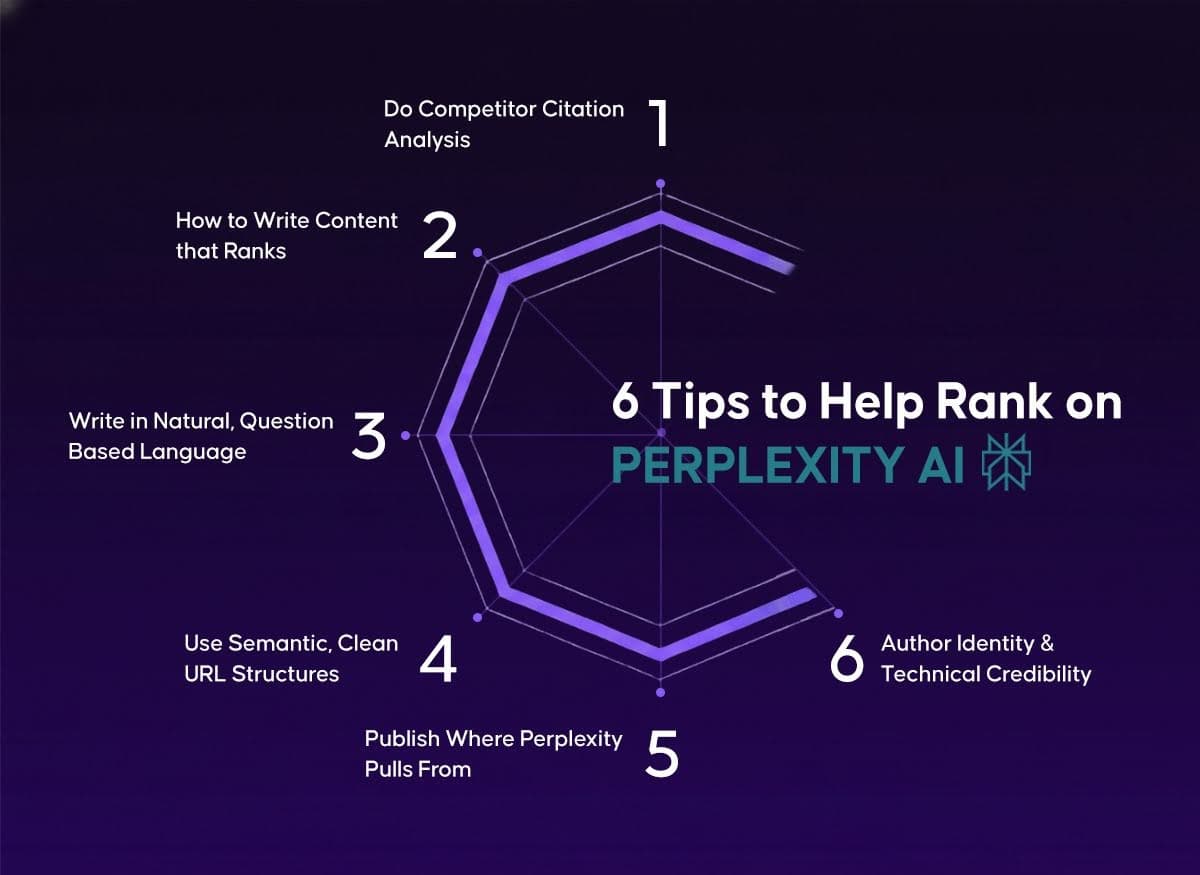
Perplexity AI selects answers based on how easily it can extract, verify, and cite information. If your content cannot be reused confidently, it won’t be surfaced, no matter how good it looks on traditional search.
1. Do Competitor Citation Analysis
Before creating new content, you need to understand what Perplexity already considers reliable. This tells you which sources are winning visibility today and sets the baseline you need to beat.
Search your priority queries directly in Perplexity and study the cited sources. Look at what topics they cover, how deep they go, and where they fall short.
How to approach it:
- Identify competitors repeatedly cited for your core queries
- Analyze content depth, structure, and format
- Create content that fills gaps, adds technical clarity, or answers missed questions
Perplexity favors content that solves the full problem in one place.
Citation analysis is only useful if you keep repeating it. Once you've mapped who's currently winning citations for your priority queries, track your results with an LLM visibility tool so you can see exactly when your own content starts getting cited on Perplexity, and how that changes as competitors publish new material.
2. How to Write Content that Ranks on Perplexity
Perplexity does not reward long-form content unless it clearly explains outcomes. Content must explain what changes for the reader and do so in a format that can be easily reused in an AI-generated answer. If the benefit is not obvious within seconds, Perplexity will move on.
What works best:
- Clear explanations tied to outcomes
- Short paragraphs and focused sections
- Direct answers early in each section
3. Write in Natural, Question-Based Language
Perplexity is built around how people naturally ask questions. Content written in promotional language is harder for the model to match with real queries. Your goal should be to mirror how users phrase problems during research. What you need to do:
- Use question-style headings
- Include multiple phrasings of the same concept
- Answer directly, without filler or positioning language
This is also where keyword strategy shifts. Instead of chasing short, generic terms, it helps to use long tail keywords in question-based content, since longer, more specific phrasings map directly onto how people actually type questions into Perplexity.
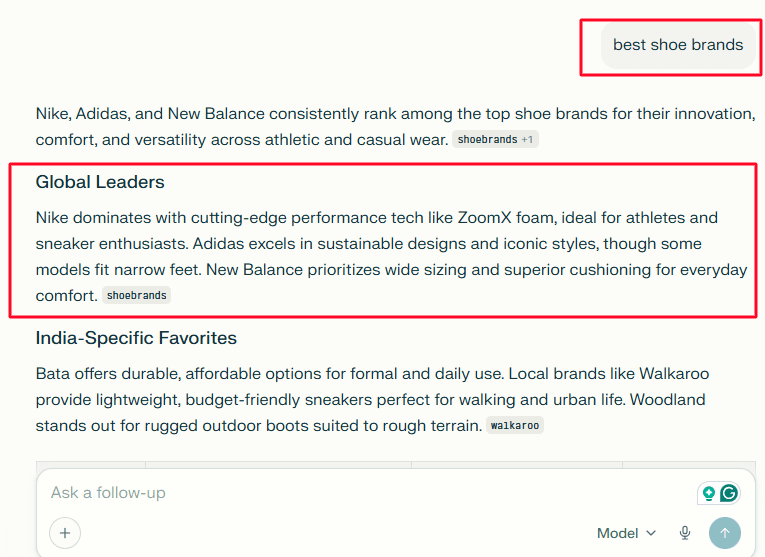
Take a look at the image below. The queries use natural language and are question-based. 
4. Use Semantic & Clean URL Structures
URLs help Perplexity understand context, and if you want your content to be used by Perplexity, follow these simple rules:
- Use human-readable URLs
(e.g./ai-search/perplexity-ranking-factors) - Include the primary/focus keyword
- Match URL hierarchy to content structure
Clear URLs reinforce topical relevance and improve discoverability.
5. Publish Where Perplexity Pulls From
Perplexity does not rely only on websites, and it consistently pulls content from developer-first platforms and high-signal technical surfaces where real problem-solving happens. If your content only lives on your site, you’re limiting where Perplexity can discover and validate it.
These high-impact surfaces include:
- Technical blogs and documentation
- Medium and dev-focused publishing platforms
- GitHub discussions and READMEs
- Reddit threads that explain real-world use cases
Publishing and syndicating technical content across these channels increases the chance that Perplexity encounters, evaluates, and cites it.
6. Authority & Technical Credibility
Perplexity favors content that is clearly written by someone who understands the topic deeply. Anonymous or generic author pages reduce trust signals. Strong author identity helps Perplexity assess whether the content is reliable enough to cite. What improves credibility:
- Clear author bio
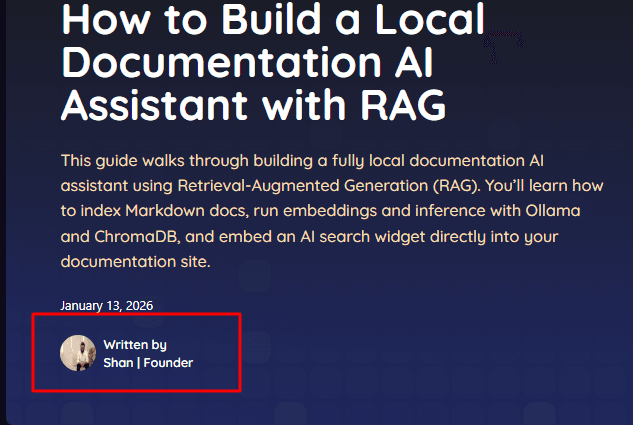
- Links to previous writing or profiles
- Consistent publishing on related topics
Content written by people with hands-on experience is more likely to be referenced in Perplexity answers.
How is Ranking on Perplexity Different from Search?
Traditional search tools show a list of pages ranked by signals like keywords, links, and performance. Answer engines work differently. They give one clear answer and show the sources behind it. The goal is not to send users browsing but it is to help them decide. Let’s see what has changed:
1. Clarity and Structure
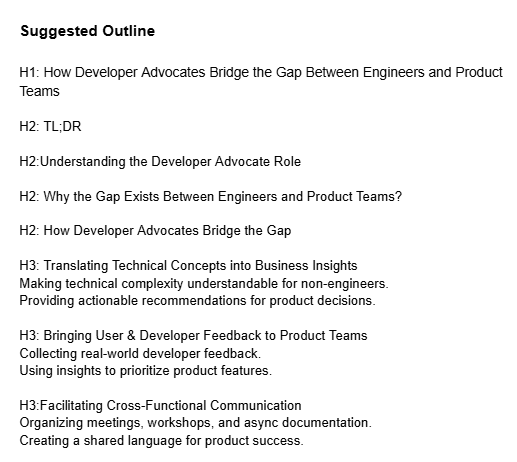
Perplexity favors content that can be understood in seconds. If the answer is buried or poorly structured, it won’t be cited. Clear hierarchy, short sections, and direct answers make content reusable inside AI responses. Well-structured content with clear headings, lists, and tables makes it easier for the model to lift accurate sections without losing context. Best practices:
What works:
- Clear headings like H1, H2, H2, H4, etc
- Short paragraphs
- Bullet points for explanations
- Direct answers at the top of sections
- Numbered lists for steps
- Tables for comparisons
Perplexity AI looks for content that answers the full intent behind a question. Using natural language, related concepts, and clear question-answer formats helps the model understand relevance. For growth and marketing teams, this means that visibility no longer depends on ranking a page but on whether your content is clear, accurate, and useful enough to be cited as a source.
If Perplexity can’t quickly extract a clear answer, it won’t use the page. If you are not sure of the structure of the content, feel free to use Infrasity’s outline template.
2. Content Freshness
When multiple sources exist, Perplexity often chooses the most current one. Updated examples, tooling references, and workflows signal relevance and reliability, especially for technical and SaaS topics. To improve Perplexity visibility:
- Refresh existing pages
- Update data, examples, and tooling references
- Keep explanations aligned with current workflows
Freshness often decides which source Perplexity chooses when multiple options exist. Updated content is more likely to be selected as a cited source. For example, regularly updating content will help your startup appear on lists like Perplexity.
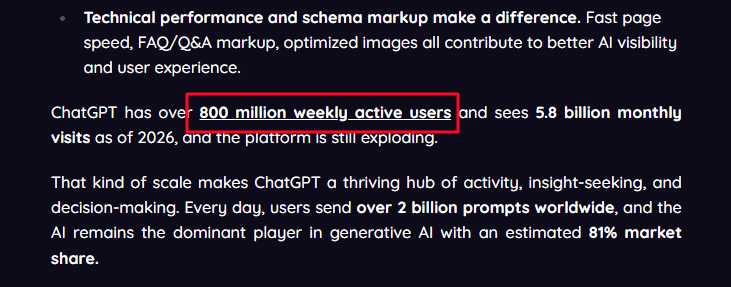
3. Link to Credible Sources
Pages that reference other reliable material are easier to trust. Linking to technical documentation, research, and industry reports strengthens verifiability and improves citation potential. Hyperlink your content to:
- Technical documentation
- Industry reports
- Research studies
Add brief explanations around each link so the context is clear.
4. Add Query-Based and Related Questions
Perplexity often builds answers step-by-step. FAQs help your content match follow-up questions, expand citation coverage, and appear across multiple prompts in a single topic area. Including FAQs improves your ability to:
- Match conversational queries
- Appear in multi-step answers
- Increase citation coverage
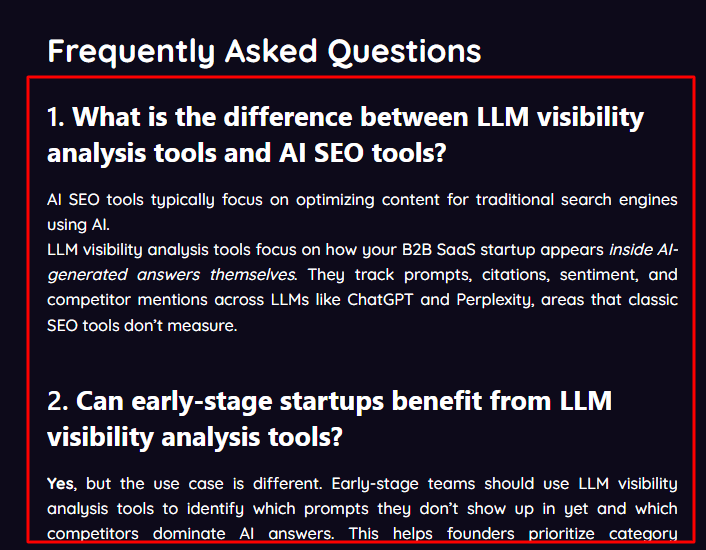
Pro tip: Add prompts from Profound AI or Peec AI and incorporate them in the FAQs of your developer content for more AI visibility. Keep answers short and written in natural language.
5. Content Types That Perform Well on Perplexity AI
Formats that reduce decision friction outperform others. Step-by-step guides, clear comparisons, and expert breakdowns are consistently reused because they help users understand and decide faster.
Some formats consistently perform better when trying to rank on Perplexity:
- How-to guides with clear steps
- FAQ pages that answer direct questions
- Comparisons that explain trade-offs
- Expert explanations that break down complex topics
If your content helps users make a decision faster, Perplexity AI is more likely to surface it.
Most of these principles carry over directly if you're also thinking about how to rank in Claude specifically, since Claude's retrieval and citation logic overlaps closely with Perplexity's, both reward clarity, structure, and verifiable sources over keyword optimization, though each platform weighs technical depth and source diversity slightly differently.
Common Mistakes That Prevent Your B2B SaaS Startups from Ranking on Perplexity
We have noticed that many teams miss Perplexity visibility, not because their content is weak, but because it’s optimized for the wrong signals. To avoid these mistakes, follow these:
- Optimizing for prompt phrasing instead of intent: Writing for exact question formats misses the real problem users are trying to solve. Perplexity looks for intent coverage, not prompt hacks.
- Publishing long, unfocused content without sources: Vague explanations and uncited claims are rarely reused. Perplexity prioritizes content it can verify and reference confidently.
- Blocking AI crawlers or ignoring structured data: If content can’t be accessed or parsed cleanly, it won’t be cited. Crawlability and structure matter.
- Over-relying on backlinks as a trust signal: Backlinks alone do not guarantee selection. Perplexity weighs clarity, accuracy, freshness, and source credibility together.
Perplexity AI rewards clear answers, strong structure, and verifiable expertise. Traditional keyword tactics weaken performance in AI-driven search. Before you publish, it's worth running existing pages through Infrasity's GEO checklist to catch these mistakes early rather than finding out months later that a page was never eligible for citation.
What Happens After You Win Visibility on Perplexity AI
Once your content starts getting cited on Perplexity AI, the real work begins. Visibility alone doesn’t guarantee influence; teams need a structured process to turn citations into measurable growth. App.infrasity is designed exactly for this, helping B2B SaaS teams go beyond tracking prompts to driving actionable results:
- Create prompt-aligned technical content
- Structure content for AI retrieval
- Track performance across multiple AI search systems over time
- Monitor visibility changes by cluster, model, and category
Inside the app’s GEO Dashboard, teams can quickly see:
- AI visibility overview: Visibility score and total coverage
- Citation rates by cluster
- Prompt-level coverage across Perplexity, ChatGPT, and Claude
- Week-over-week changes
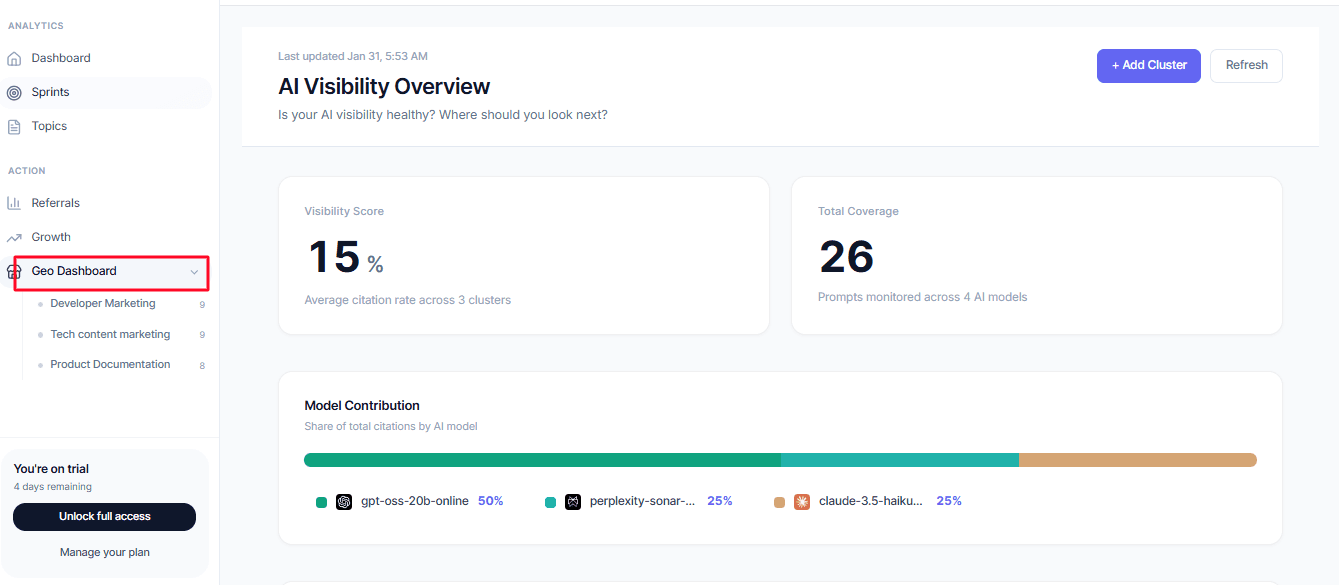
Here’s how teams put this into practice:
Step 1: Export priority prompts Start by adding high-intent evaluation prompts, comparison queries, and category-defining searches from tools like Profound, Peec AI, or Hall. These are the queries where visibility matters most.
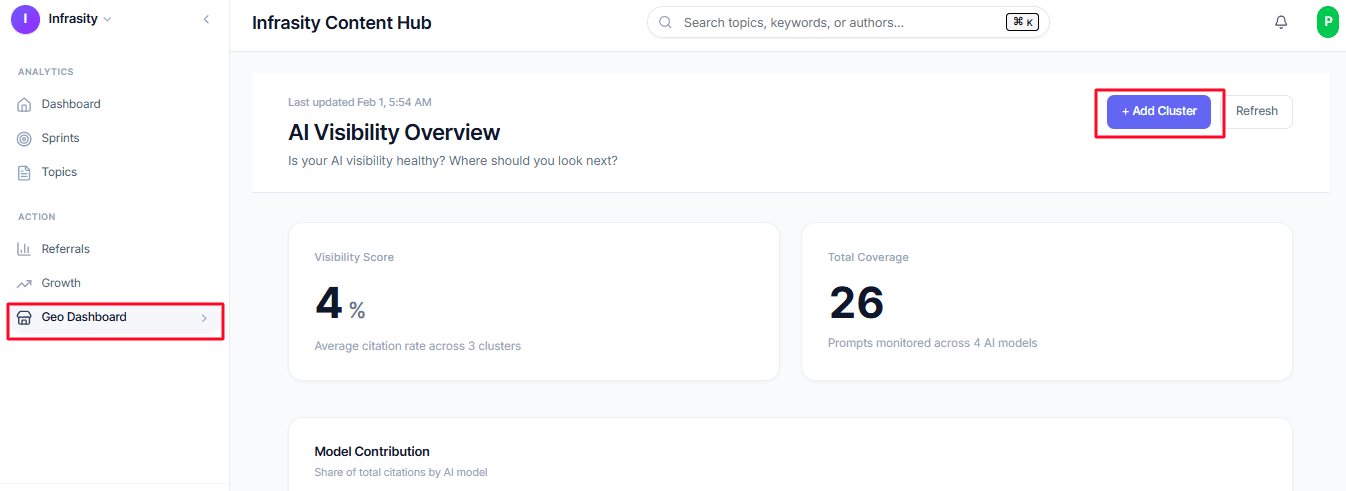
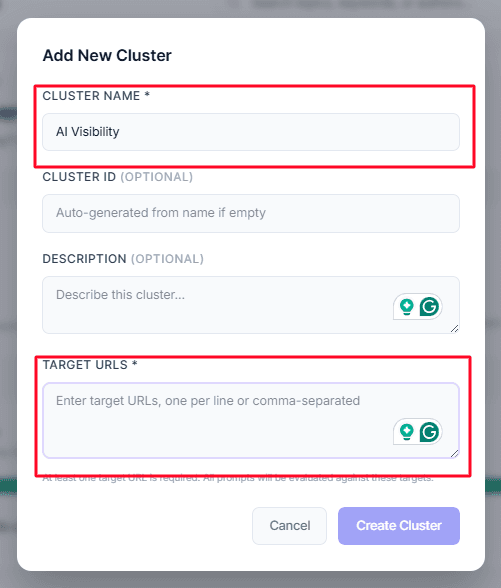
Step 2: Group prompts into clusters Upload prompts into App.infrasity and organize them by buyer intent and use case, such as “AI Visibility.” Clustering helps AI systems reason at the topic level and ensures content aligns with real queries. Add your target URLs and hit Create Cluster.
Step 3: Create prompt-aligned technical content Infrasity helps teams produce content that LLMs can reliably retrieve and cite, including:
- Clear technical explanations
- Structured comparisons
- Use-case-driven documentation
Step 4: Track visibility by cluster, model, and time App.infrasity lets teams monitor:
- Visibility score by cluster
- Citation rates across Perplexity, ChatGPT, and Claude
- Week-over-week changes per AI model
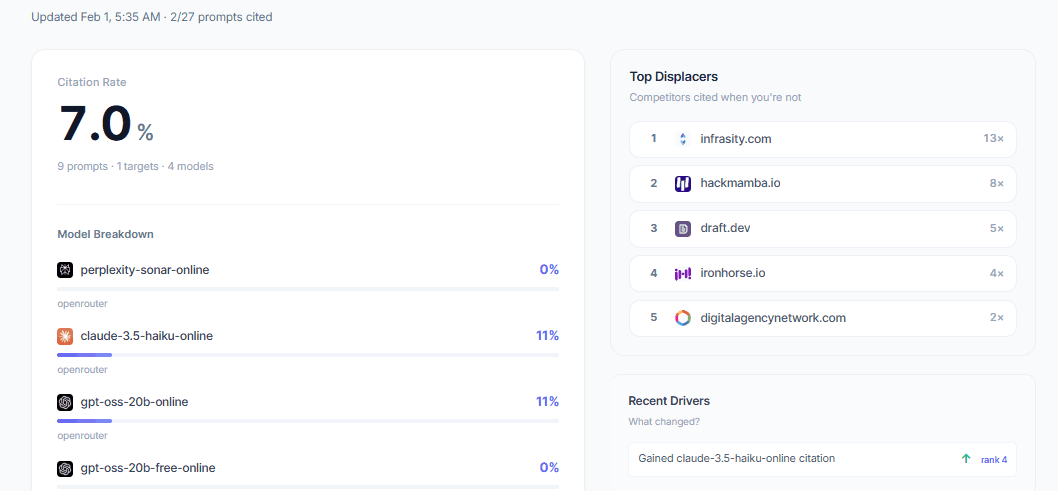
This closes the loop between analysis, content, and measurable AI visibility gains. Infrasity is built for developer-focused B2B SaaS, ensuring your content has the technical depth that LLMs reward. Unlike generic tracking tools, it helps teams systematically close the AI visibility gap, turning insights into growth.
Conclusion
B2B SaaS growth and marketing leaders face a new challenge: being visible where buyers actually research, AI answer engines like Perplexity AI. Unlike traditional search engines, Perplexity provides direct answers and cites sources it trusts, meaning content must be clear, accurate, structured, and technically credible to be referenced. Simply optimizing for keywords no longer guarantees visibility.
To know how to rank on Perplexity AI, teams should start with competitor citation analysis, produce source-worthy technical content, format for research queries, write in natural question-based language, and ensure semantic URLs.
Publishing on developer-focused platforms and building author credibility further increases citation chances. Avoid common mistakes such as chasing prompt phrasing, publishing vague, uncited content, blocking crawlers, or relying solely on backlinks.
Let us know which of the tips worked for you.
Frequently Asked Questions
1. How is ranking on Perplexity different from Google SEO?
Google ranks pages based on links, keywords, and user signals. Perplexity does not use traditional rankings. It retrieves and cites sources when generating answers. This means learning how to rank in Perplexity requires optimizing content to be used as a reference, not just indexed.
2. Can early-stage B2B SaaS rank on Perplexity without high domain authority?
Yes. Perplexity evaluates pages based on usefulness and source quality, not domain strength alone. Well-structured technical content, clear explanations, and real-world examples often outperform larger sites. This makes learning how to rank in Perplexity especially valuable for early-stage teams competing with larger incumbents.
3. How do you track AI rankings on Perplexity over time?
AI rankings don’t appear in standard analytics tools. To track Perplexity AI rankings, teams need prompt-level monitoring that shows when and where content is cited. Platforms like Infrasity track AI rankings on Perplexity across prompts, clusters, and models, helping teams measure visibility changes and optimize systematically.
4. What type of content gets cited most often on Perplexity?
Perplexity AI frequently cites content that explains concepts clearly and helps users make decisions. This includes technical guides, documentation, comparisons, FAQs, and expert breakdowns. Content written to educate rather than promote performs best when trying to rank on Perplexity AI.
5. Does ranking on Perplexity use the same signals as ChatGPT or Google AI Overviews?
Not exactly. All three prioritize clarity and verifiable sources over keyword density, but the overlap isn't total. Perplexity leans heavily on real-time retrieval and developer-first platforms like GitHub and Reddit, ChatGPT weighs training data and plugin-connected sources more heavily, and Google AI Overviews still pulls from pages with strong traditional SEO signals. Content structured for Perplexity, clear headings, direct answers, and cited data, tends to transfer well across all three, but teams optimizing seriously for AI visibility should track AI rankings on Perplexity and other models separately rather than assuming one score represents all of them.
6. How long does it take to start getting cited on Perplexity after publishing?
There's no fixed timeline, but most teams see initial citations within a few weeks of publishing if the content is crawlable, well-structured, and covers a topic Perplexity already retrieves for. Freshness and repeated signals matter: content that gets referenced elsewhere (Reddit threads, GitHub discussions, other blogs) tends to get picked up faster than content that only lives on your own domain. Ongoing prompt-level tracking is the only reliable way to know whether citations are actually happening, rather than guessing from traffic alone.