
Key Takeaways
- 94% of B2B buyers now use AI during vendor research, so a shortlist is often decided inside ChatGPT or Perplexity before a prospect ever visits your site.
- Most AI visibility tools stop at a score or a gap report. Content Hub is built to answer what to publish, where to distribute it, and which existing pages to fix first.
- Structure and positioning matter more than volume: 44% of all LLM citations come from the first 30% of a piece of content.
- A stale content audit on existing high-authority pages typically moves faster than publishing new articles from scratch.
Why is B2B SaaS content not showing up in ChatGPT even when published regularly?
Getting your content to appear in AI-generated answers is one of the most underutilized growth levers in the SaaS space. AI marketing for SaaS is not just about ChatGPT-assisted copywriting — it is about ensuring your brand is the source that large language models cite when buyers research solutions in your category.
Traditional content marketing was built around keyword rankings — but modern B2B SaaS content strategy needs to account for AI-generated search results as a primary discovery channel. Building a content hub that signals topical authority to both Google and large language models requires a structured approach to content architecture, internal linking, and entity-based optimization.
90% of developers now use at least one AI tool regularly at work. 51% use one every single day. And when they are not writing code with it, they use it to research, evaluate tools, compare platforms, and shortlist vendors.
94% of B2B buyers now use AI during vendor research. The shortlist your sales team is competing for is being built inside ChatGPT or Perplexity before anyone visits your site, fills out a form, or replies to an email.
For B2B SaaS teams, AI visibility for B2B SaaS is no longer a nice to have. It is the difference between being on the shortlist and not getting the call.
There are tools that will show you exactly how invisible you are. But they hand you a report and call it a deliverable. The ones that go further tell you to publish more content, as if the problem was volume.
Knowing you are invisible is not the same as knowing how to fix it. That gap is exactly what Content Hub was built to close.
What Is the Problem With Most AI Visibility and LLM Intelligence Tools Today
B2B SaaS brands building for AI visibility need to understand that not all generative platforms work the same way. The AEO vs GEO distinction is especially relevant here — answer engine optimization targets platforms like Google SGE, while generative engine optimization targets LLM-based tools like Claude and Perplexity.
Infrasity has worked with 30+ B2B SaaS teams like Lovable, Qodo, Brevo, Devzero to name a few on AI visibility. Every single engagement started the same way, someone showing us a beautifully designed dashboard with a score, a competitor gap chart, and a percentile ranking across ChatGPT, Perplexity and Claude.
No answer to what to publish next. No clarity on which Reddit threads were driving citations for competitors. No indication of which existing pages needed updating to improve LLM crawlability. Just a number sitting there, looking important.
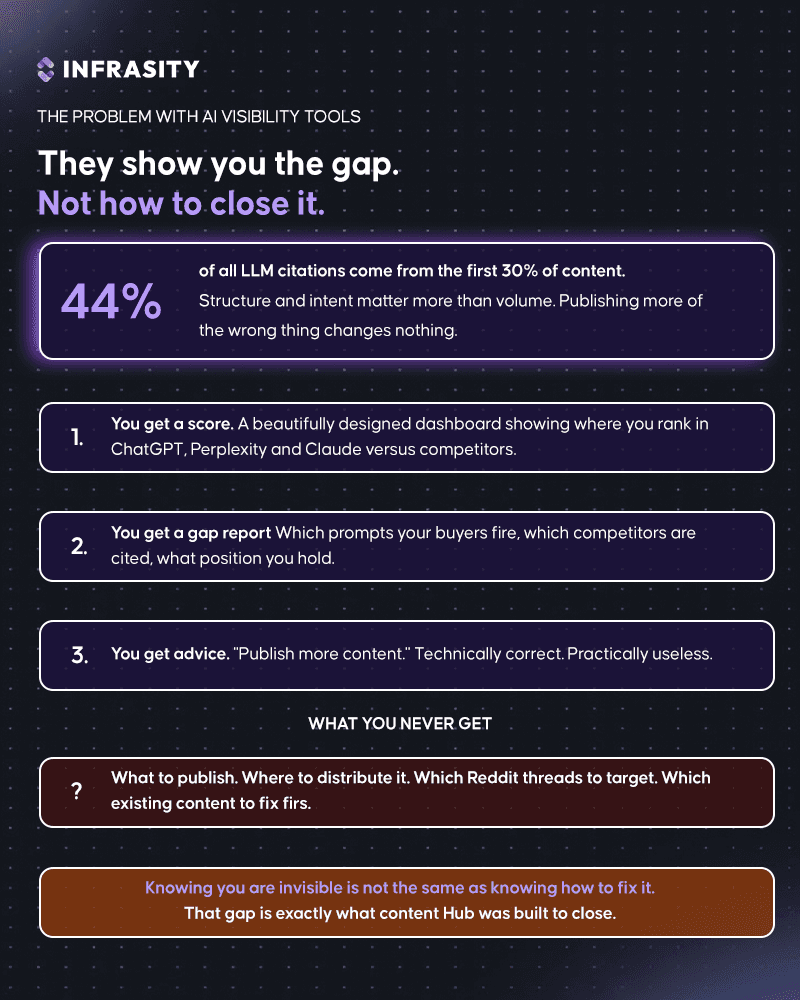
The market has not caught up to the execution side yet. Most platforms are built to measure. Very few are built to move. The advice that does exist tends to collapse into "publish more content," which is roughly as useful as a doctor telling a patient to be healthier. Technically correct. Practically useless.
Here is the stat that puts it in context: 44% of all LLM citations come from the first 30% of a piece of content. Which means structure, positioning and intent matter far more than volume. Publishing more of the wrong thing does not move your ranking. It just creates more content that AI models ignore.
The gap is not due to a lack of awareness of the problem. It has a clear, executable answer to what comes after the report. If you have not yet quantified where those gaps are, running an AI visibility audit first will tell you which E-E-A-T and crawlability issues are actually costing you citations.
What Is Content Hub and What Problem Does It Solve
Content Hub is an AI content execution platform. Not a visibility tracker. Not a reporting dashboard. An execution engine that picks up exactly where every other tool in this space drops off.
The primary steps involved in onboarding:
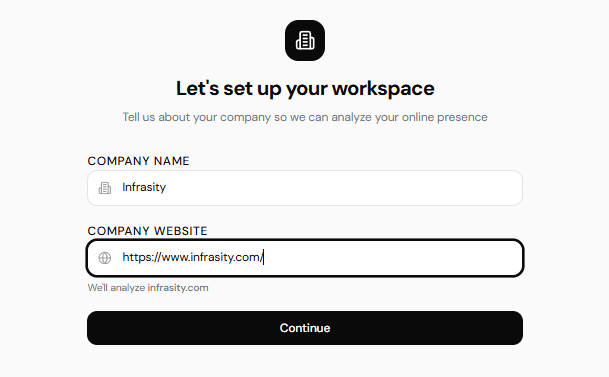
Paste your domain. Content Hub scrapes your website and identifies the exact prompts your buyers are firing into ChatGPT, Perplexity, and Claude
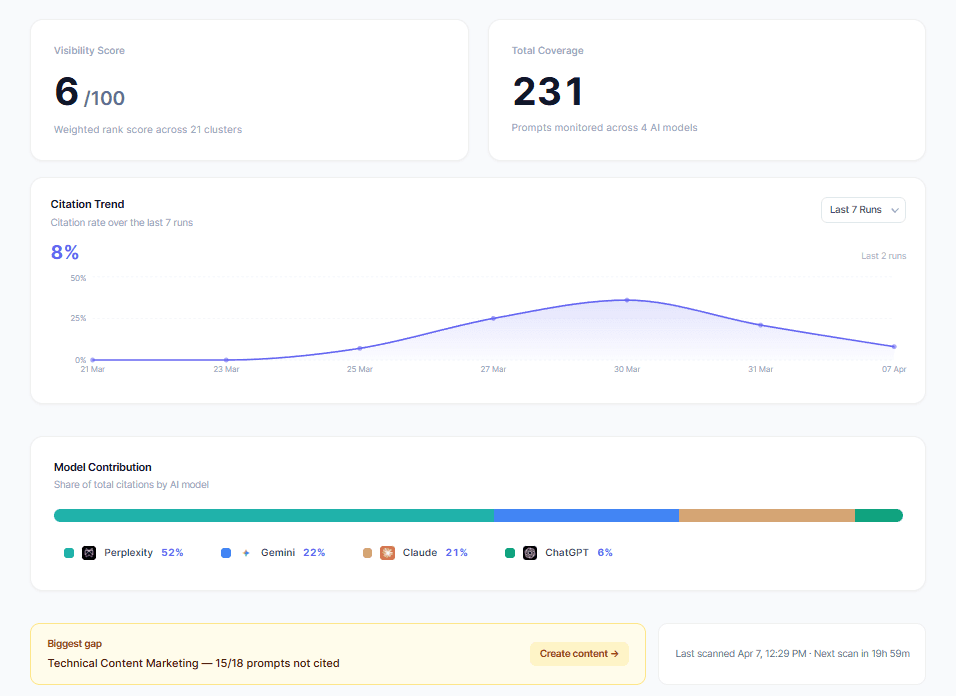
It shows you where you rank for each prompt versus your competitors, not as an abstract score but as a specific list of prompts where you are absent, and they are not
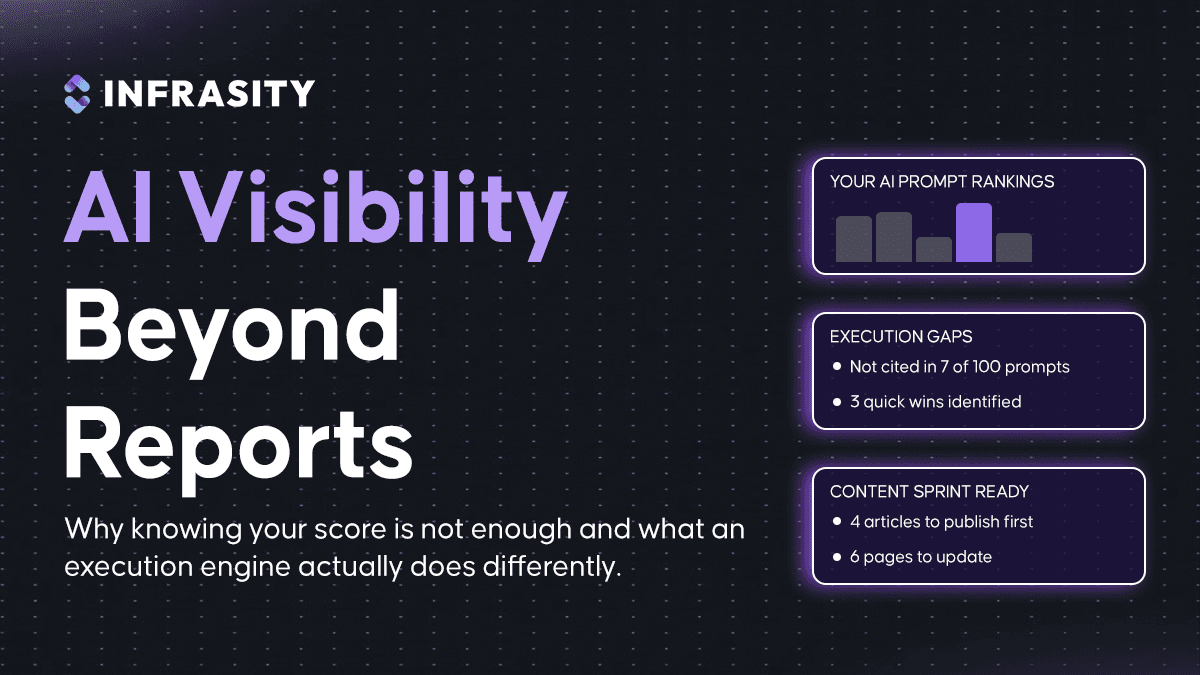
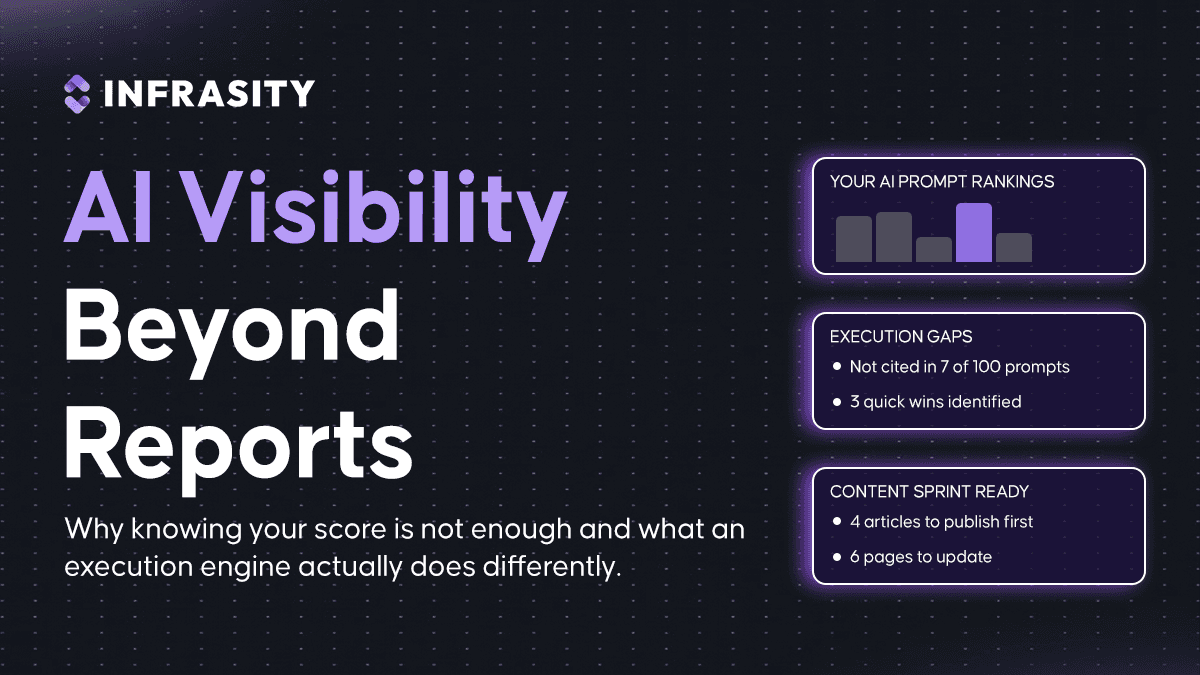
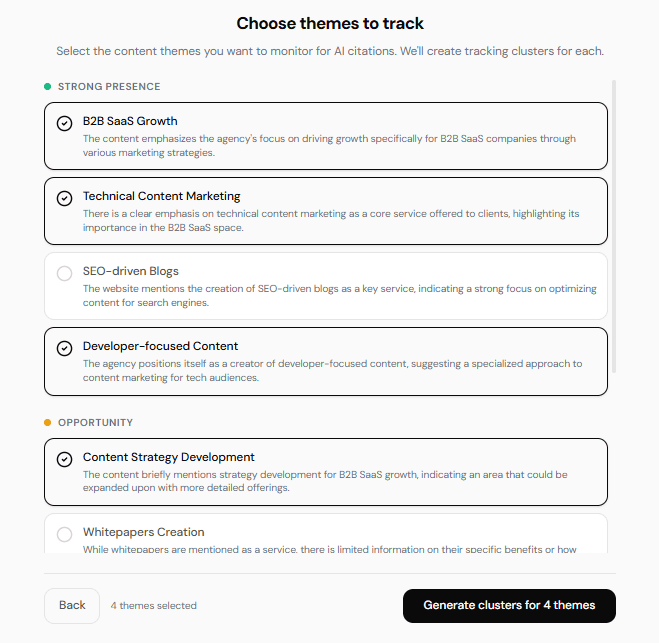
Then it tells you what to do. Not "publish more content." A prioritized execution plan with four clear outputs:
- Which articles to write first
- Which existing pages to fix for LLM crawlability
- Which distribution channels your ICP is most active on
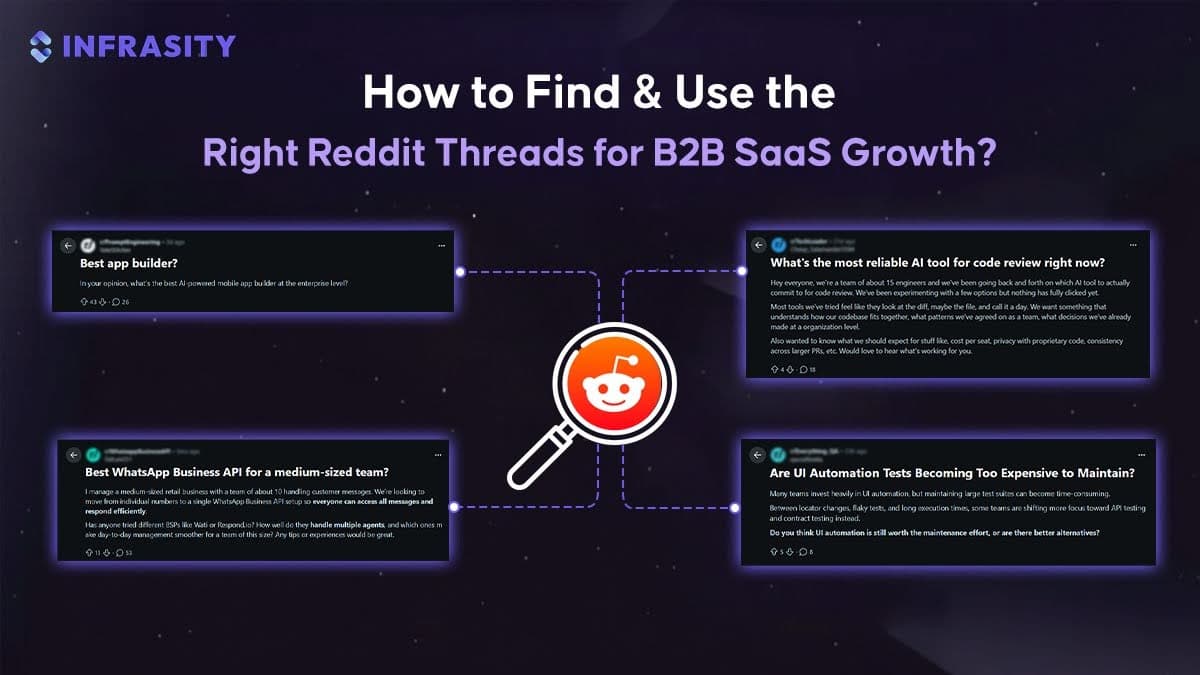
- Which Reddit threads in your category are already ranking on Google and getting cited inside AI answers
Content Hub surfaces the highest-leverage actions first, so the first sprint your team runs is the one that moves the needle fastest
If you have been sitting on a visibility report, wondering what to do with it, Content Hub is the answer
How Does Content Hub Generate a Content Sprint
Most content teams plan their editorial calendar based on gut feel, trending topics, or whatever the SEO tool flagged last week. Content Hub does it differently.
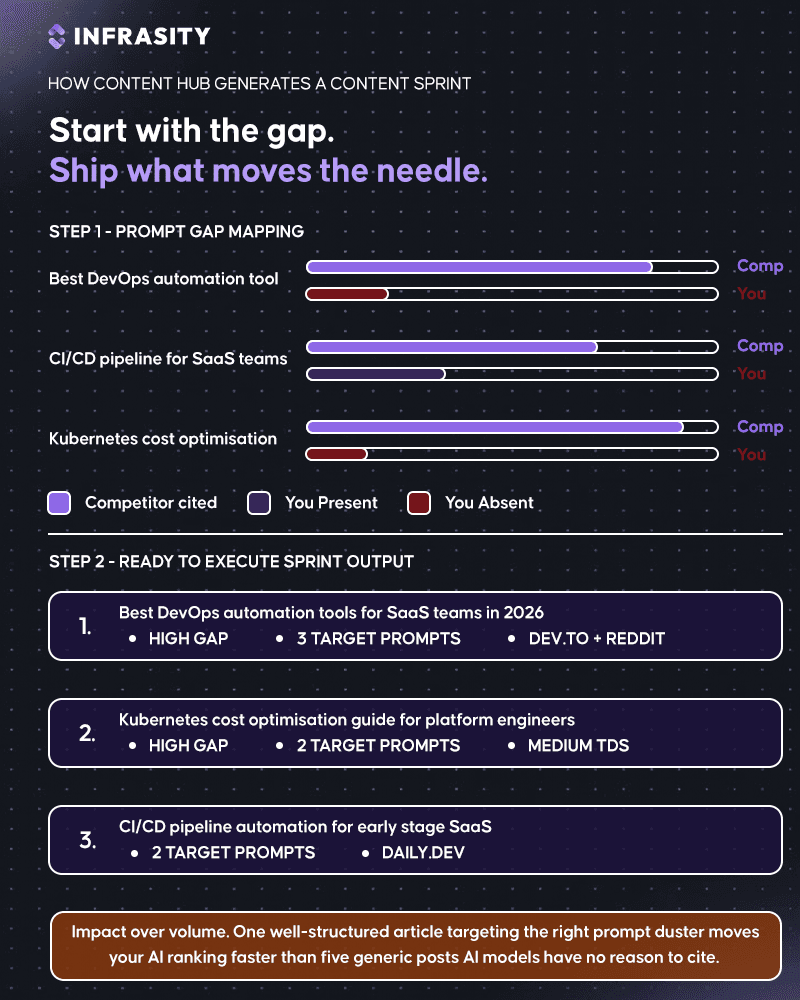
 Content Hub maps every prompt gap between you and your competitors. The prompts where you are completely absent, but competitors rank consistently, get prioritized first
These are not just ranking gaps. They represent active buyers who are currently finding your competitors instead of you
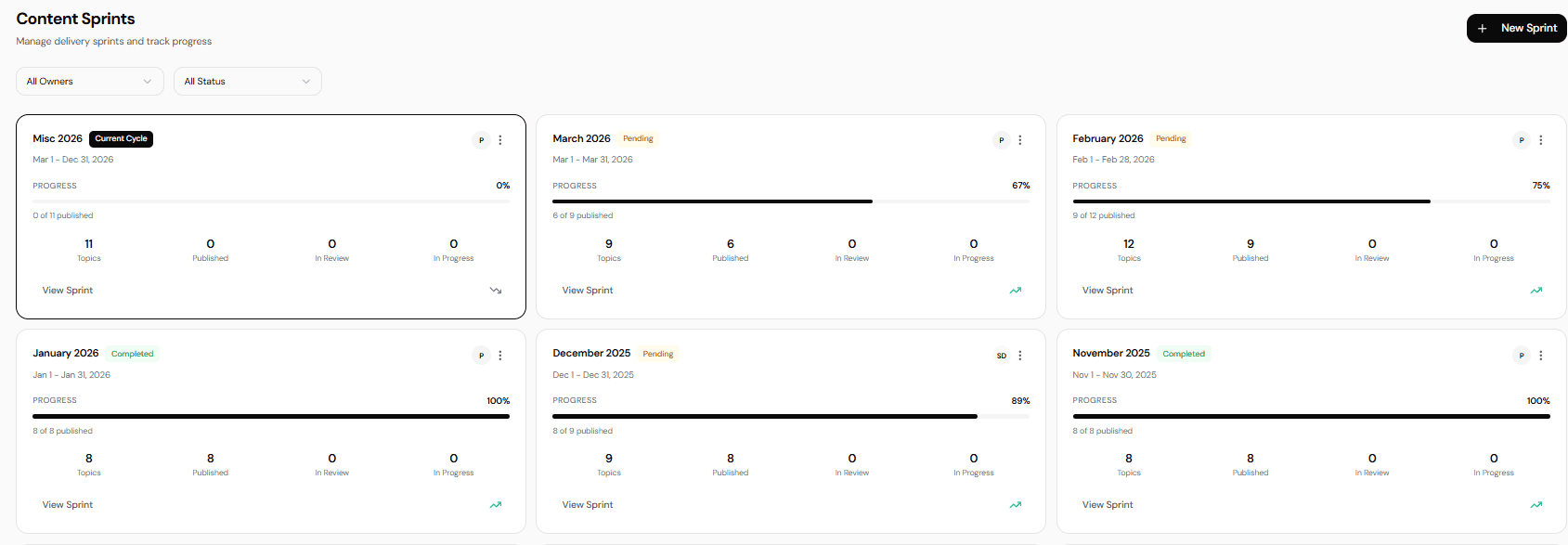
- From that analysis, Content Hub generates a ready-to-execute sprint. Not a list of content ideas. Not a brainstorm doc. A ranked set of articles with clear intent mapping, target prompts, and distribution guidance baked in from the start
The sprint is built around impact not volume. One well-structured article targeting the right prompt cluster will move your AI ranking faster than five generic blog posts that AI models have no reason to cite
Every sprint starts with one question: where is the highest-value gap right now, and what is the fastest way to close it
How Does Content Hub Identify Distribution Channels and Reddit Threads
Publishing great content on your own blog and hoping AI models find it is like opening a restaurant on a street with no foot traffic. The content exists. Nobody is walking past it.
The platforms LLMs crawl when building their category knowledge are not your company blog. They are Medium, Dev.to and Daily.dev. These are the platforms where your ICP is already reading, where AI models are already pulling citations from, and where a single well-distributed article compounds across both Google rankings and LLM answers simultaneously.
Content Hub maps which platforms your ICP is most active on for your specific category, Medium, Dev.to and Daily.dev, and tells you exactly where to publish first for maximum LLM citation surface area
These are not just distribution channels. They are the platforms that LLMs crawl to build their knowledge of your category. A piece of content published on Medium TDS or Dev.to has a fundamentally different citation probability than the same content sitting only on your company blog
Reddit is one of the most underrated sources for citations in AI-generated answers. A thread from three years ago on r/devops asking "what is the best CI/CD tool for a small team" is ranking on Google today and being cited in ChatGPT responses. Your competitors figured this out. Content Hub surfaces the exact threads in your category where your brand should be present, but currently is not
The result is one distribution motion working across two channels simultaneously. You are not optimizing for SERP separately from LLM visibility. You are doing both with the same piece of content, placed in the right community, at the right time
What Is a Stale Content Audit and Why Does It Matter for AI Rankings
Most content teams focus entirely on publishing new content when their AI visibility for B2B SaaS is low. That instinct makes sense, but it is often the wrong place to start.
Your website almost certainly has pages that used to perform well, rank for relevant keywords, and drive traffic. Over time, the keywords shifted, buyer language evolved, and the headings that made sense two years ago no longer match the prompts your buyers are firing into ChatGPT today. For B2B SaaS and DevTool teams specifically, this drift happens faster than most realize because buyer language in the AI era evolves with every model update.
LLMs actively deprioritize this kind of content. Outdated headings, low entity density, and structural formatting that was built for human readers rather than machine parsing all reduce the probability of your content being cited.
Content Hub audits every existing page on your domain and flags the ones that need attention. Not a vague "this page needs updating" flag but specific fixes: which headings to rewrite, which keywords are misaligned with current buyer prompts, and which structural changes will improve LLM crawlability the fastest
The reason this matters is speed. Publishing a new article and waiting for it to be indexed, distributed and cited takes time. Updating an existing page that already has domain authority, backlinks, and indexing history is significantly faster
Teams working through a Content Hub stale content audit typically see citation movement within weeks rather than months
This same "buyer language shifted, headings didn't" problem shows up directly in how prospects move through the funnel. Our breakdown of the B2B buyer journey covers how awareness, consideration, and decision-making now happen inside AI tools before a lead ever reaches your sales team.
How Is Content Hub Different From Other AI Visibility Platforms
Most AI visibility platforms were built to answer one question: where do you stand. That is useful context. It is not a growth lever.
Content Hub was built for the question that comes after. The one every B2B SaaS and DevTool team wrestling with AI visibility for B2B SaaS is actually sitting with them when they close the report tab and open a blank doc, wondering what to write next.
| Metrics of Analysis | Other AI Visibility Platforms | Content Hub |
|---|---|---|
| Primary output | Visibility score and gap report | Prioritized execution plan |
| What it answers | Where are we right now | What do we do tomorrow morning |
| Content guidance | Publish more content | Specific articles ranked by prompt gap and competitor absence |
| Distribution | Not covered | Maps Medium, Dev.to and Daily.dev by ICP activity in your category |
| Not covered | Surfaces threads already ranking on Google and being cited in AI answers | |
| Existing content | Not assessed | Full stale content audit flagging exact fixes for LLM crawlability |
| Content prioritisation | Not covered | Prompt clusters organized by buyer intent, highest-leverage gaps first |
| Sprint output | Not covered | Ready-to-execute ranked article list with intent mapping and distribution guidance baked in |
| Speed to citation movement | Depends on what you do with the report | Weeks, not months, by starting with existing content before building new |
| Team workflow | Manual interpretation of the report | Structured sprint, your team can action the same day |
Conclusion: The Next Step Has Always Been the Hard Part
The teams that move fastest on AI visibility for B2B SaaS are not the ones publishing the most. They are the ones publishing the most specifically.
Infrasity has worked with over 30 B2B SaaS and DevTool teams on this exact problem. One beta team went from invisible to appearing in 6 out of 10 target prompts within 60 days using a Content Hub-generated sprint. A DevTool founder had a 4-week content sprint, 12 Reddit threads mapped, a stale content fix list, and a full distribution plan within 20 minutes of pasting their domain.
That level of analysis used to take Infrasity two weeks of manual research per client. Now it takes minutes.
If you have been sitting on a visibility report, wondering what to do with it, Content Hub was built for exactly that moment. Paste your domain and get your first prompt ranking report, content sprint, stale content audit, and distribution map in minutes.
Running sprints at this pace usually means bringing AI agents into the production workflow itself. Our guide to AI agent content strategy for B2B SaaS covers the frameworks teams use to turn these sprints into a repeatable pipeline instead of a one-time push.
FAQs
What is the difference between AI visibility and LLM citation ranking?
AI visibility is whether your brand appears in AI-generated answers at all. LLM citation ranking is the position you hold for a specific prompt across ChatGPT, Perplexity and Claude. Content Hub tracks both and tells you which prompts to target to improve both.
How do I get my B2B SaaS product to appear in ChatGPT's answers?
Three things matter most. Structure your content as direct answers not long-form narratives. Be present on the platforms LLMs crawl for category knowledge, including Reddit, Dev.to and Medium. And audit your existing content for outdated headings and low entity density that reduces citation probability.
Why is my content not ranking in Perplexity even though it ranks on Google?
Google and Perplexity use different signals. Google prioritizes backlinks and keyword relevance. Perplexity prioritizes semantic clarity and answer-shaped structure. A page can rank on Google and be ignored by Perplexity if it was not built with LLM retrieval in mind.
How long does it take for the content to start appearing in ChatGPT after it's fixed?
Teams starting with a stale content audit see citation movement in 4 to 6 weeks. Teams starting with new content typically see movement in 8 to 12 weeks. Fixing what you already have is almost always the fastest path.
Which distribution platforms help most with LLM citation ranking?
Medium, Dev.to and Daily.dev have the most direct impact for B2B SaaS and DevTool companies. Reddit threads are equally important for buyer evaluation prompts. Content Hub maps all of these for your specific category.
What is a stale content audit, and why does it matter?
It identifies existing pages where headings no longer match current buyer prompts, and a structure was built for human readers rather than machine parsing. Fixing these pages is the fastest way to improve AI citation ranking without publishing anything new.