How the Sprint Analytics Report Works: Fixes, Themes, and What Worked
Turn a raw month of sprint analytics into a structured performance review over Content Hub MCP, complete with what's working, what needs fixing, and the recurring content themes.
Once Claude Desktop is connected to Infrasity's Content Hub via MCP (see the Content Hub MCP setup guide if you haven't done that yet), you can turn a raw month of sprint analytics into a structured performance review, complete with what's working, what needs fixing, and the recurring content themes, all in one conversation.
Before you start, make sure:
- The sprint you want to review already exists in Content Hub
- GSC and GA4 are connected, so there's performance data to pull
- The sprint's topics are updated with their proper published URLs
Here's the flow, from a raw analytics pull to a short list of takeaways.
Fetch the sprint-wise analytics report
Name the month and the org, for example:
"I want you to fetch the Sprint wise analytics report for the July month for Infrasity org"
Claude first works out what it needs (the company and its list of sprints) before pulling anything, then returns a per-topic table for the full July sprint window: clicks, impressions, CTR, average position, sessions, and users, each compared against the prior period, across all 11 topics that had refreshed data that month.
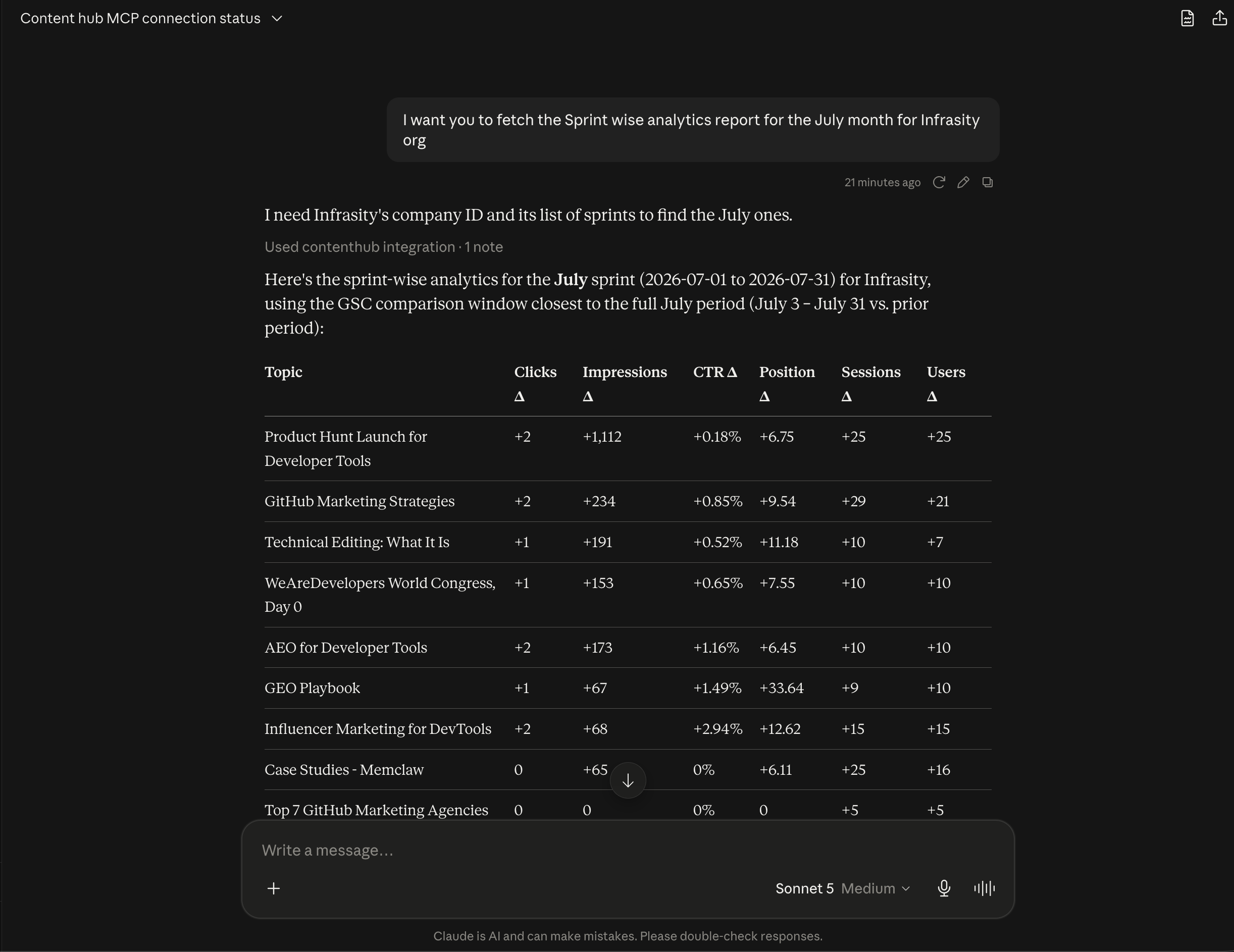
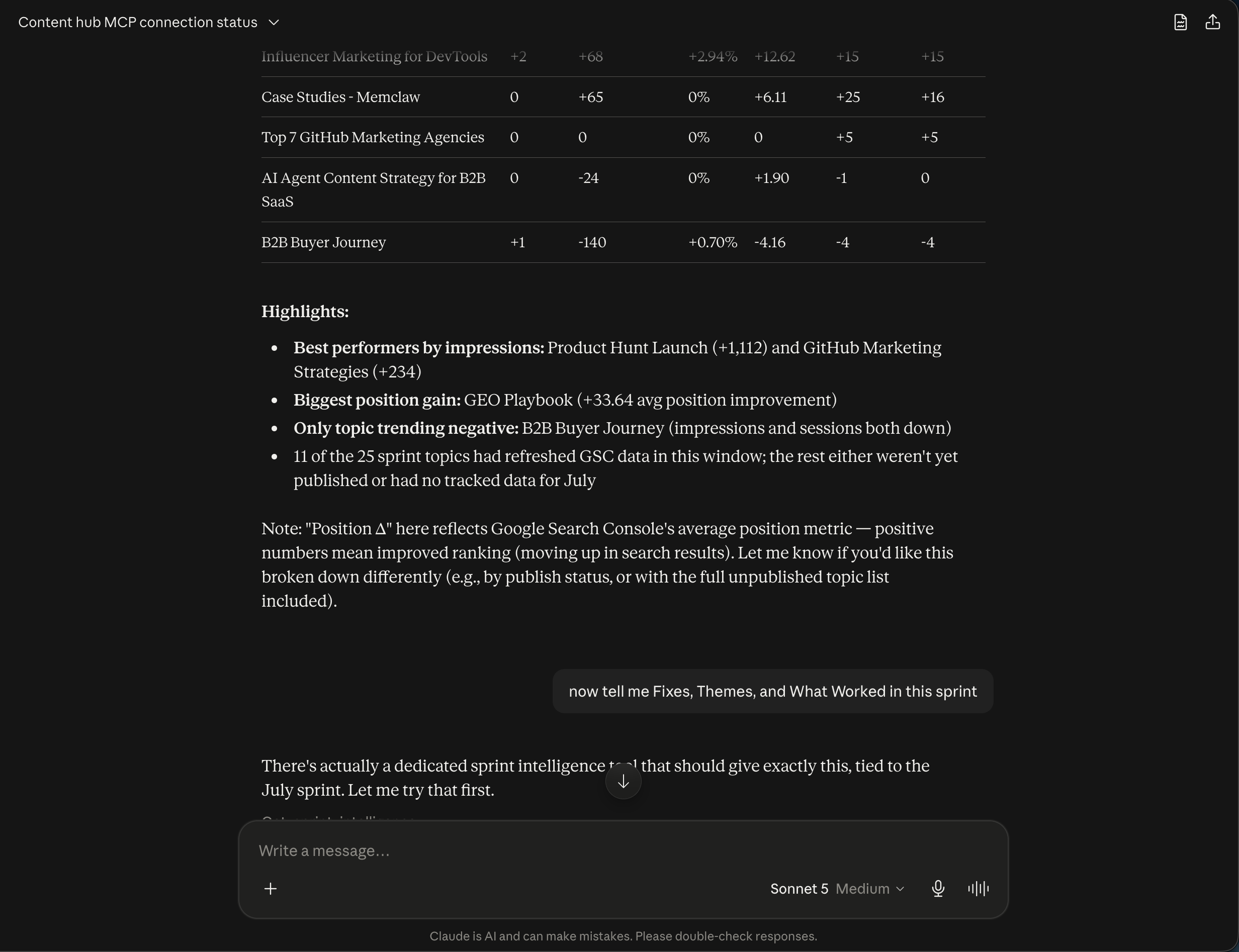
Claude closes the table with a few highlights before you even ask for analysis: the Product Hunt launch piece led on impressions (+1,112), the GEO Playbook posted the sprint's biggest ranking jump (+33.64 average position), and only one topic, B2B Buyer Journey, was trending negative. It also flags that roughly half the sprint's 25 topics had no refreshed GSC data yet, either unpublished or not indexed.
Ask for fixes, themes, and what worked
These three are Content Hub's standard review categories:
- What Worked: the sprint's clearest wins, ranked by the specific signal that proves each one, like an impression spike or a big ranking jump.
- Fixes: the topics actually losing ground, each paired with the signal behind the decline and a concrete suggestion for what to do about it.
- Themes: every topic in the sprint grouped into the recurring content pillars it belongs to, so you can see where the sprint's effort actually went.
With the raw analytics already in the conversation, ask Claude to structure it into a proper review, for example:
"now tell me Fixes, Themes, and What Worked in this sprint"
Claude checks for a purpose-built sprint intelligence tool first rather than guessing. For July, that tool came back empty, so it says so directly and falls back to deriving the review straight from the sprint analytics it already pulled instead of quietly making something up.
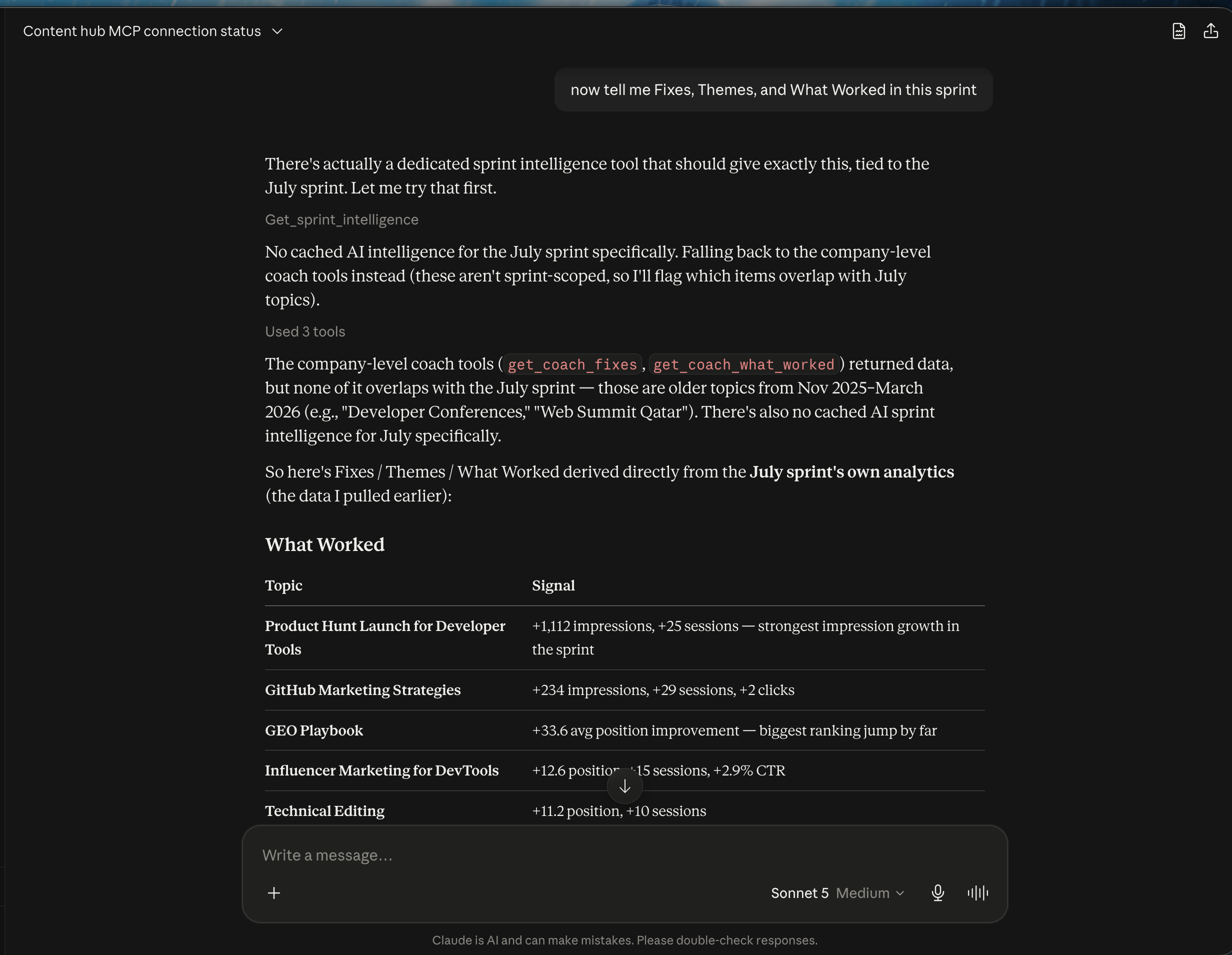
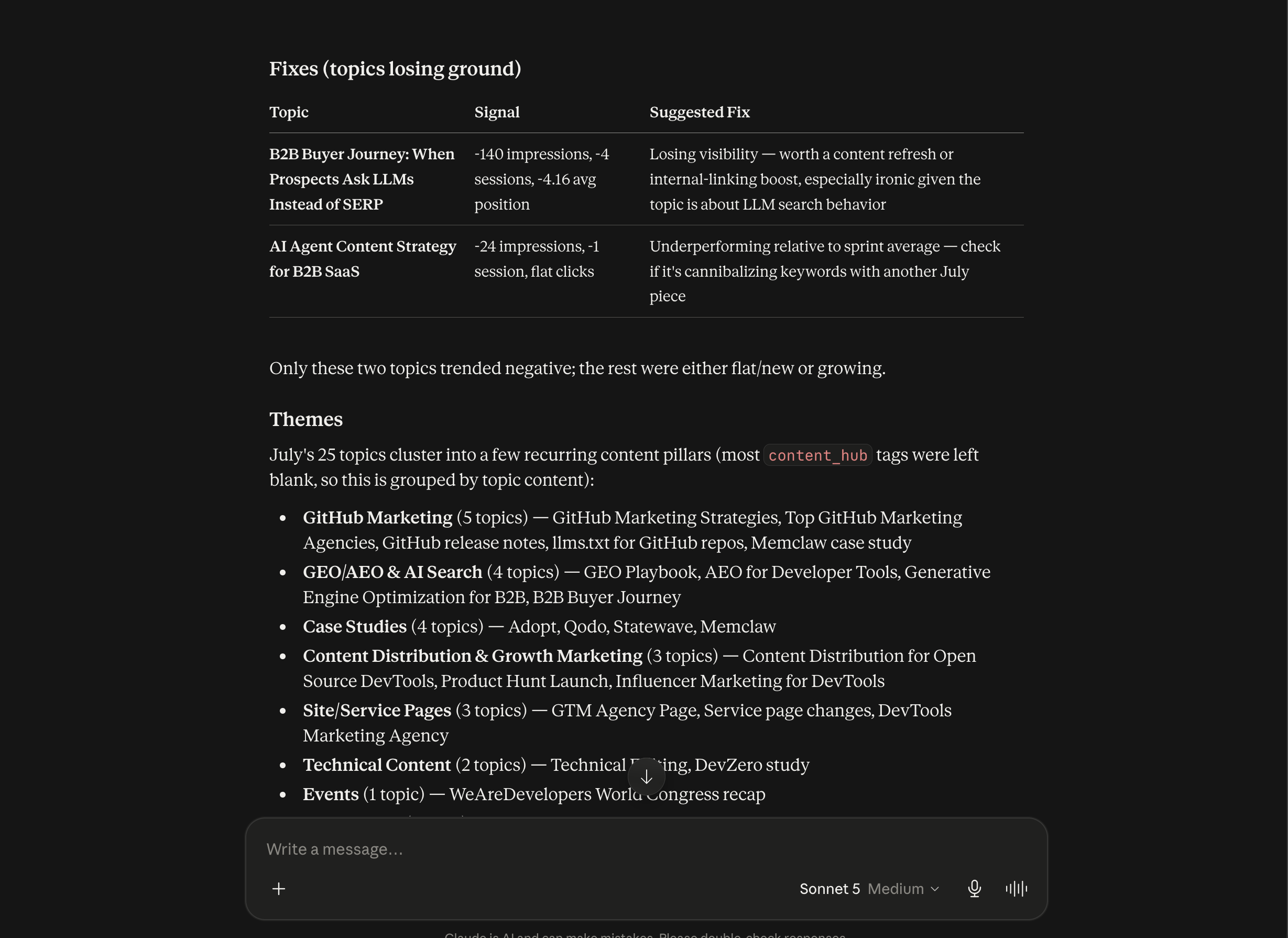
For What Worked, it ranks the sprint's clearest wins: the Product Hunt launch piece for its impression growth, the GEO Playbook for its outsized ranking jump. For Fixes, only two topics were actually losing ground:
| Topic | Signal | Suggested Fix |
|---|---|---|
| B2B Buyer Journey: When Prospects Ask LLMs Instead of SERP | -140 impressions, -4 sessions, -4.16 avg position | Losing visibility, worth a content refresh or internal-linking boost |
| AI Agent Content Strategy for B2B SaaS | -24 impressions, -1 session, flat clicks | Underperforming relative to sprint average, check for keyword overlap with another topic |
For Themes, July's 25 topics cluster into a handful of recurring pillars, GitHub Marketing and GEO/AEO & AI Search being the two largest.
Ask for takeaways
If you want the whole review condensed into something scannable, just ask:
"can you please give me some takeaways"
Claude returns a short numbered list, each takeaway backed by the specific numbers behind it: GEO/AEO content punching above its weight (the GEO Playbook's ranking jump, AEO for Developer Tools growing solidly), GitHub Marketing as the sprint's steadiest performer, the Product Hunt piece driving the biggest single traffic spike, the slightly ironic case of B2B Buyer Journey losing search visibility on a piece about search behavior, and a reminder that nearly half the sprint's topics still have no tracked data to check next time.
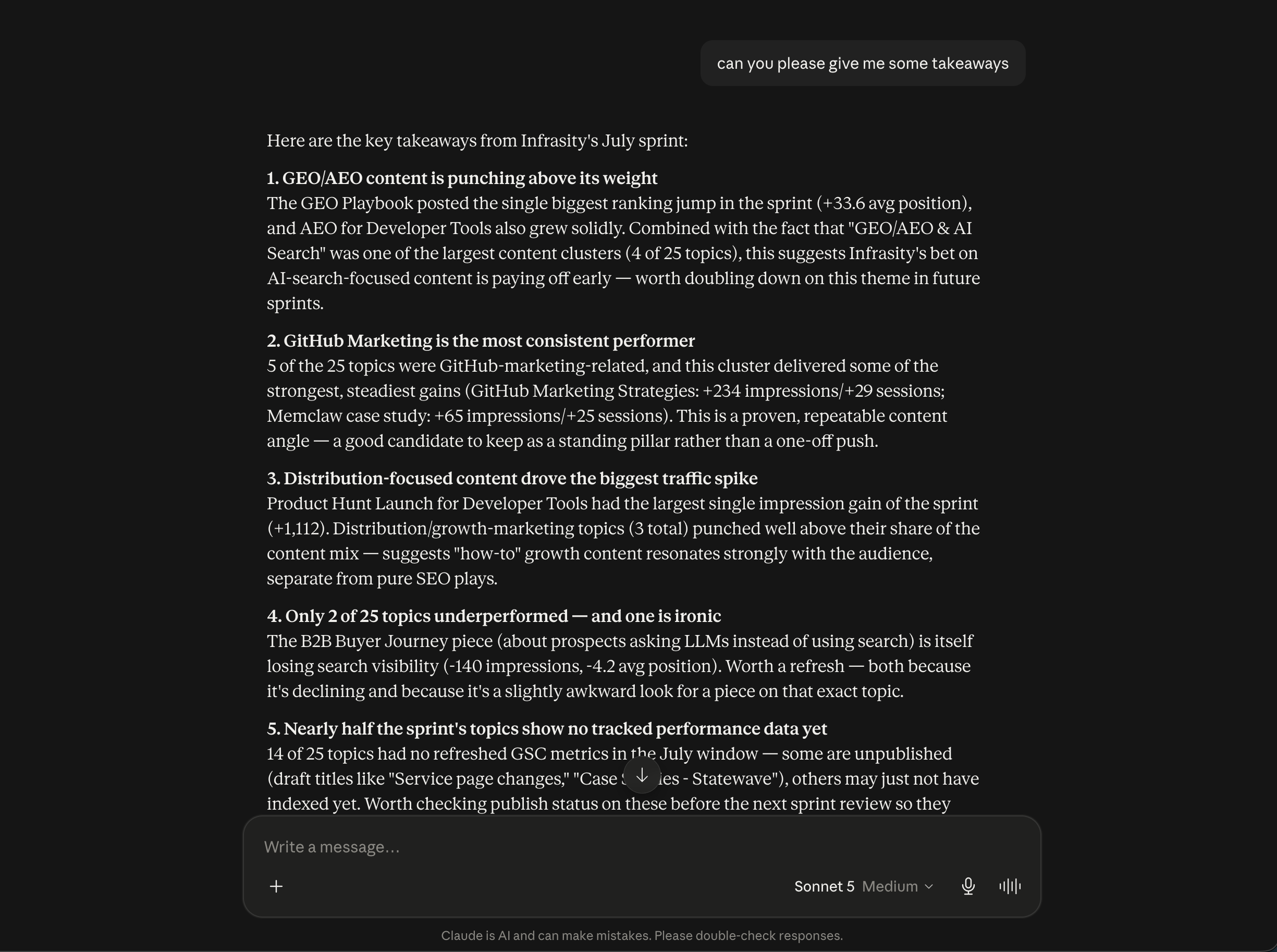
A raw sprint analytics pull turns into a structured fixes, themes, and takeaways review, all inside one Claude Desktop conversation, no spreadsheet work required.
Open app.infrasity.com and ask for your own sprint's fixes, themes, and what worked to see where this month's content actually needs attention.
How to Know Who's Getting Cited Instead of You
Track exactly who's winning the citations you're not, prompt by prompt, over Content Hub MCP, instead of manually comparing domains one at a time.
How to Fetch the GSC and GA4 Data Using Content Hub MCP
Pull Google Search Console and GA4 data for any page straight into a Claude Desktop chat, then have Claude interpret it instead of cross-referencing two dashboards by hand.