Sprint Analysis: How to Get Sprint Data From Content Hub Using MCP
Pull sprint data, topics, publish status, GSC performance, and trend history straight into a Claude Desktop chat instead of clicking through the Sprints tab manually.
A sprint is Content Hub's content planning cycle: a batch of topics assigned to a specific window, usually a month, that move from idea through drafting to published. Once Claude Desktop is connected to Infrasity's Content Hub via MCP (see the Content Hub MCP setup guide if you haven't done that yet), you can pull sprint data, including topics, publish status, GSC performance, and trend history, straight into a chat instead of clicking through the Sprints tab manually.
Before you start, make sure:
- At least one sprint has been created in Content Hub
- GSC and GA4 are integrated, so there's performance data attached to the sprint
- The sprint's topics are updated with their proper published URLs
Here's the flow, from a full sprint list down to an AI-generated takeaways summary.
Ask Claude for all your sprints
Start broad. Ask Claude to list every sprint for your org, for example:
"can you fetch the data for all the sprints in content hub for Infrasity org?"
Claude returns every sprint's name, start date, end date, and sprint ID, newest first. It's also a useful sanity check: duplicate sprint entries show up in the same list, so you can spot messy data before you dig into any one sprint.
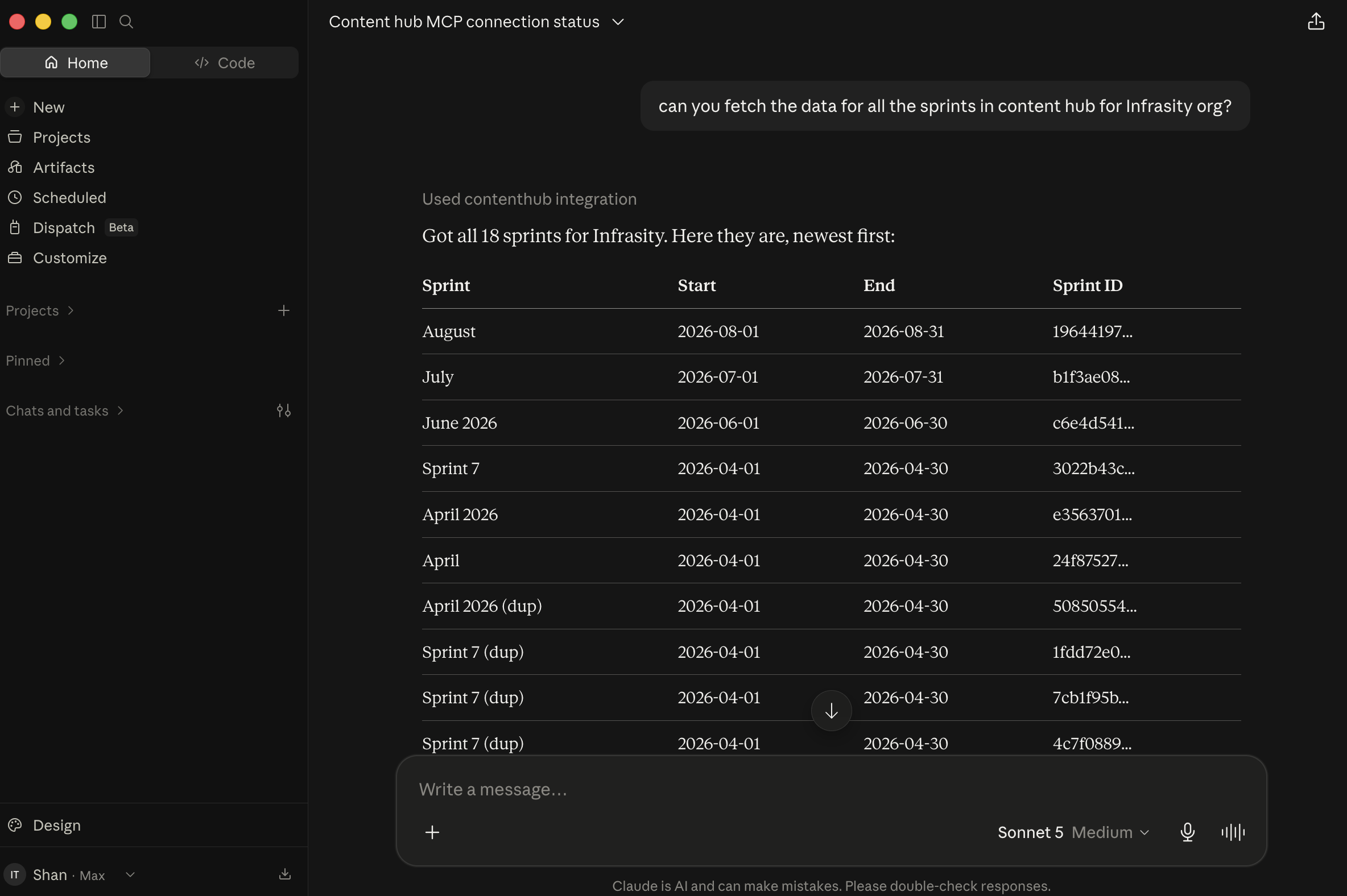
Ask for the full data on one sprint
Once you know which sprint you want, ask for everything on it by name, for example:
"for the June 2026 sprint, can you fetch all the data for Infrasity org?"
Rather than dumping raw JSON, Claude summarizes the sprint into a structured response: an overview (window, topic count, published vs. unpublished), and a full table of every topic in the sprint with its target keyword, publish date, and URL.
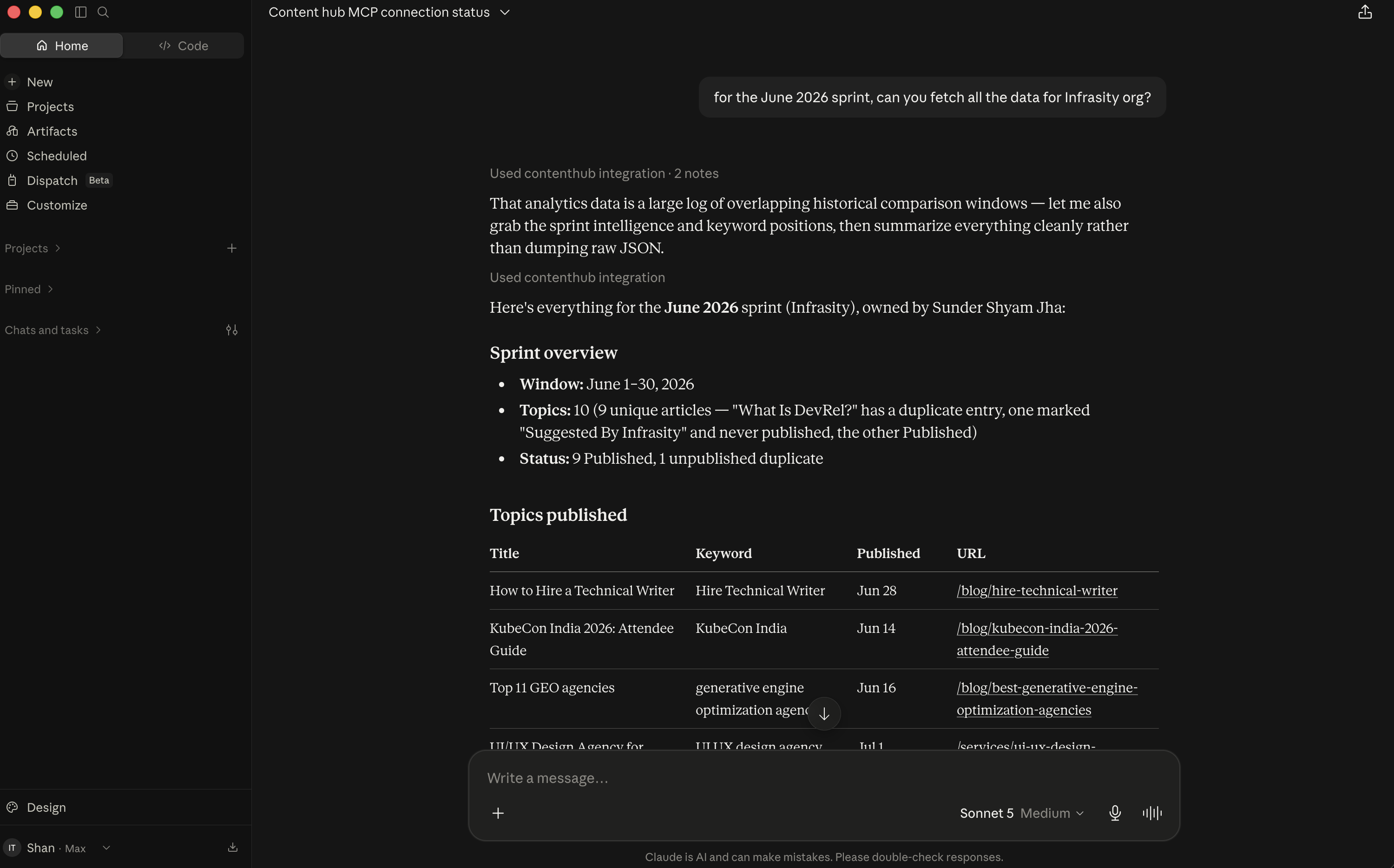
It then pulls in the most recent GSC performance snapshot for the sprint, comparing the last few weeks against the prior period so you can see which articles are gaining or losing search visibility, and closes with a quick headline takeaway before you even ask for analysis.
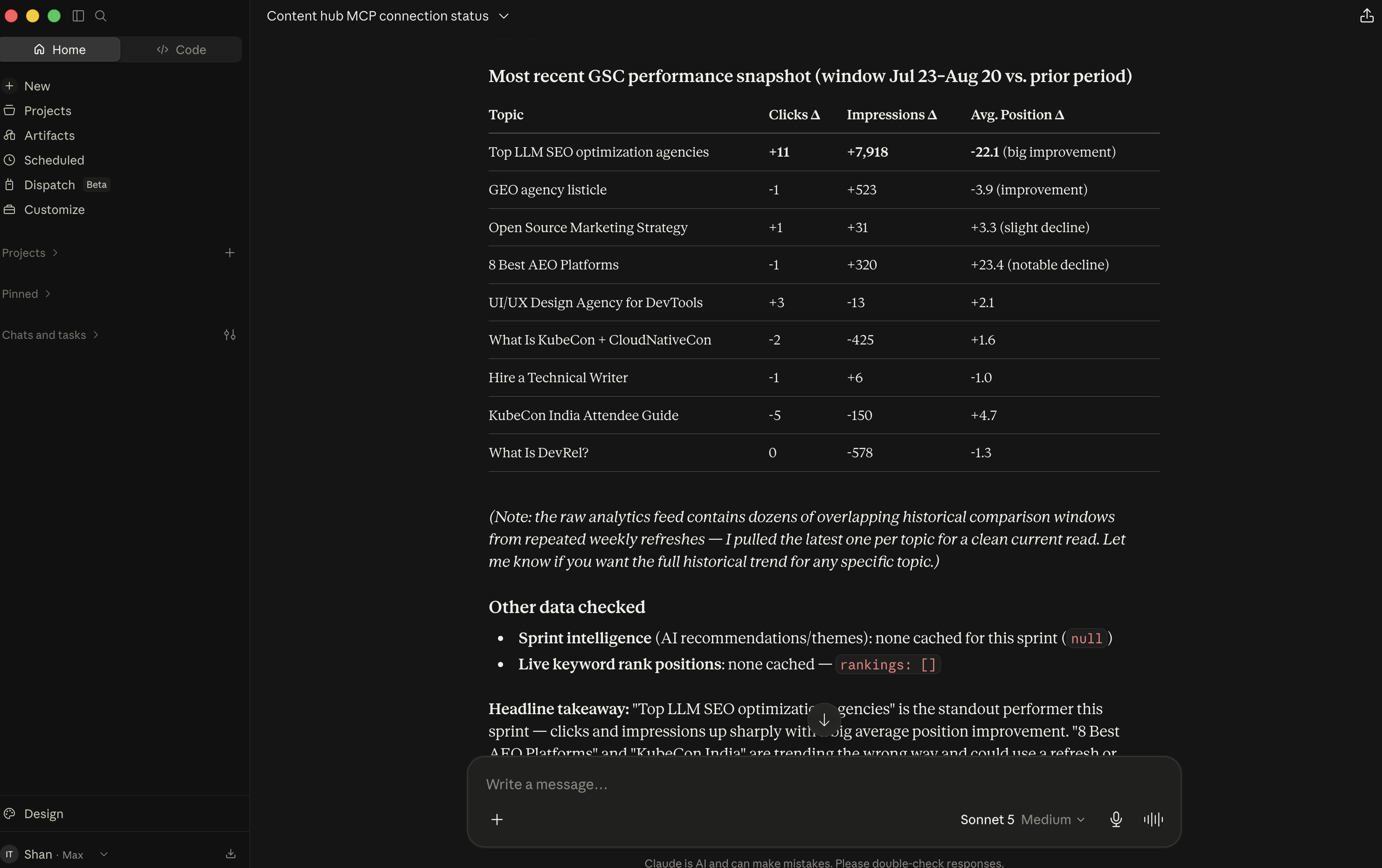
Ask Claude to analyze the data for insights and takeaways
With the raw sprint data already in the conversation, ask Claude to interpret it:
"can you analyse this data and tell me you key insights and takeaways?"
Claude works through the full trend history, not just the latest snapshot, and groups each topic into a category: a breakout winner with a real ranking jump, a steady riser compounding without drama, and event-tied content (like a conference piece) fading on a normal, expected curve rather than a red flag.
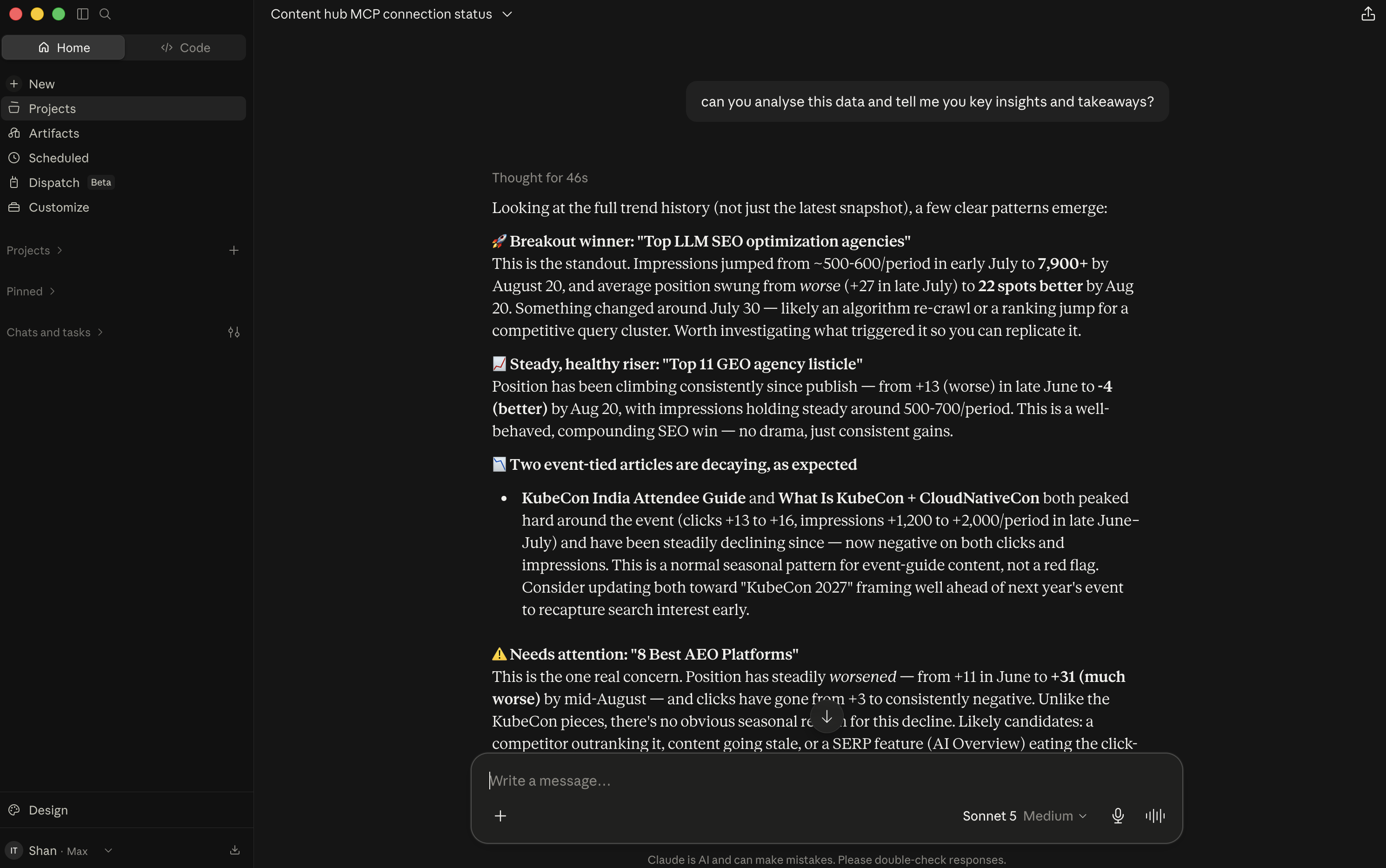
It also flags what needs action: a genuine decliner with a likely cause and fix, a topic with traffic but zero clicks (a CTR problem, not a visibility one), early positive signals on newer content, and any data hygiene issues like duplicate entries. It closes with a one-line bottom line for the sprint tying it all together.
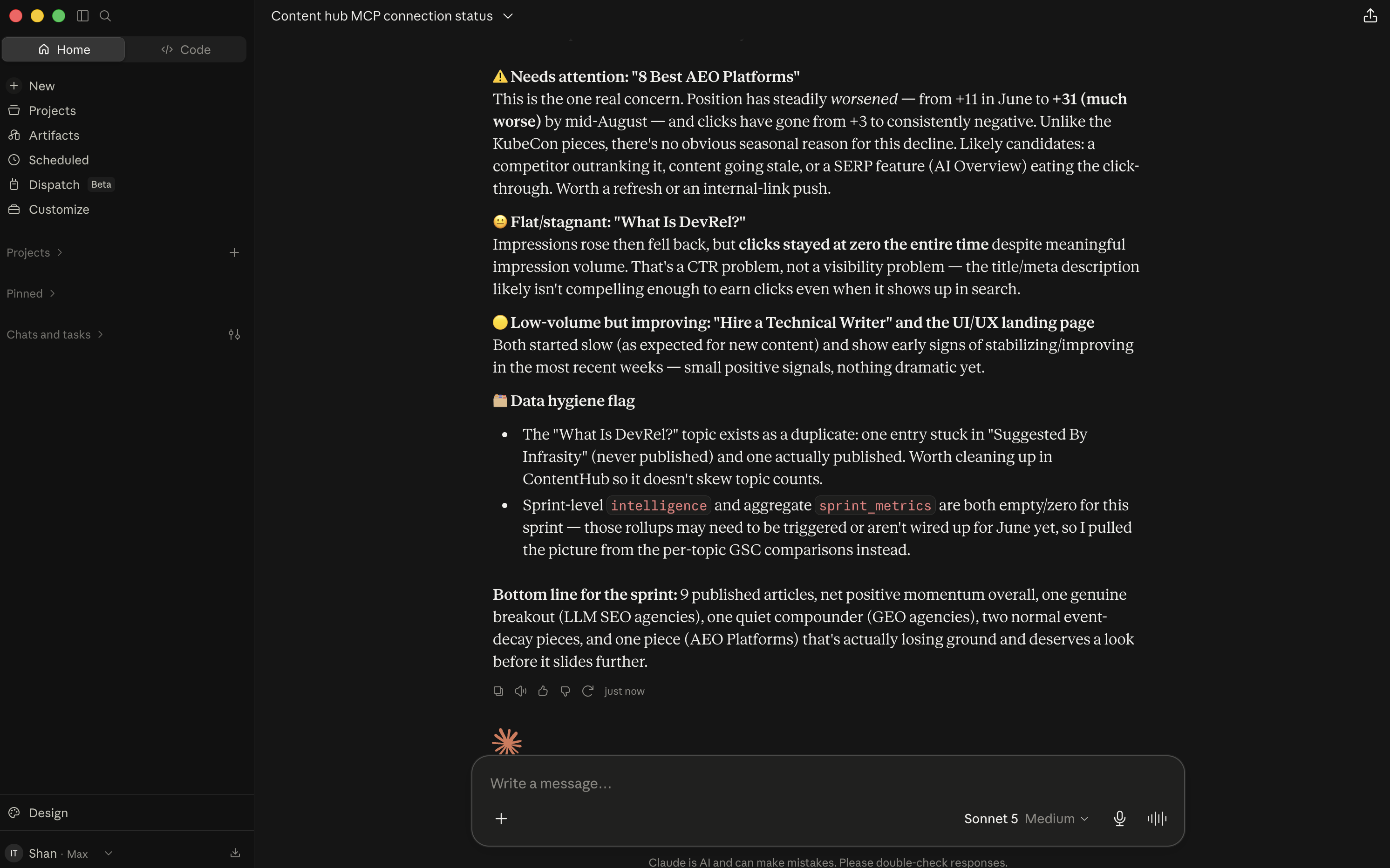
From a full list of sprints down to an AI-analyzed set of takeaways, this whole review happens inside one Claude Desktop conversation, no dashboard clicking required.
Open app.infrasity.com and pull up your current sprint to see how this month's topics are actually performing before you plan the next one.
How to Create a Sprint and Add Topics Using Content Hub MCP
Create a new sprint, populate it with topics, and attach published URLs, entirely from a Claude Desktop chat over Content Hub MCP.
How to Create a GEO Cluster, Add Prompts, and Track Citations via MCP
Create a new GEO cluster, populate it with prompts either directly or by scanning your site, and read the resulting citation and visibility data, all from a Claude Desktop chat over Content Hub MCP.