How to Fetch the GSC and GA4 Data Using Content Hub MCP
Pull Google Search Console and GA4 data for any page straight into a Claude Desktop chat, then have Claude interpret it instead of cross-referencing two dashboards by hand.
GSC (Google Search Console) reports how a page performs in Google's own search results: clicks, impressions, CTR, and average position. GA4 (Google Analytics 4) reports what happens once someone actually lands on the page: sessions, conversions, bounce and engagement rate. Once Claude Desktop is connected to Infrasity's Content Hub via MCP (see the Content Hub MCP setup guide if you haven't done that yet), you can pull both for any page straight into a chat, then have Claude interpret it for you instead of cross-referencing two dashboards by hand.
On the GSC and GA4 dashboards themselves, you only get the raw numbers. You still have to open both, line up the same date range, and work out what's actually going on yourself. Over MCP, Claude pulls both data sources together in one request and does that analysis for you, arriving at a prioritized list of what to do next instead of leaving you with two sets of numbers to interpret.
Before you start, make sure GSC and GA4 are integrated in Content Hub.
Here's the flow, from a raw data pull to a prioritized action list.
Ask Claude to fetch GSC and GA4 data for your page
Ask for both data sources together, naming the page you care about, for example:
"using the Content hub MCP, can you please fetch the GSC + GA4 Data for infrasity.com page"
Claude returns a side-by-side comparison against the prior period. For Search Console, that's clicks, impressions, CTR, and average position, plus a breakdown of top pages, top queries, and performance by segment (blog vs. services pages, for example) so you can see where movement is coming from, not just the aggregate.
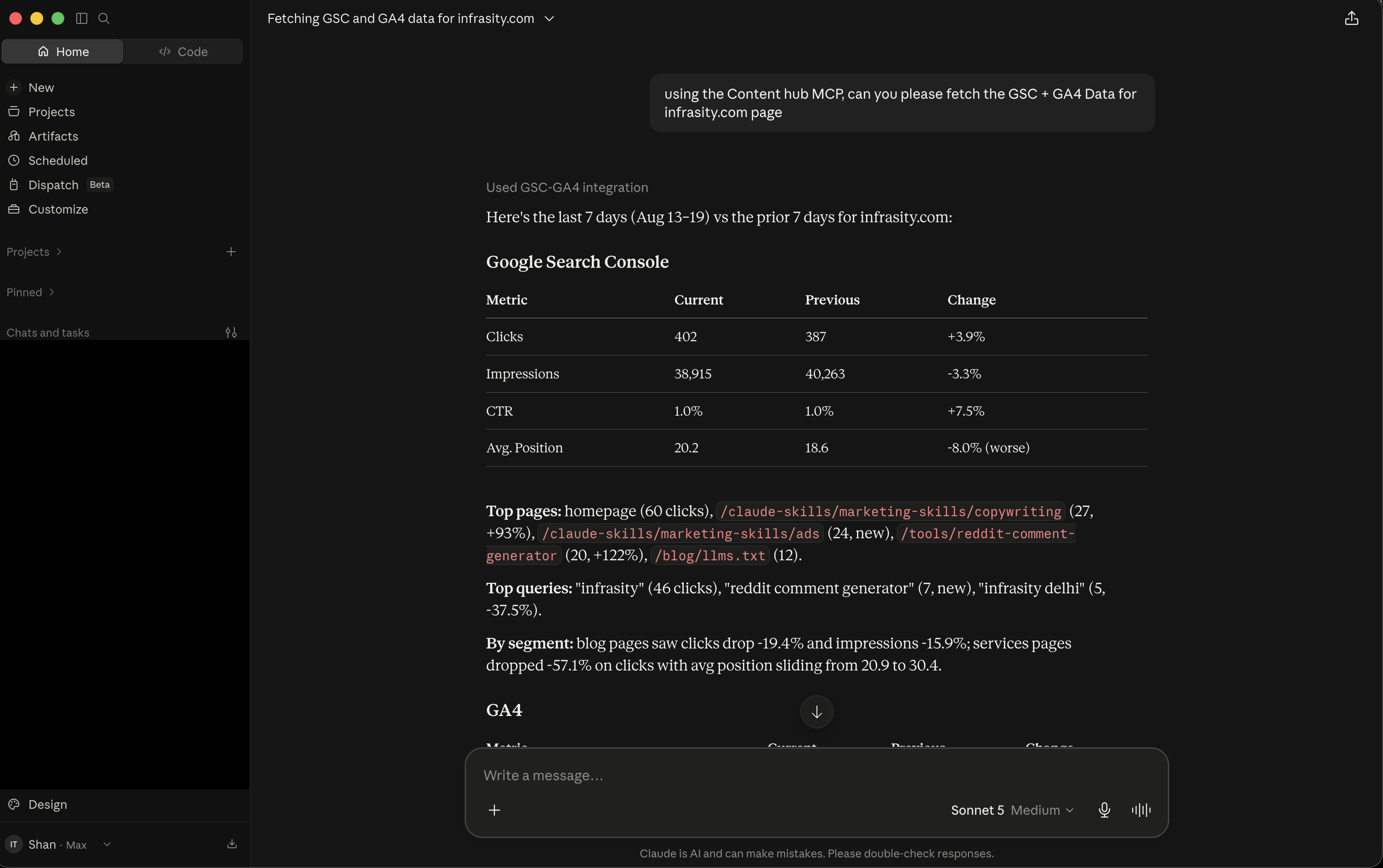
For GA4, that's sessions, users, pageviews, conversions, bounce and engagement rate, plus a breakdown by channel (Organic Search, Direct, Referral, and so on), top landing pages, and AI/LLM referral traffic specifically. Claude closes with a quick read on the headline tension between the two data sources and offers to save the report or send it to Slack.
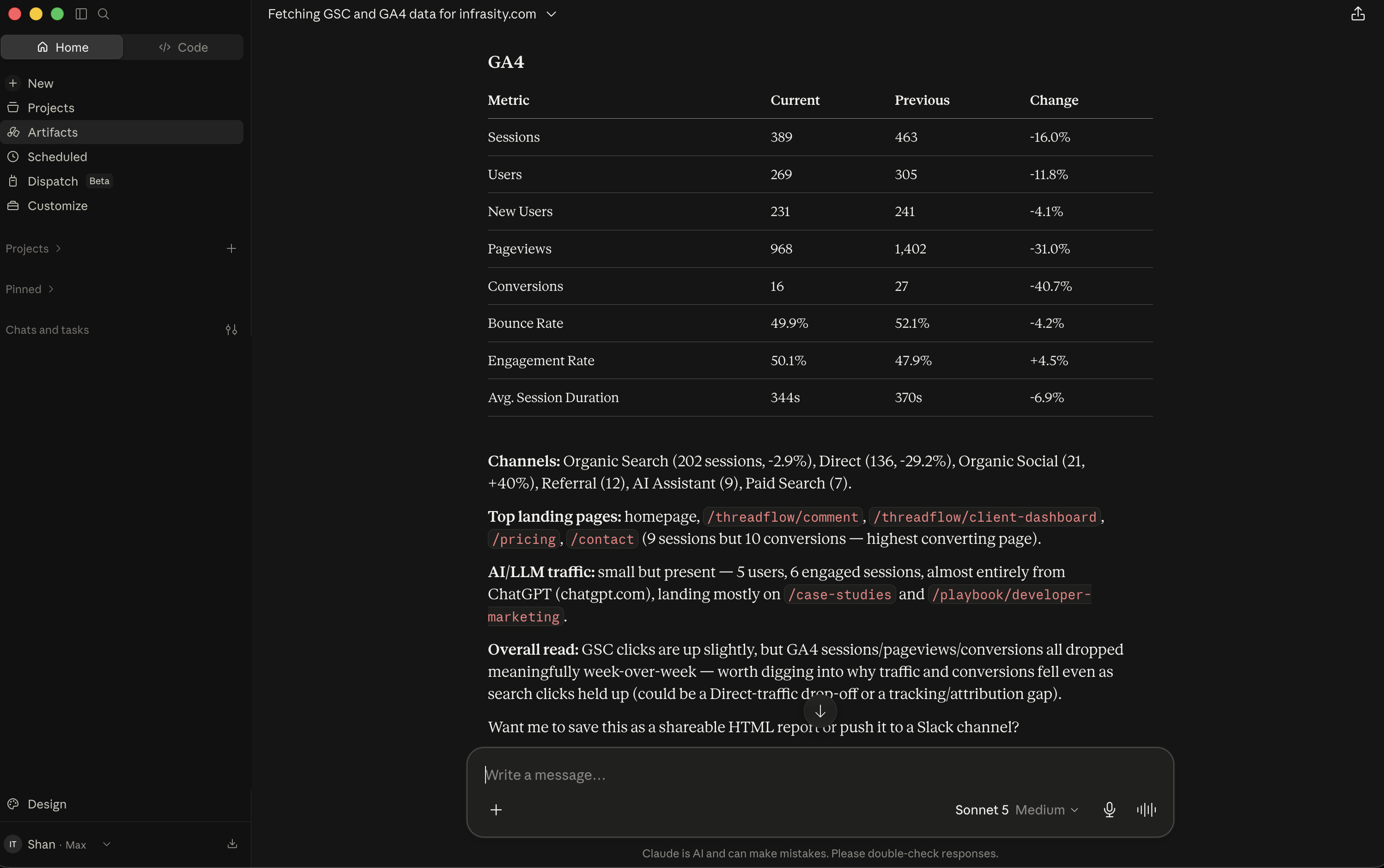
Ask Claude to analyze the data
With the raw numbers already in the conversation, ask Claude to dig into why, for example:
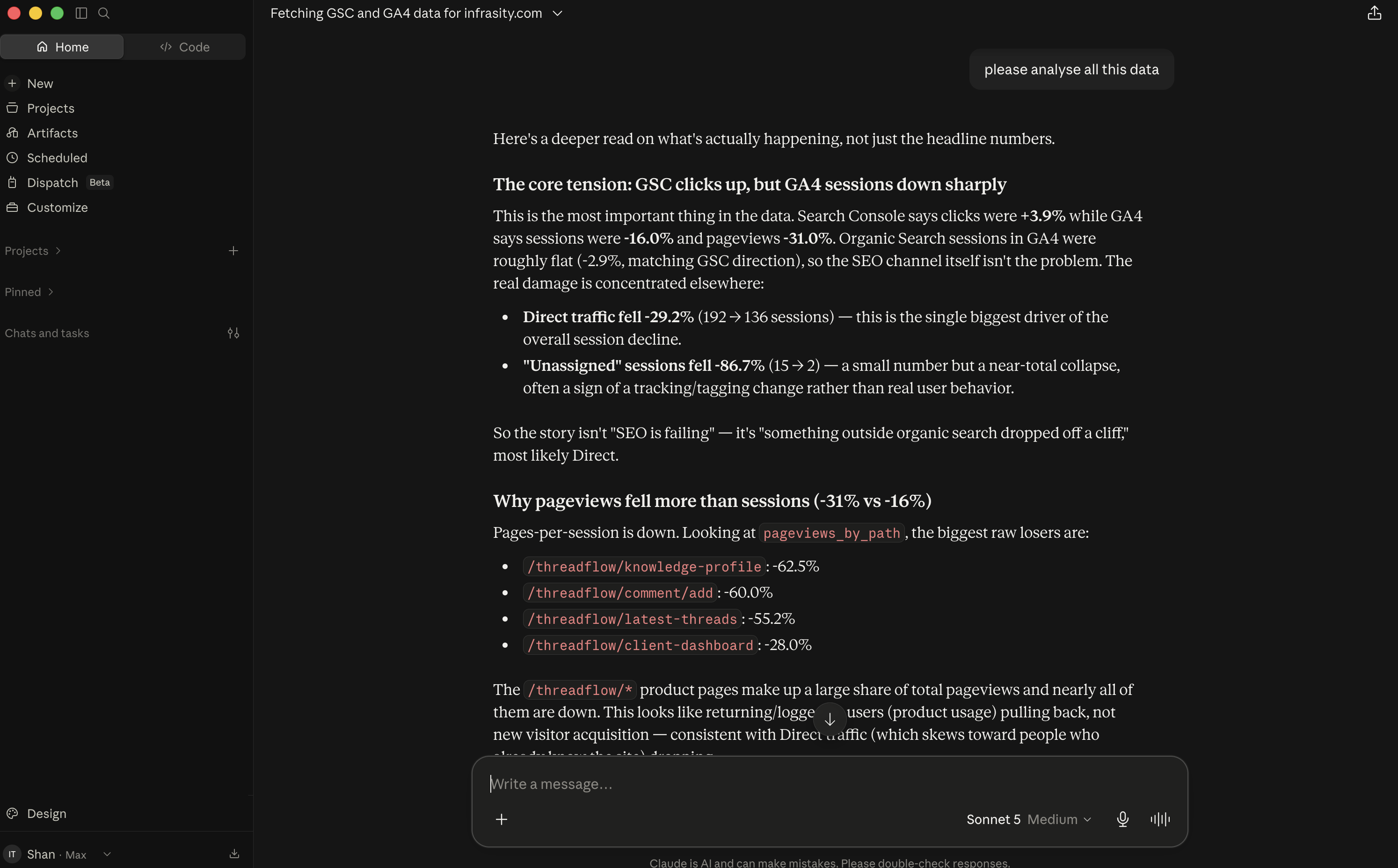
"please analyse all this data"
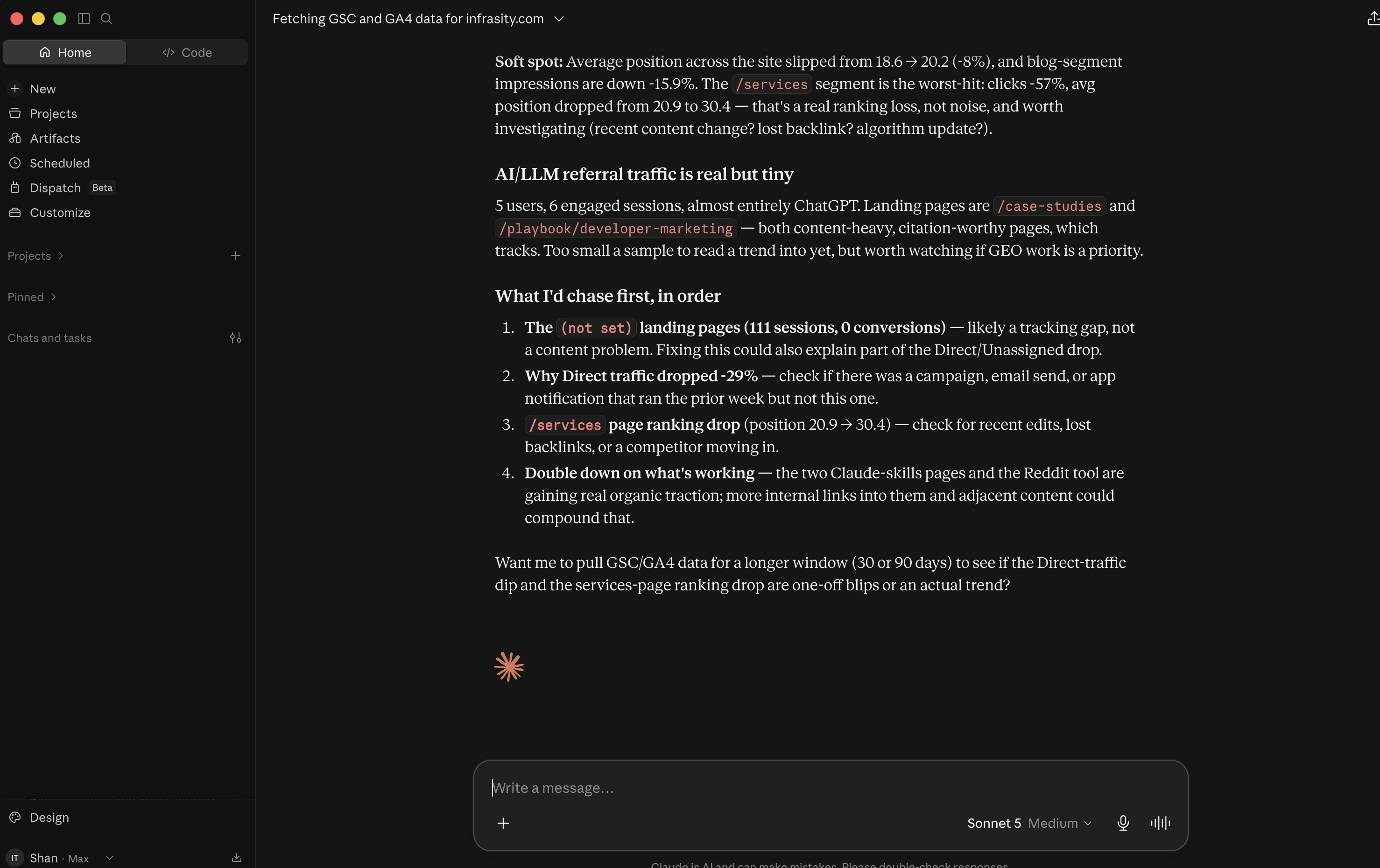
Claude names the central tension (clicks holding up while sessions and pageviews dropped), checks whether Organic Search itself is the problem, and narrows the real damage down to specific traffic sources and pages rather than treating the whole site as one number.
It then digs into why conversions fell, separating a likely tracking or tagging gap from an actual quality problem, and calls out the pages that are genuinely winning or losing on search, by URL, with the metric that proves it.
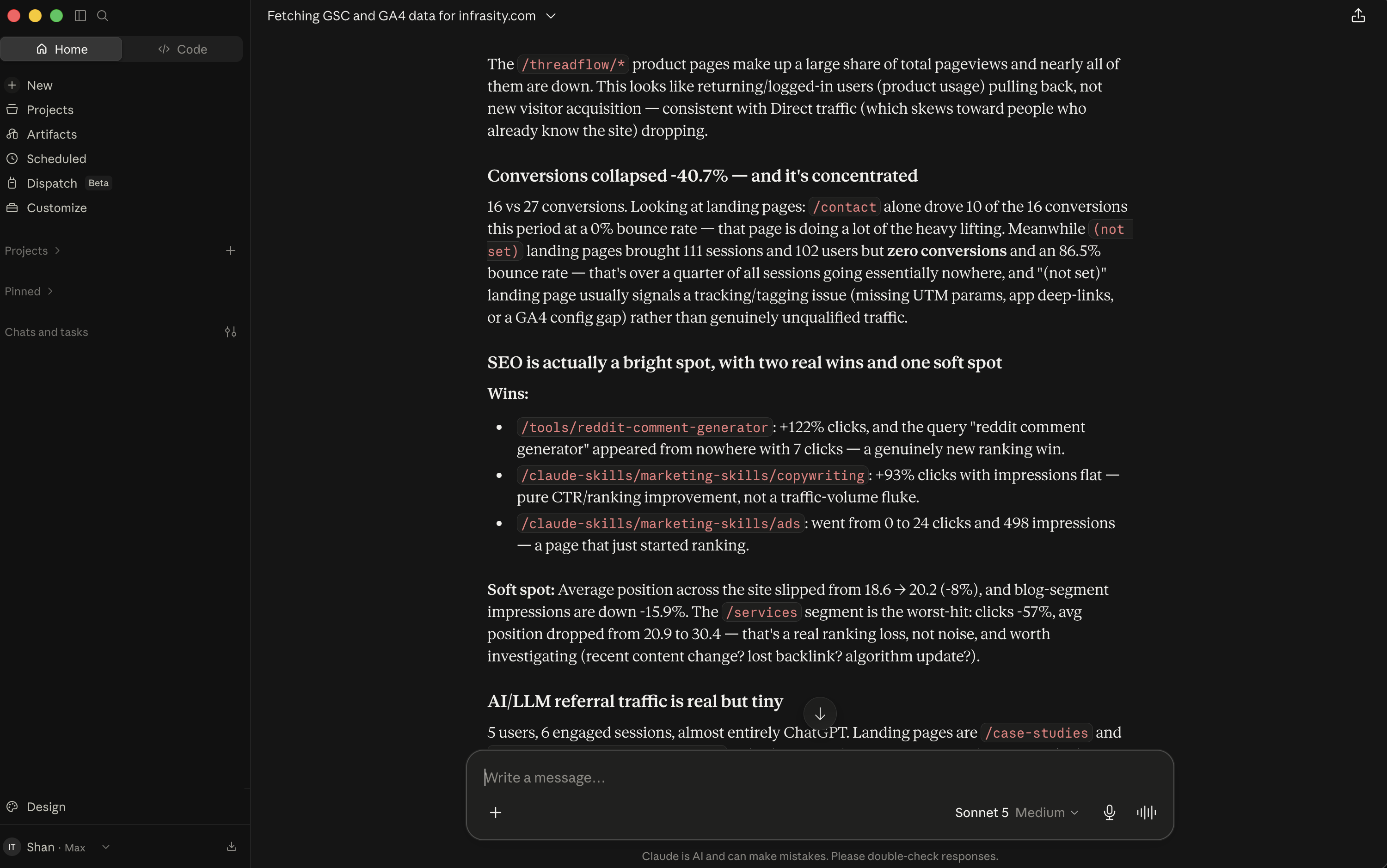
It closes with AI/LLM referral traffic (too small a sample yet to call a trend) and a short, prioritized list of what to investigate first, then offers to extend the analysis to a longer time window.
Ask Claude for takeaways
If you want the analysis condensed into something you can act on or share, just ask:
"please give me takeaways"
Claude returns a short numbered list, each point paired with the data behind it: SEO is healthy and the real problem is elsewhere, conversions likely dropped partly from a tracking gap rather than genuinely dead traffic, and two specific pages are real SEO wins worth noting.
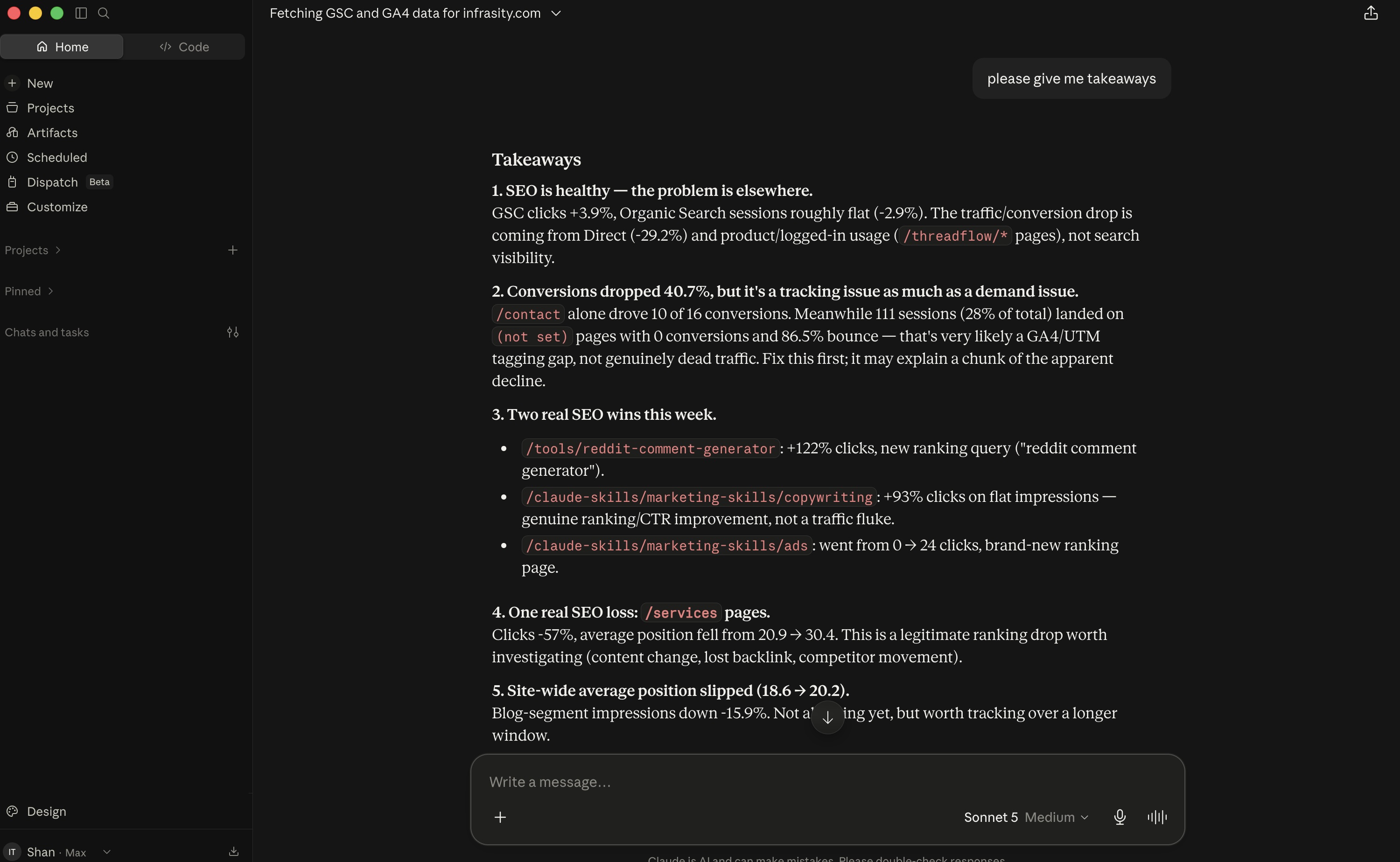
The rest covers one real SEO loss worth investigating, a slight site-wide position dip, and AI/LLM traffic as still too early to call. It closes with a short, priority-ordered list of next steps, from fixing the tracking gap to building on pages already gaining momentum.
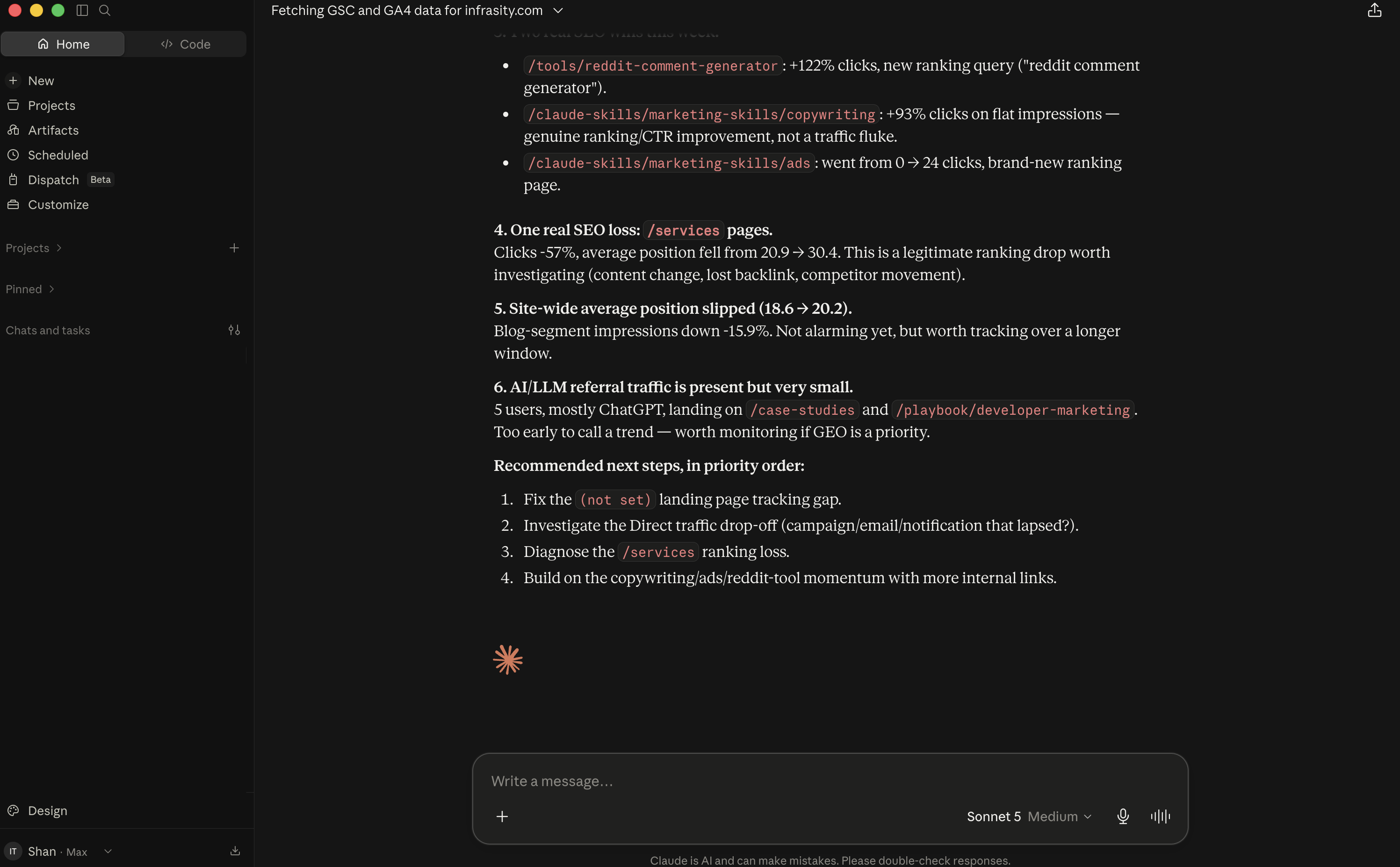
A raw GSC and GA4 pull becomes a prioritized action list, all inside one Claude Desktop conversation, with no dashboard-hopping required.
Head to app.infrasity.com and pull GSC and GA4 for your own top page to see whether your search wins are actually translating into real traffic.
How the Sprint Analytics Report Works: Fixes, Themes, and What Worked
Turn a raw month of sprint analytics into a structured performance review over Content Hub MCP, complete with what's working, what needs fixing, and the recurring content themes.
How to Check Published Blog Performance at a Glance
Pull blog performance across multiple sprints in one message over Content Hub MCP, complete with a chart, the full publish log, and Claude's takeaways.