How to Run GEO/AEO Audits Using Content Hub MCP
Run a full GEO/AEO audit from a single chat message, on your own domain, a single page, or any company's docs, all over Content Hub MCP.
A GEO/AEO audit checks how citeable a domain or page actually is to AI models: things like structured data, answer-first formatting, freshness signals, and whether AI crawlers can even read the page at all. Once Claude Desktop is connected to Infrasity's Content Hub via MCP (see the Content Hub MCP setup guide if you haven't done that yet), you can run a full audit from a single chat message. Claude decides what kind of audit to run based on what you give it: a bare root domain triggers a full crawl, a specific page path triggers a single-page audit, and a domain that isn't an Infrasity client at all still gets a standalone live audit.
Here are all three, with a real example of each.
Domain-wide audit
Give Claude a bare root domain and it runs a full crawl, for example:
"can you do domain wide audit for infrasity.com using Content Hub MCP"
Claude explains what it's about to do before running it (a root domain means a full crawl across roughly a dozen pages and dozens of checks), then returns an overall score with a full category breakdown covering content structure, GEO and AEO readiness, technical SEO, structured data, authority, and content quality.
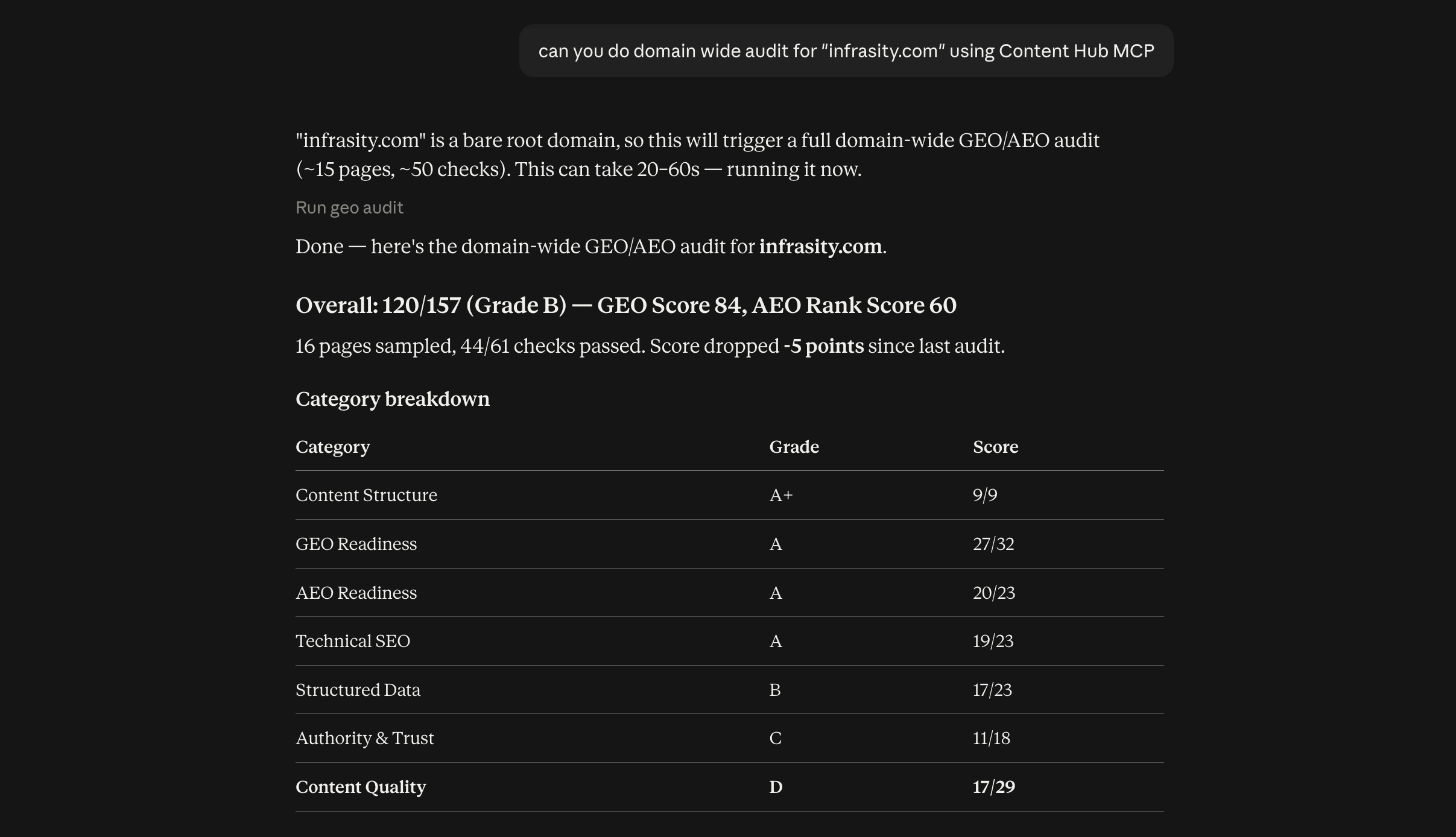
From there, Claude walks through what's strong (things like a well-structured llms.txt, every AI crawler allowed, solid internal linking) and then the biggest problems ranked by impact, usually led by weak content quality and gaps in authority signals like missing author attribution or freshness dates.
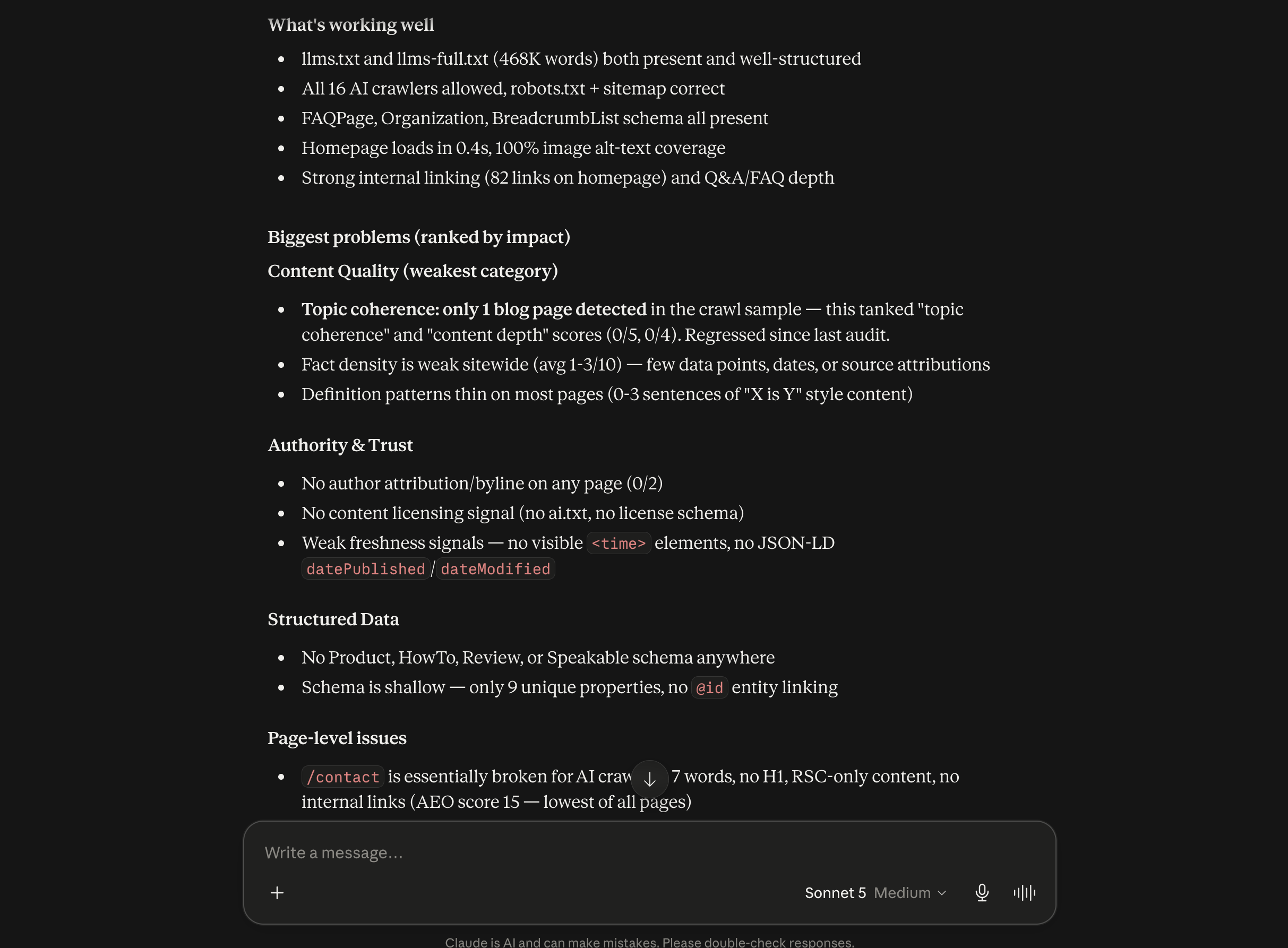
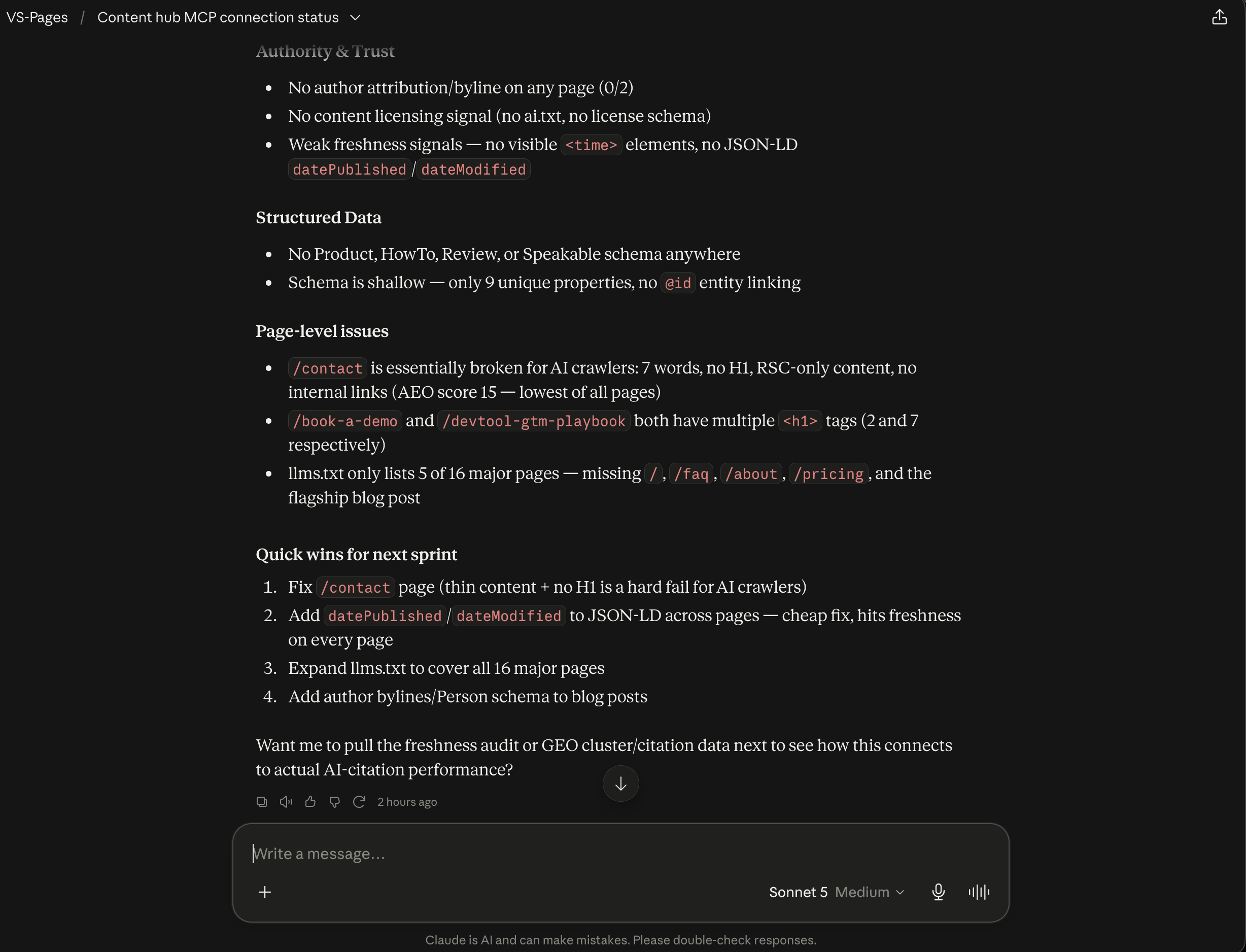
It closes by naming specific pages with structural issues (missing H1s, duplicate H1s, thin content) and a short quick-wins list of the highest-leverage fixes, then offers to pull citation data next to see how the audit connects to actual AI-citation performance.
Single-page audit
Give Claude a specific page path instead of a root domain, and it runs a lighter, single-page audit instead of a full crawl, for example:
"can you do a single page audit for https://www.infrasity.com/services/developer-marketing-agency"
Claude notes the difference upfront (a specific path means a single-page check, not a crawl), then returns a score broken down by section, covering semantic answer coverage, crawlability, schema signals, internal linking, and content structure.
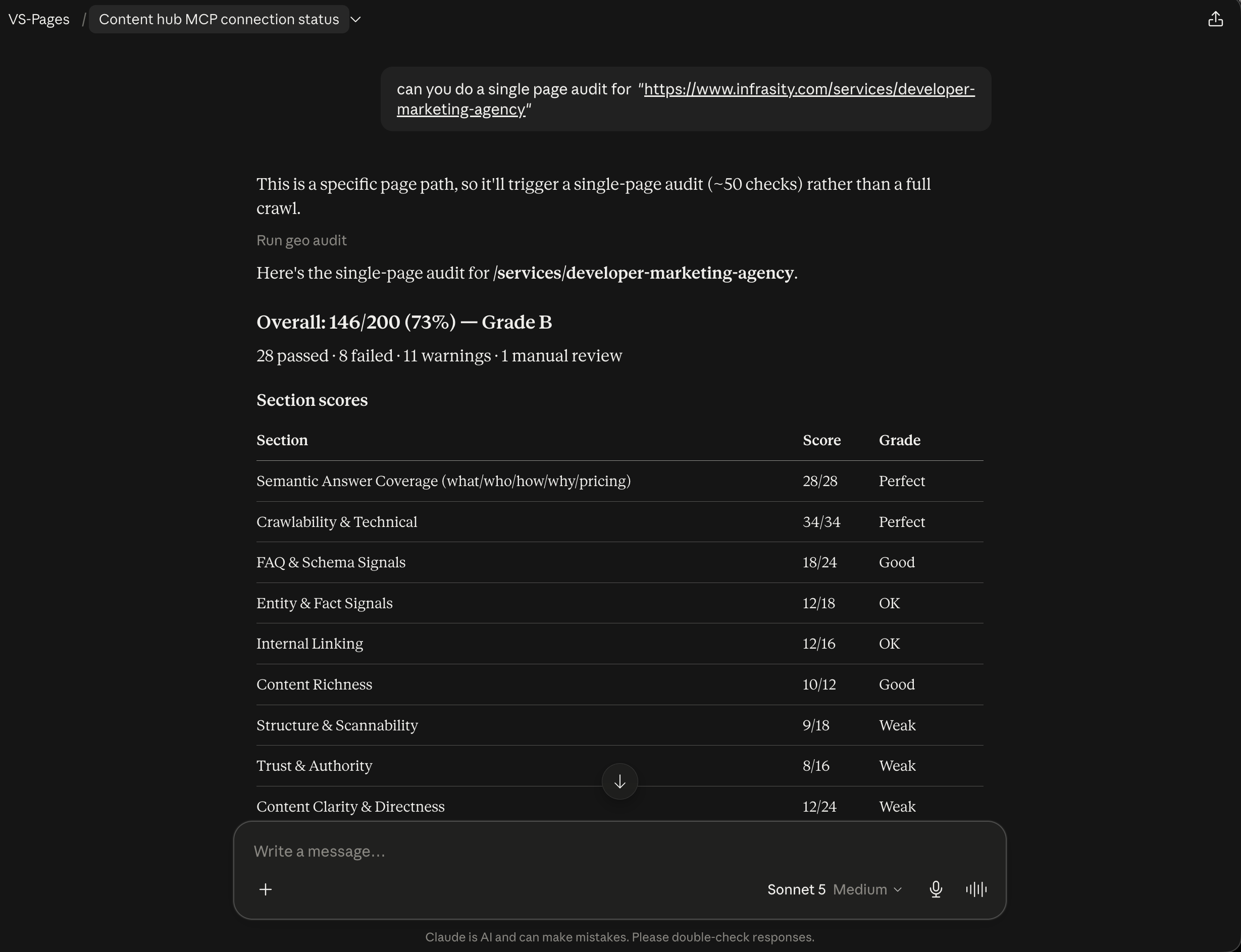
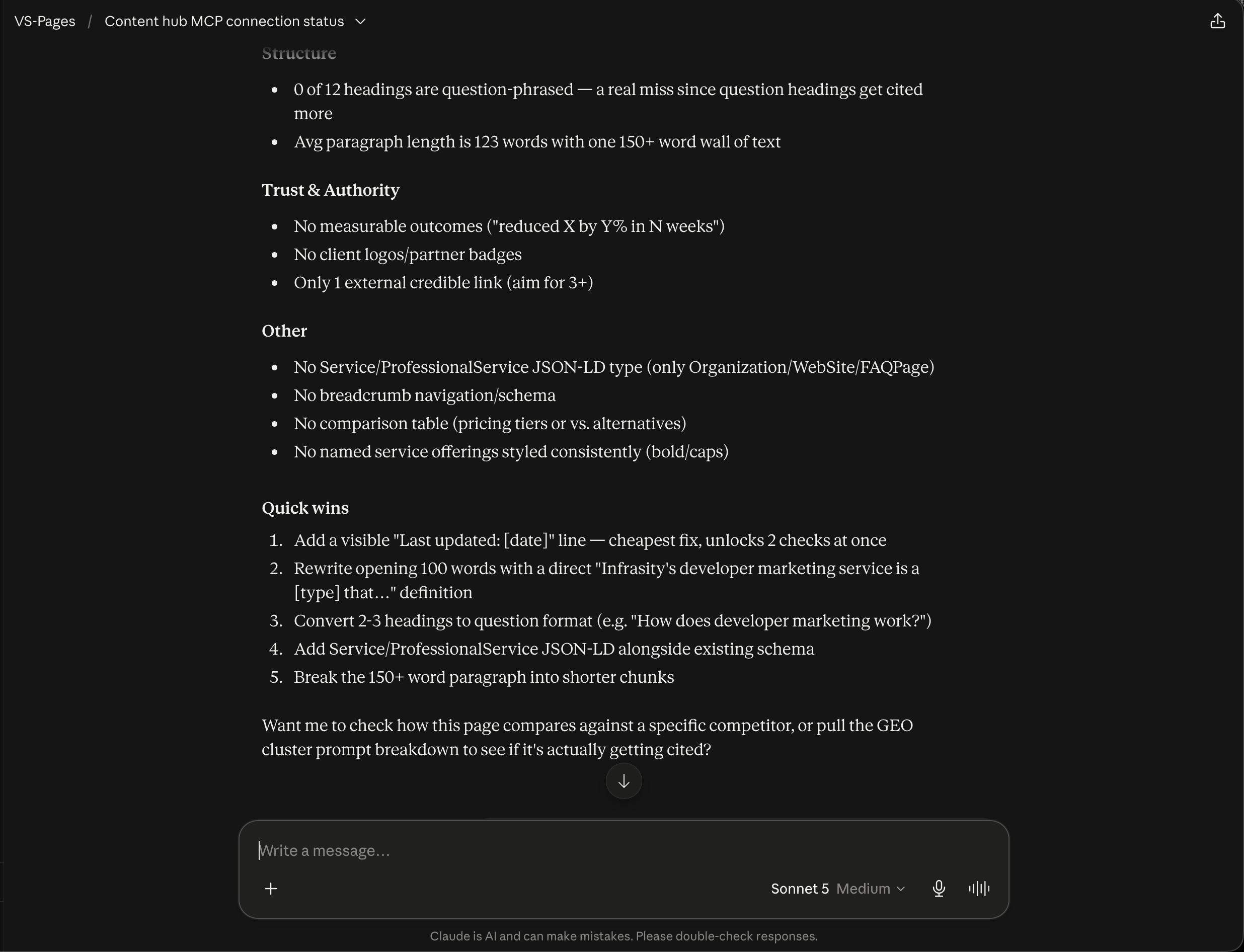
Claude sets what's strong (fully covered semantic answers, flawless crawlability, solid internal linking) against the key failures to fix, usually grouped around freshness (no visible last-updated date), unclear opening copy that buries the direct answer, and headings that aren't phrased as questions.
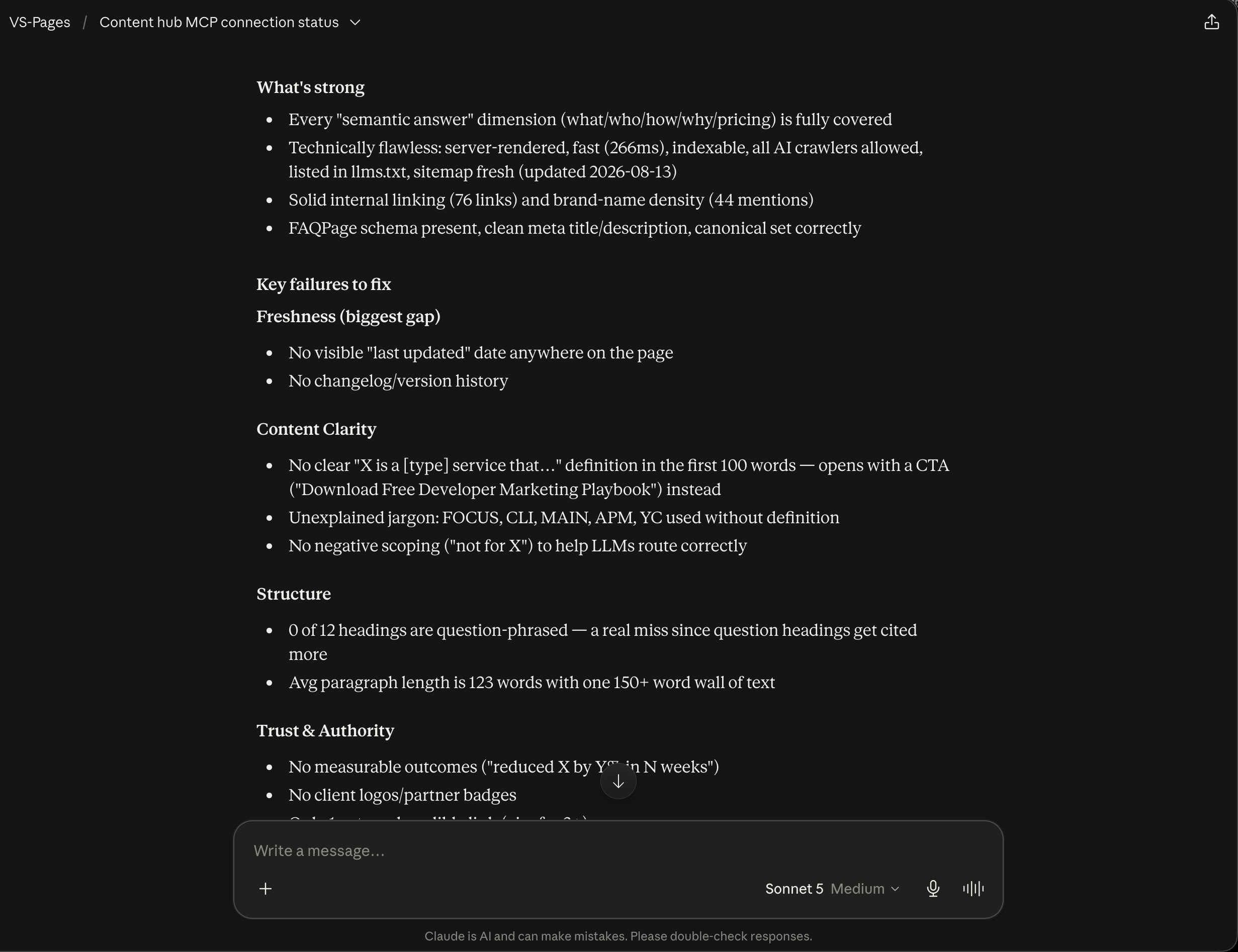
It closes with trust and authority gaps (no measurable outcomes cited, no client logos), any missing schema or breadcrumb structure, and a quick-wins list of concrete fixes, down to the exact heading or opening line to rewrite. It also offers to compare the page against a competitor's.
Docs audit, for domains outside Infrasity
You're not limited to Infrasity's own client domains. Give Claude a documentation URL for any company, and it runs a standalone live audit instead, for example:
"can you do the docs audit for https://openrouter.ai/docs/quickstart"
Claude is explicit about the difference before returning results (this one runs without a linked company profile, since the domain isn't an Infrasity client, as a standalone live audit), then scores the docs across sections like AI/LLM discoverability, technical crawlability, content completeness, and agent tooling.
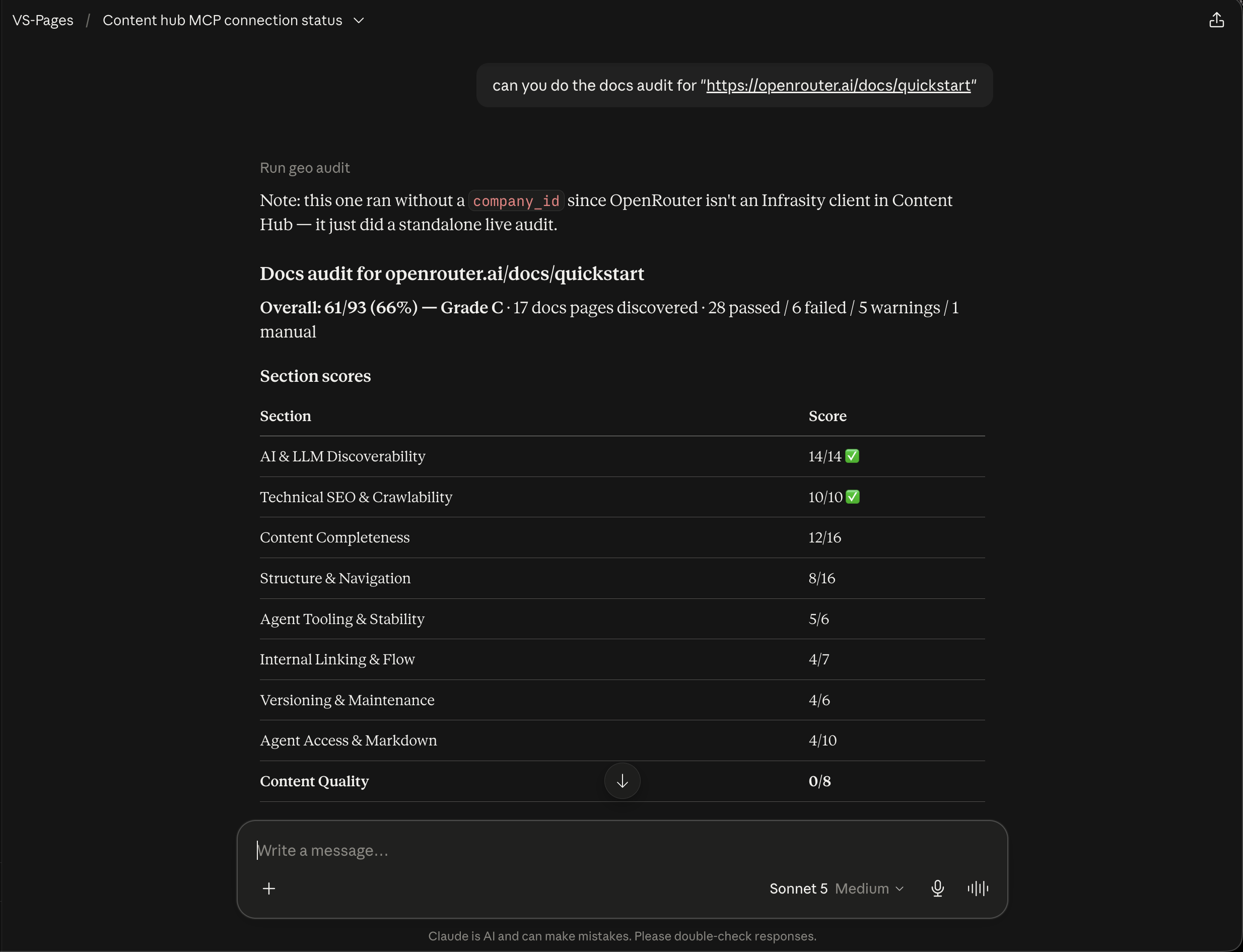
It covers what's strong (a well-configured llms.txt and robots.txt, documented code examples and error codes) against key problems, usually led by weak content quality (a quickstart page too thin to actually walk a user to a working state) and pages returning errors specifically to AI crawlers even though the docs are otherwise indexable.
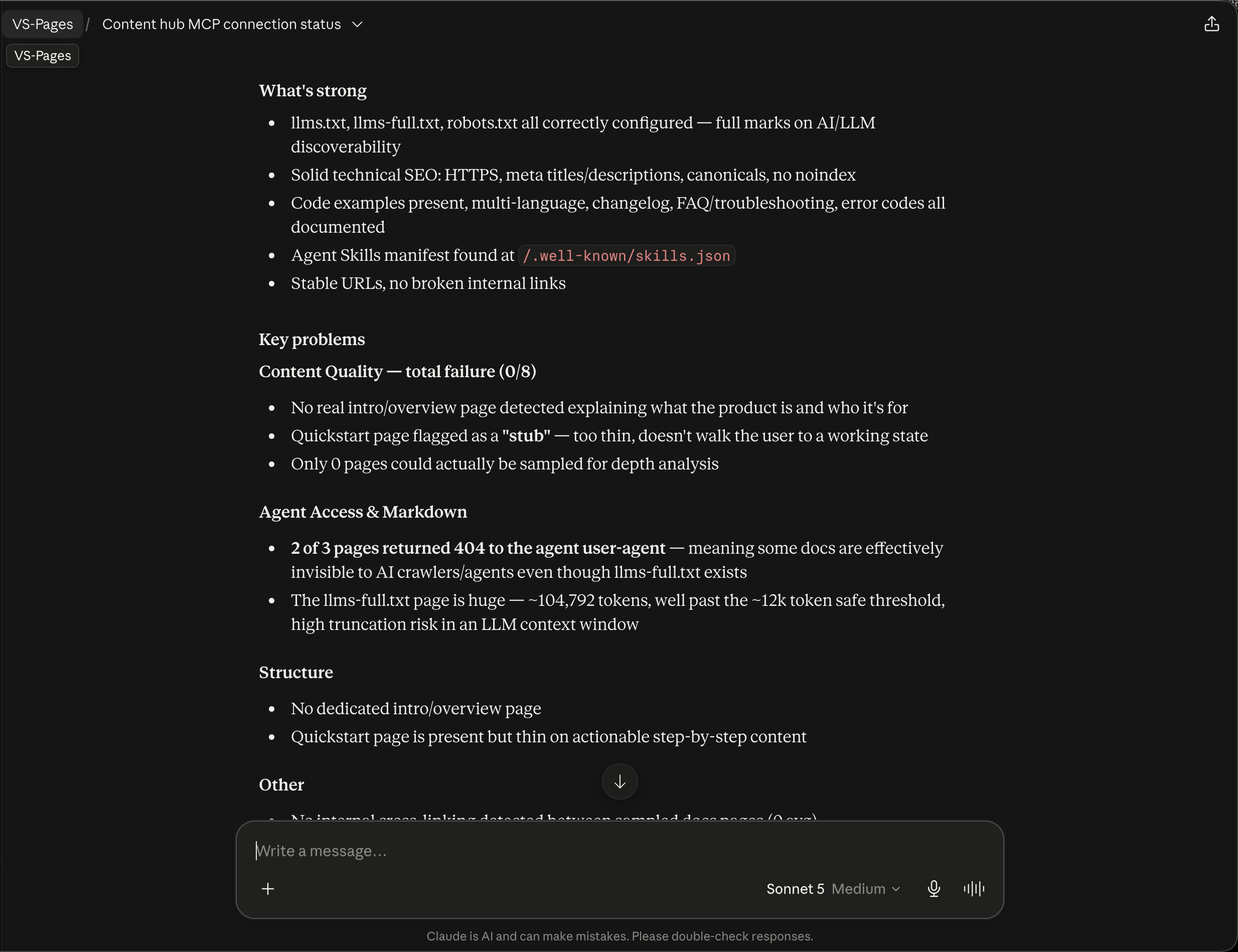
It closes with structural gaps (no internal cross-linking between docs pages, no MCP server endpoint listed) and a quick-wins list, from fleshing out the quickstart content to splitting an oversized llms-full.txt file, then offers to run a full domain audit or compare against a competitor's docs.
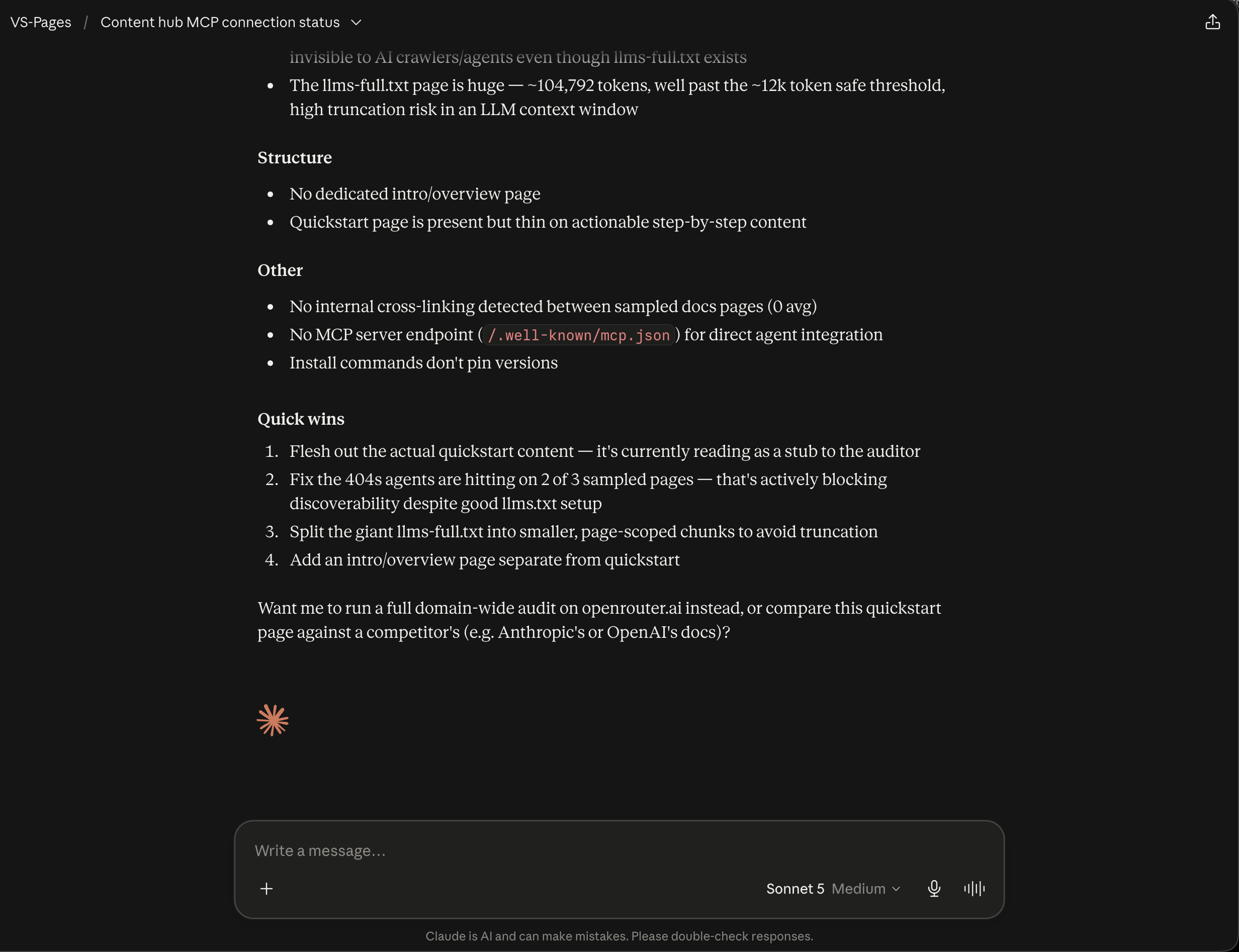
Three audit modes, one MCP connection: a full domain crawl, a focused single-page check, and a standalone docs audit for any company, all without leaving the chat.
Head to app.infrasity.com and run an audit on your own domain, or on a page you're about to publish, to see exactly where it stands before it goes live.
How to Read the GEO Dashboard: Citation Rate vs. Share of Voice
Track AI visibility with Content Hub MCP, and understand the difference between citation rate and share of voice before looking at any numbers.
How to Turn GEO Audits Into a Content Backlog
Cross-reference a GEO cluster against your published content over Content Hub MCP, and turn the underperforming prompts into a prioritized content backlog.