
Introduction
LSI (Latent Semantic Indexing) keywords are terms thematically or conceptually related to your focus keyword.
Latent Semantic Indexing as a technique was first introduced in a research paper in 1988 that introduced the usage of semantically related words as "a new approach for dealing with the vocabulary problem in human-computer interaction." LSI later became one of the main parts of SEO that helps search algorithms rank content by its context rather than the keyword repetition frequency.
SEO is a critical factor for SaaS businesses in the modern digital environment, particularly for early-stage startups. The latent semantic indexing keyword is one essential SEO strategy that can help startups shine.
This blog will explore what LSI keywords are all about and how they can help improve your site's SEO performance.
What Does LSI Mean?
Latent Semantic Indexing (LSI) is a mathematical method that analyzes relationships between words to understand context.
Rather than just looking for main keywords and relying only on exact matches, Google search now focuses on themes, capturing a broader range of meanings and associated terms. These thematically related words are LSI keywords.
At the end of the day, computers are interpreting the vocabulary of humans. And what words humans use depends heavily on the context. So, if a computer analyses content only through a particular keyword, it may often make mistakes in judging it. When computers understand contextual meanings and look for related terms instead of just exact matches, the results are much more accurate.
What Are LSI Keywords?
LSI Keywords means thematically related terms to your focus keyword that help Google's search algorithm to better understand the depth and quality of your content and ascertain through semantically related phrases what a piece is topically about.
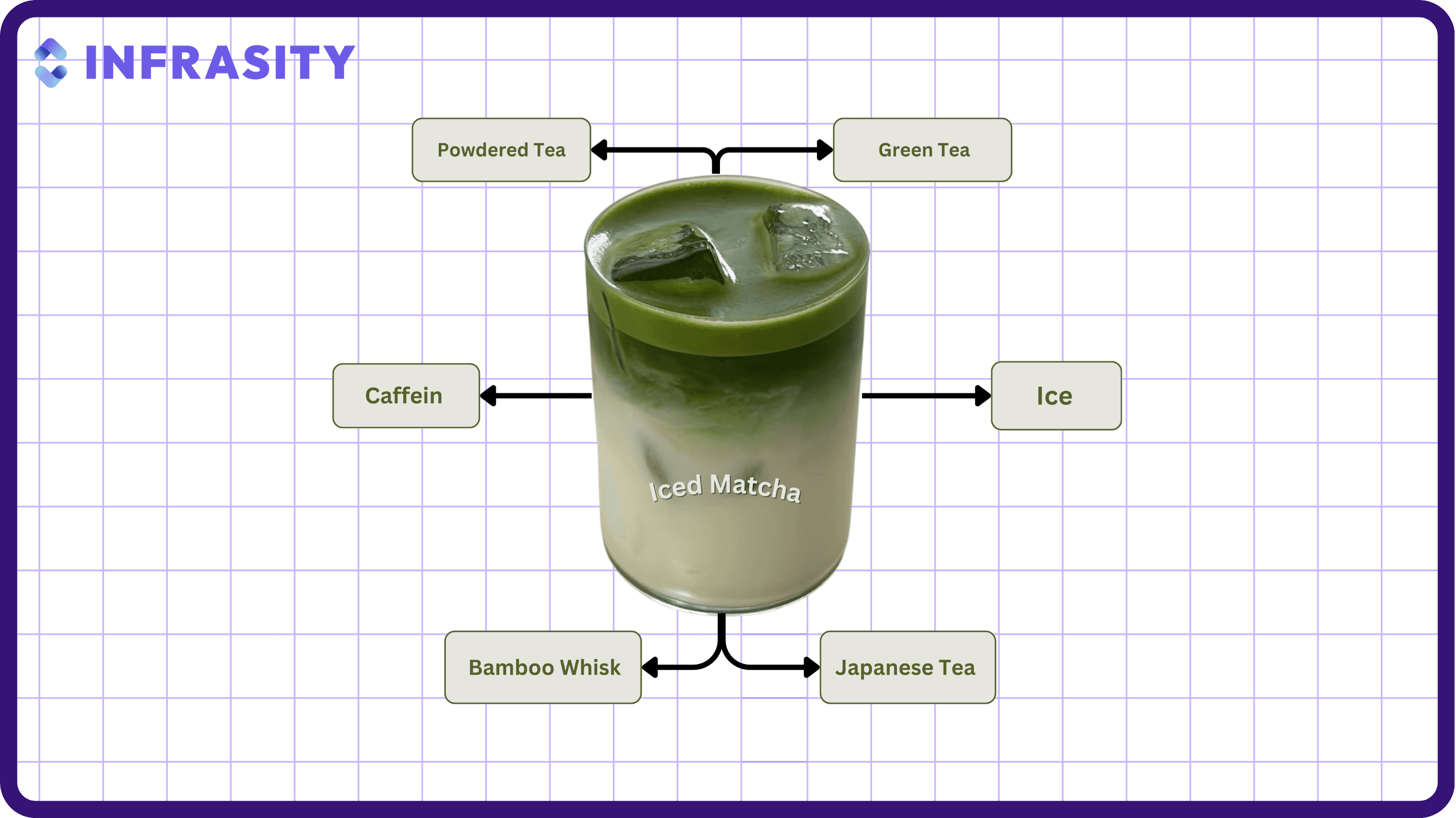
For example, suppose you want to search for 'Iced Matcha'. But you forget the name and instead, just google 'Japanese green tea.'
If computers were only to yield results based on target keywords, it would have been challenging to get to Matcha from Japanese green tea, as it might exclusively return articles that contain the word 'Japanese green tea.'
However, a search engine focusing on semantic keywords will understand that the words Matcha and Japanese green tea often occur together in several articles, meaning that they are conceptually related. It will therefore yield more relevant search results and also return an article on 'Iced Matcha' if you search for 'Japanese green tea'.
Do Google's Search Engine Algorithms Use LSI Keywords?
Sort of, but not as you might think!
Google gives priority to long tail or short tail keywords, but does not directly support LSI as a factor for ranking on the search engine result page. In fact, Google has given direct statements against using latent semantic indexing as a ranking criterion. John Muller, Google's search advocate, blatantly dismissed the usage of LSI keywords in search engine performance.
LSI technology is old, and Google's approach is much more nuanced than just picking up content and ranking it in accordance with the usage of terms related to the target keyword.
However, Google does give preference to semantically rich content and uses semantic relevance to understand what a piece of content is about. This means that Google takes into account related words that often co-occur with the target keyword when ranking and evaluating your page.
Well, if you think about it, if you only focus on infusing target keywords into your content at a high frequency, it will not lead to excellent and relevant content. It will not have quality information or a good knowledge graph and may suffer from keyword stuffing.
The better alternative is to organically use related terms and concepts to enhance SEO performance. This will make your content more rich in terms of information and therefore will be used by Google to ascertain its depth and context. The aim is to create an ecosystem of semantically related terms in your content, so that it is comprehensive and helpful for your readers, and therefore better in the eyes of Google crawlers.
This means that latent semantic indexing is beneficial in terms of SEO performance even if 'LSI keywords' are not directly supported by Google.
What are LSI Keywords in SEO Strategy?
LSI keywords align your content with user intent, making it more comprehensive and improving its chance of ranking for multiple relevant searches. This allows your content to resonate more with readers as they find a broader range of helpful information related to their query.
This same shift toward understanding intent rather than exact phrasing is why it helps to understand AEO vs SEO: traditional SEO optimizes for ranking on a results page, while answer engines increasingly pull directly from content that answers a query comprehensively, which is exactly the kind of semantically rich, LSI-informed writing this section is about.
How Do Related Words (LSI Keywords) Help in SEO?
Today, Google's algorithm has become much more advanced. It no longer uses just keyword density based on specific keywords in an article to evaluate it.
Google now tries to understand the overall topic of a page.
Computers are also trying to keep up with the way humans speak and enter search queries. Therefore, Google now uses contextual understanding through a range of related words to determine what a piece of content is about. So, the more holistically written your content is, the better Google thinks it is and, therefore, enhances SEO performance.
This same contextual understanding is central to Answer Engine Optimization (AEO), where AI-driven search and chat tools scan content for semantically related terms to pull direct answers rather than just ranking links, making a strong LSI keyword foundation just as valuable for AEO as it is for traditional SEO.
When using LSI keywords, it is crucial to ensure that most of them are connected naturally to the document. Do not overdo the use of LSI keywords, and choose to incorporate them in headings, subheadings, and body where applicable. It is best to avoid going overboard with keywords here, as it can lead to keyword stuffing, and your keywords should not exceed 1-2% of the content. Having effectively structured content areas, particularly bullet-point lists and short paragraphs, will yield better results.
Remember That LSI Keywords Are Not Synonyms
One important thing to remember is that Google's algorithm is looking for semantically rich content that helps it understand what the content is topically about. Semantic words and phrases are not synonyms but related terms.
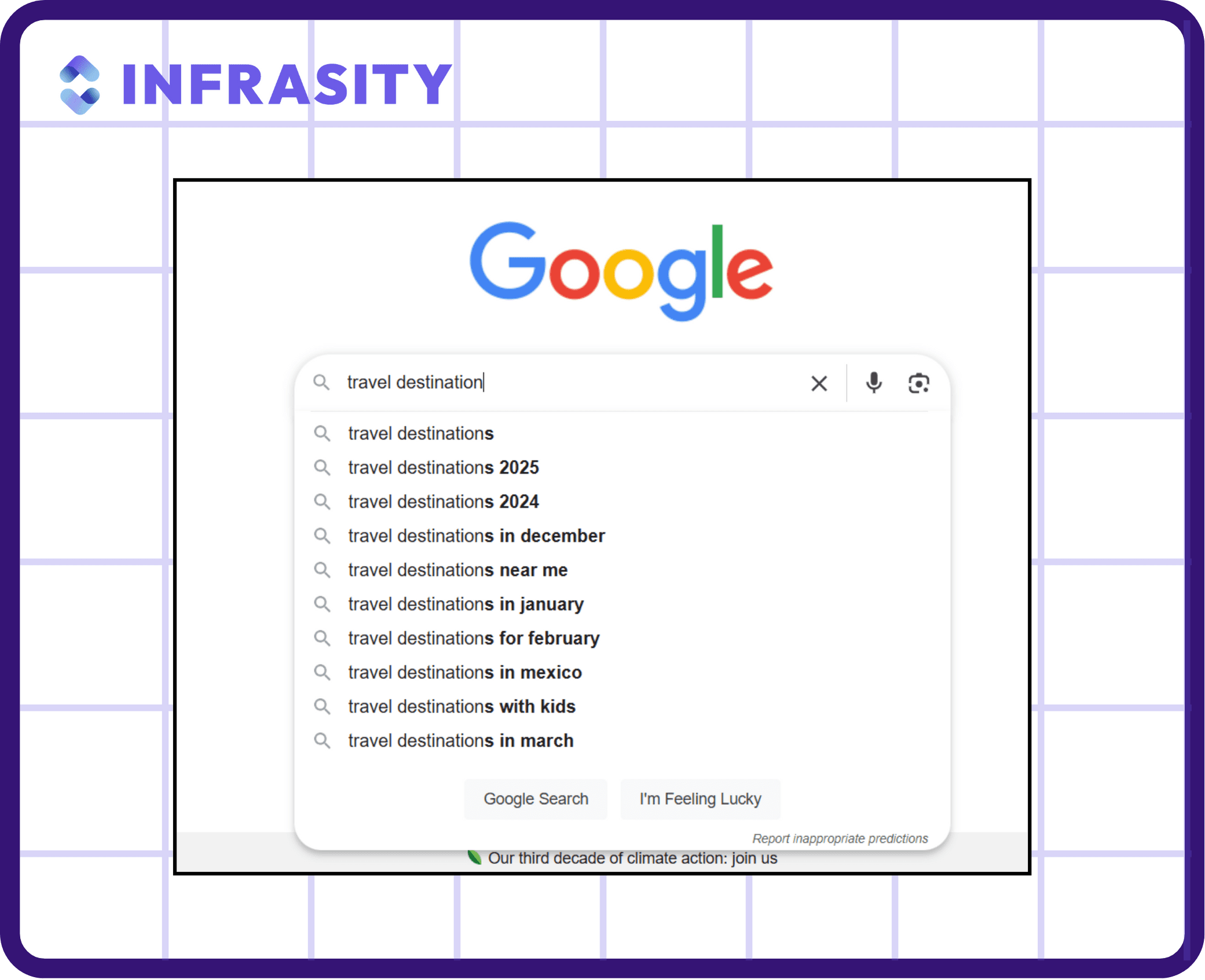
For instance, the semantically related word for "Travel" will not be "Tour," as these are synonyms, just another word for it. This will not help the Google crawler in contextualizing. You need to use terms like:
Benefits of Using LSI Keywords
Enhanced Content Relevance
Using LSI keywords helps your content comprehensively address specific topics, making it more structured for both readers and search engines. This can reduce bounce rates by providing relevant answers in one place.SEO Advantages
LSI keywords help increase relevant traffic by making content more comprehensive, improving ranking potential for related terms. This also boosts indexing and allows SaaS startups to compete with larger brands by incorporating the use of these keywords in their content marketing strategy.Broader Keyword Targeting
LSI keywords expand content visibility by incorporating a variety of related terms, allowing businesses to capture users at different stages of their search journey.
How to Find LSI Keywords
Finding LSI keywords can be done either manually, where you can find out what words are related to your target keyword or use SEO tools especially designed to find related keywords.
1. Manual Research Methods
Google Autocomplete
One of the simplest ways to find LSI keywords is by using Google's autocomplete or suggestion search. Your crucial main keyword is the one you type in the first instance, and Google will give suggestions.
For example, let's take 'ICED AMERICANO' as our primary keyword. All the words that appear in the drop-down menu are LSI Keywords.
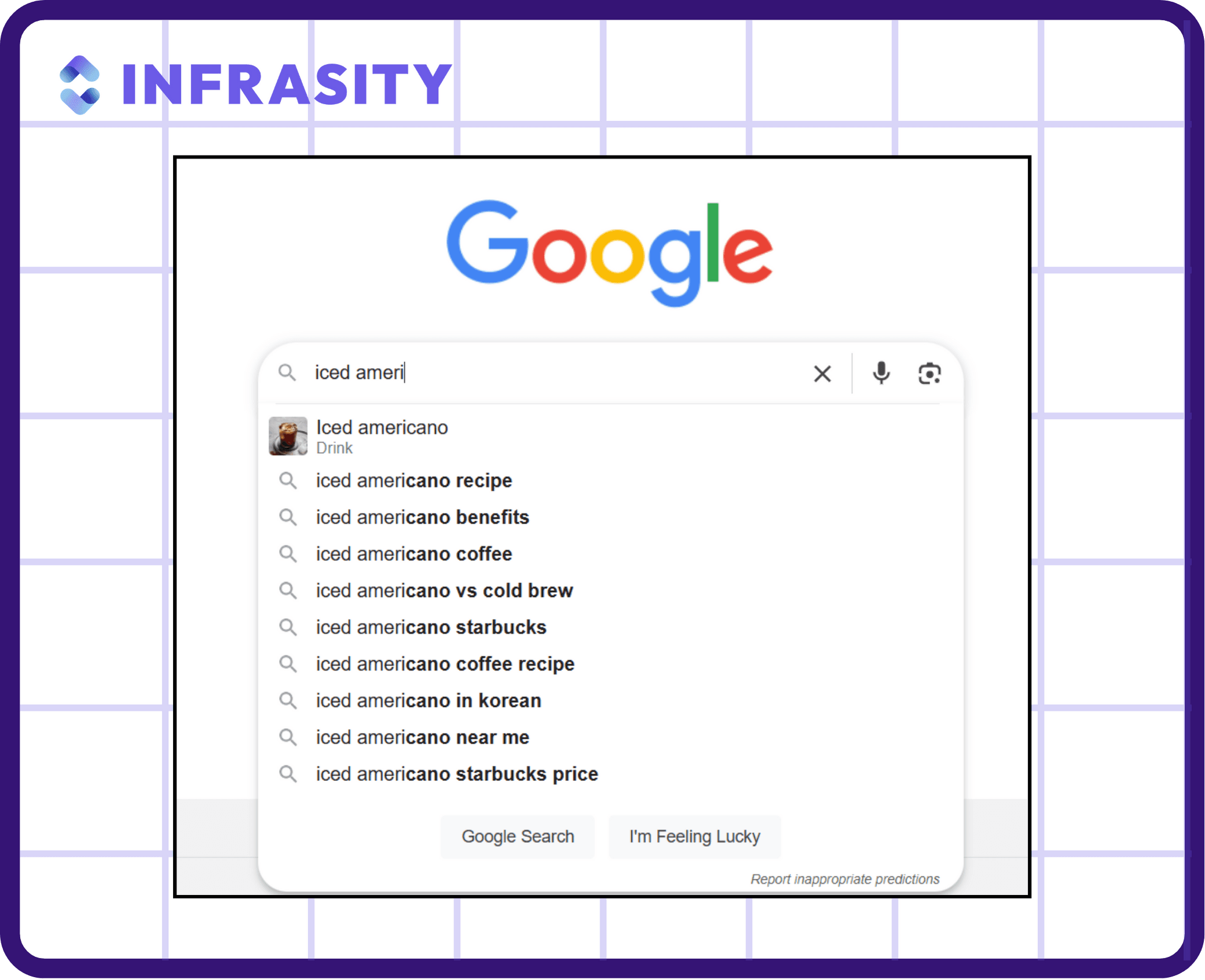
The next step is to use all these related words in your content to make it comprehensive and semantically rich.
For enhanced results, check the 'People Also Ask' box and other connected searches at the bottom of the SERP. The public search reveals typical questions that encompass the specified primary term and can provide a lot more context than the keywords themselves.
The most significant advantage of working with search snippets is an understanding of other terms that go hand in hand with it.
2. Tools and Resources
A much more straightforward and advanced way of taking out keywords is using a set of dedicated SEO Tools such as LSI Graphs, Semrush, or Ahrefs that can be utilized to find phrases and concepts related to the primary term. Google Keyword Planner also shows keyword suggestions associated with search volume.
Using Semrush:
STEP 1: Log in to your Semrush account or sign up if you don't have one. STEP 2: Navigate to the 'Keyword Magic Tool' under the 'Keyword Research' section and then enter your primary keyword. In our example, it's ICED AMERICANO, and start the search for keyword ideas. SEMrush will give you a list of terms related to our target keyword. According to our example, we got:
iced americano coffeeiced americano recipe
STEP 3: Browse the generated keyword list, which includes related terms, phrases, and questions people commonly search. These terms also carry with them their corresponding Monthly Search Volumes (MSVs) and Keyword Density (KD).
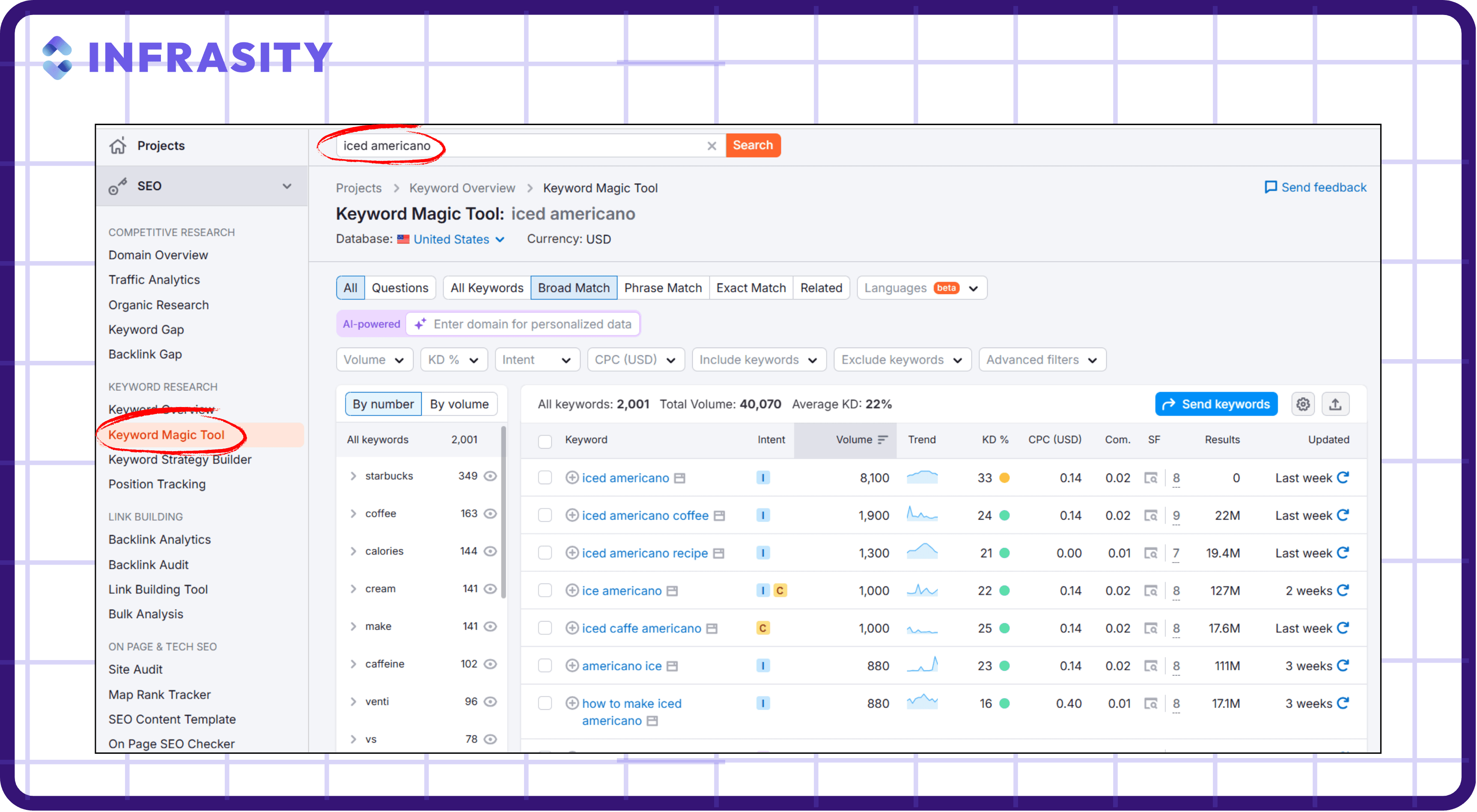
STEP 4: Then filter and sort keywords by volume, competition, or question format for deeper context.
STEP 5: Select relevant keywords and export them or add them to a keyword list for strategic use.
Finding Competitor Keywords with SEMrush Another great SEMrush feature is getting keywords used by your competitors. For this, follow these steps:
- Go to Organic Search
- Enter the URL of your competitor (The content that tops the SERP).
- Find out the LSI keywords used by them!
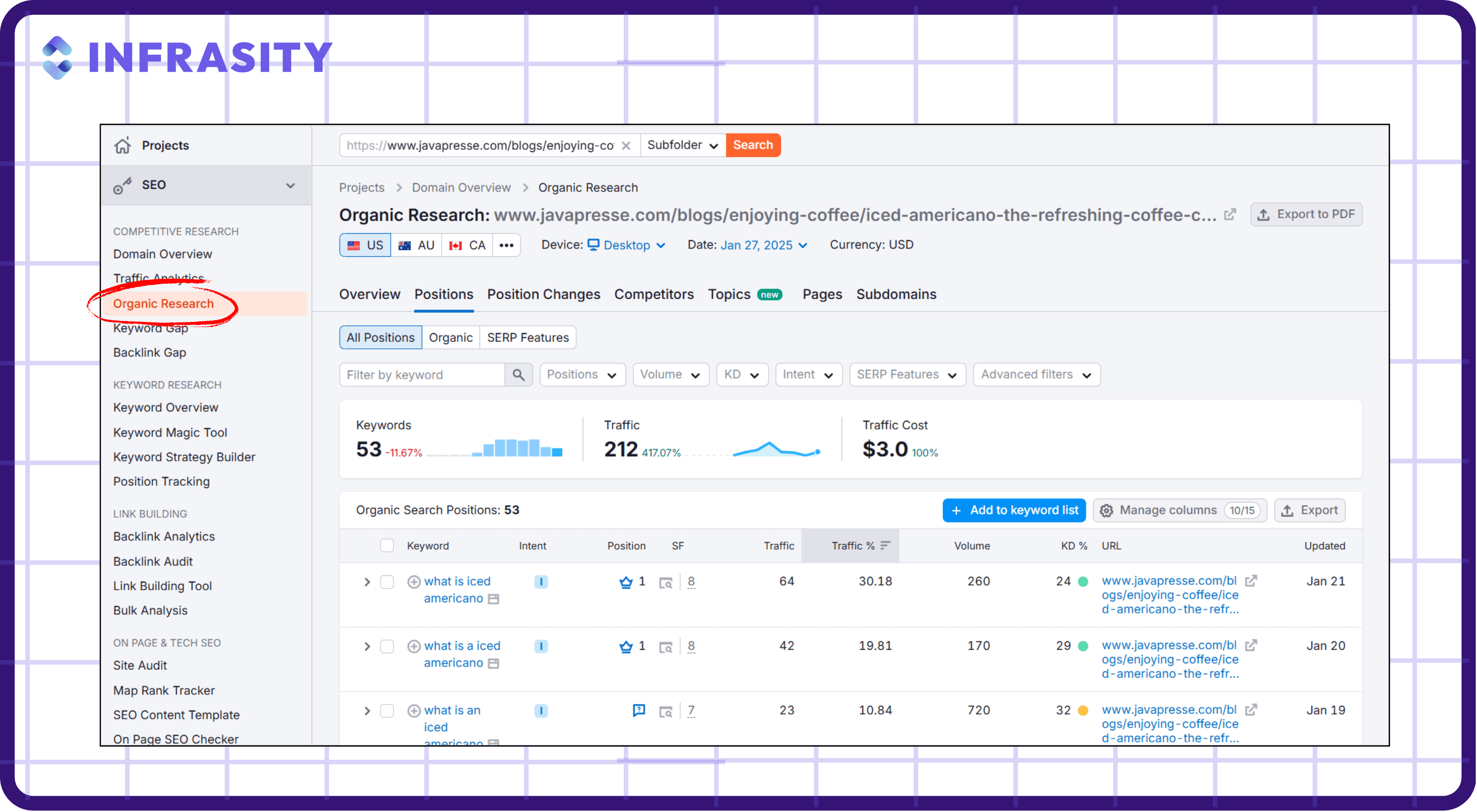 These tools can help enrich your content by incorporating not just the primary term but also related keywords and common user questions, giving your content more depth and better search performance.
How to Use LSI Keywords?
Latent Semantic Analysis (LSA) can be integrated into implementation strategies for processing text data and uncovering hidden semantic relationships. Start by preprocessing the text (e.g., removing stop words, tokenization), then construct a term-document matrix. Apply Singular Value Decomposition (SVD) to reduce dimensionality, highlighting patterns that associate terms with concepts.
Use these transformed features in models for improved document clustering, topic modeling, or search relevance. LSA enhances understanding by capturing meanings beyond simple word matching, reduces noise by focusing on core concepts, and boosts relevance in search results by using context. This approach strengthens overall text analysis and model performance.
Technical Optimization
Using LSI keywords in the meta information of the content, including the meta description and the title tags, helps to pump up the SEO while not loading the main keyword again. The LSI terms must enhance headers (H1, H2, etc.), as it helps the engines realize the main points of the material. While image alt text and internal linking with LSI keywords improve the context for the search engine regarding content themes and prevent concentrating too much on LSI terms, it does not overburden the reader with additional information.
It is also worth double-checking that the crawler settings on your site actually let Google reach the pages where you have invested in this semantically rich content. Our Robots.txt Guide walks through how to configure your robots.txt file so that important, LSI-optimized pages stay crawlable while low-value pages are excluded.
Using these techniques, SaaS startups can therefore develop a united but still search engine-friendly experience, which will in turn garner continued attention from the reader base.
Common Mistakes to Avoid
While LSI keywords are beneficial, certain mistakes can hinder SEO performance:
- Keyword stuffing: Do not overstuff LSI keywords in an article, as this distorts the flow; the search engine may even penalize the site. So, if you are thinking 'Are 7 LSI Keywords too many?', you should read your content and try to understand from the user perspective if it distorts the flow.
- Irrelevant term usage: Do not use close synonyms for terms from your topic because this can lead to misleading readers and search engines.
- Over-optimization: Carefully manage keyword usage and avoid overly using some of them as they make the conversation sound like an advertisement.
- Ignoring user intent: Rather than building the copy around too many keywords, identify terms that add real contextual value to the content.
These practices help to guarantee that your SaaS startup content is on the user side and also optimize SEO.
Conclusion
LSI technology is based on an understanding of the vocabulary problem between the way humans speak and the way a computer understands. When Google scans your content, it looks for words and phrases that often co-occur with your main keyword. These related terms are LSI keywords.
Incorporating LSI keywords can revolutionize your current SEO strategy by improving content ranking and matching user demand. Besides, this also increases the effectiveness of your SaaS content, leading to increased keyword targeting for more organic search traffic.
It helps to employ these methods to build up a balanced, search engine-friendly experience that can still grab readers' attention.
FAQs
1. What Are LSI keywords?
LSI (Latent Semantic Indexing) keywords are thematically or conceptually related terms to the main keyword. They help the Google crawler in topically understanding a piece of content.
2. What Are Examples of LSI Keywords?
LSI keywords are words and phrases thematically or conceptually related to the focus keywords. They are not synonyms but related keywords. For example, if your main keyword is 'restaurants', related words or LSI keywords could be cuisine, waiters, food, etc.
3. What Does LSI Stand for in SEO?
LSI improves content relevance, search rankings, and the range of keywords targeted, ensuring that content is relevant to users as well as ranking for related search terms.
4. Which Tools Are Used to Identify LSI Keywords?
Some commonly used tools include Google Keyword Planner, LSI Graph, and SEMrush to find LSI keywords and related phrases.
5. is the Use of Keywords Along With Lsi Terms Helpful?
Yes, but moderate use is advisable. Overuse of LSI keywords can disrupt content flow, leading to keyword stuffing and search engine penalties. Always use them naturally!