
TL;DR
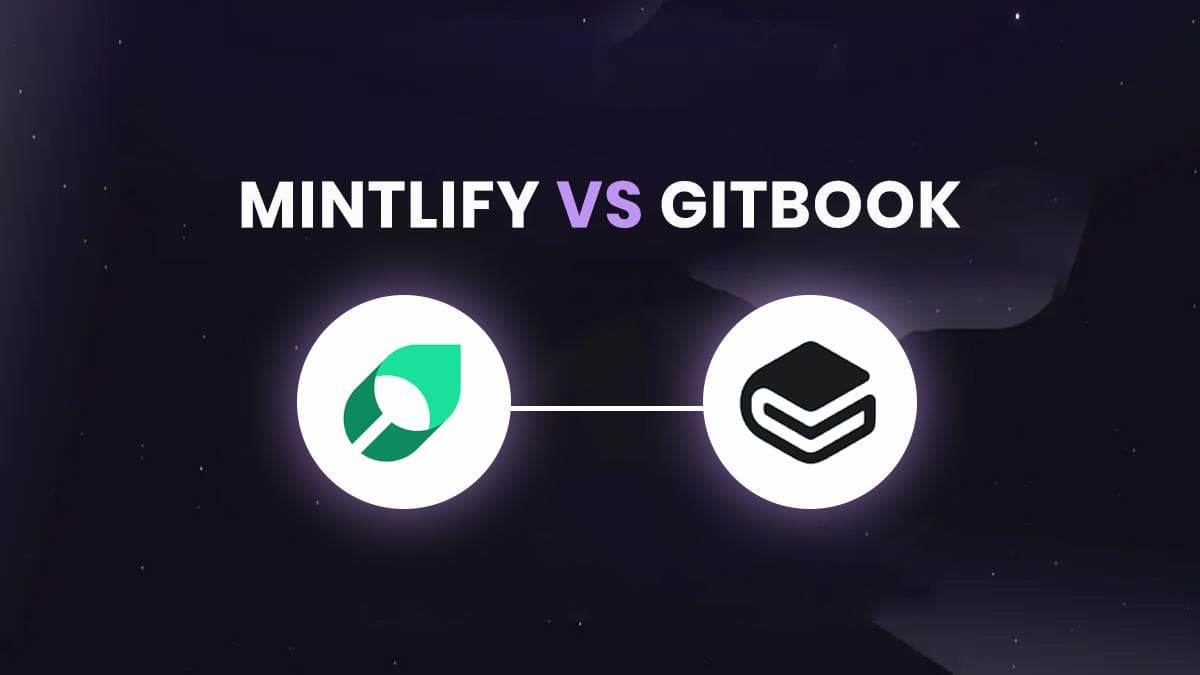
- Architecture: Mintlify is a Docs-as-Code platform engineered for API schemas (used by Vercel, Coinbase); GitBook is a Docs-as-Content platform engineered for content collaboration (used by NVIDIA, Zoom).
- Capacity: Mintlify manages high volume via API velocity and code commits (CI/CD); GitBook limits throughput based on your writing team's manual input.
- Integration: Mintlify offers Native OpenAPI Ingestion and SDK-aware components; GitBook relies on manual formatting and static code blocks.
- Experience: Mintlify provides an executable DX (Playgrounds, Auto-sync); GitBook offers a best-in-class editorial UI (Notion-like pages).
The focus of today's documentation platform debate has moved beyond just Markdown editing and theme personalization. For companies centered around API-first development, infrastructure, and LLM technologies, the decisive factor lies in the seamless integration of Code, Documentation, and SDKs. If your documentation solution interrupts this workflow by demanding manual updates whenever the schema shifts, it hinders the rapid onboarding of developers. This discussion transcends mere UI design—it concerns choosing a platform built to support the scale, speed, and intricacy of modern software engineering.
This discussion transcends mere UI design, it concerns choosing a platform built around the same product documentation best practices that separate a self-serve onboarding engine from a support-ticket generator.
For organizations dealing with APIs, infrastructure, platform engineering, and LLM/AI, key considerations include:
- Can the documentation system accurately handle schema changes?
- Is it capable of scaling to thousands of endpoints?
- Does it automatically refresh SDK references?
- Can it reduce the time required for developer onboarding from several hours to mere minutes?
The Core Comparison: Tables and Feature Deep-Dive
The Paradigm Shift: From Docs-as-Content to Docs-as-Code
| Feature | GitBook: The Content-First Approach | Mintlify: The Code-First Approach |
|---|---|---|
| Source of Truth | UI/Editor-driven content. | Git-based MDX & OpenAPI/Swagger. |
| Capacity | Scales with writer hours. | Scales with code commits (CI/CD). |
| API Integration | Manual API blocks. | Native OpenAPI Ingestion. |
| Deployment | Manual, UI-driven versioning. | Automatic, PR-level previews. |
Technical Deep Dive: API and Code Quality
A documentation platform is only as good as its integration with your source code. Below is a 360-degree view of how Mintlify and GitBook handle the most critical, API-centric features.
| Feature | Mintlify: The Code-First Approach (Automation) | GitBook: The Content-First Approach (Manual Control) |
|---|---|---|
| API Schema Integration | Automatic Open API Processing: Drop in your schema, and Mintlify generates the full API reference automatically. | API content written manually: Most API docs need hand-written content blocks for structure. |
| API Reference Generation | Autogenerated Endpoint Docs: Parameters, responses, examples, and error codes stay in sync with the schema. | No Native OpenAPI Ingestion: No automatic parsing or syncing of endpoints; docs must be written manually. |
| API Interaction & Usability | Interactive Consoles: Allows live API calls directly from your documentation pages. | No Intercative Consoles: GitBook is more static and focuses on content presentation. |
| SDK Integration | SDK Linking & Versioning: Integrates with JS, Python, Go, etc., and keeps docs tied to repo changes. | No SDK-Aware Workflows: You can link repos, but there's no automatic code sample generation or method-linking. |
| Error Response Docs | Auto-pulls errors, status codes, and schema definitions directly from OpenAPI. | Write Errors Manually: Status codes, error messages, and definitions must be manually documented. |
| Performance & Loading Speed | Extremely Fast Static-Site Output (Built for high-performance reading experience). | Heavier, Slower Editor-Focused Runtime (Designed for a rich editing/UI experience). |
| Component Reuse & Extensibility | MDX Components (Reusable blocks, Custom React components allowed). | No True Component System: Static pages only; limited built-in block types. |
What is Mintlify?
Mintlify is an AI-native, code-first documentation platform that automates the generation, maintenance, and synchronization of technical documentation directly from a company's codebase and OpenAPI specifications. It treats documentation as code, embedding it into the engineering CI/CD workflow to ensure it is always accurate, interactive, and aligned with the latest API changes. This automation minimizes "doc debt" and accelerates the developer experience (DX) for users.
Validation from the YC Ecosystem
The choice of documentation platform is a strong signal of architectural intent, and Mintlify's adoption within the YC community validates its code-first approach:
- Mintlify isn't just a YC W22 company—it continues to be one of the most widely adopted tools across recent YC batches (S23, W24, S24). Its architecture has been validated repeatedly by new startups moving fast with API-first or AI-infra products.
- It's consistently ranked among the top-used developer tools inside recent YC cohorts, showing strong peer adoption among technical, founder-led teams.
- YC Group Partner Harj Tagger states, "Every YC batch we consistently see the top performing startups use Mintlify to build their docs."

- Mintlify powers documentation for major API-centric companies, including those with YC roots or strong developer focus, like Anthropic, Coinbase, and PayPal.
This heavy usage within the incubator proves that for high-growth, technically complex startups, Mintlify's automated, low-friction pipeline is the architectural standard.
Without Mintlify:
- An engineer changes the code and the OpenAPI specification.
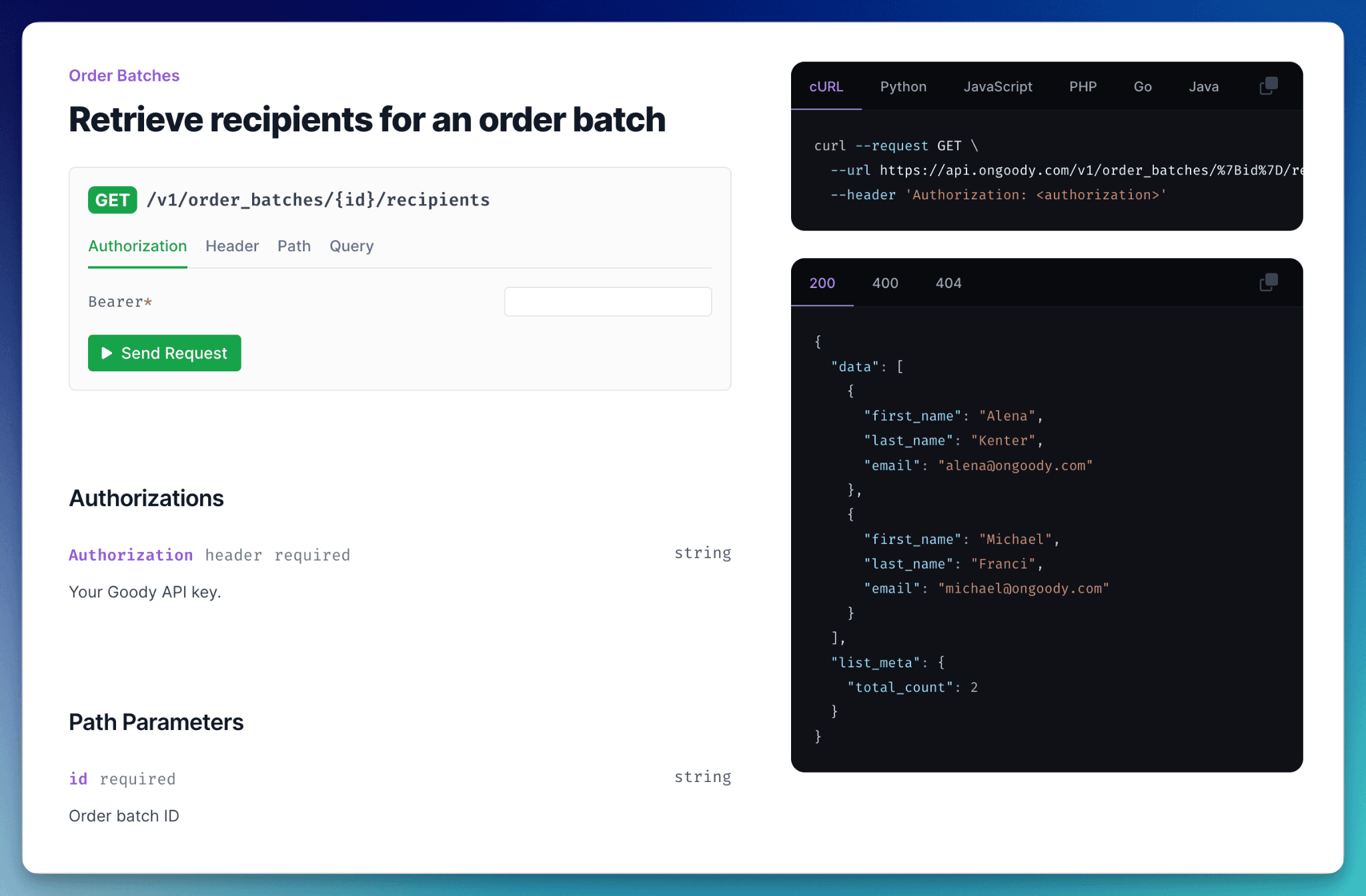
- A technical writer must manually find and update the parameter details, response schemas, and code samples across all relevant documentation pages. This is a manual, error-prone task that causes documentation to lag behind the API.
With Mintlify:
- The engineer changes the code and commits the updated OpenAPI file to Git.
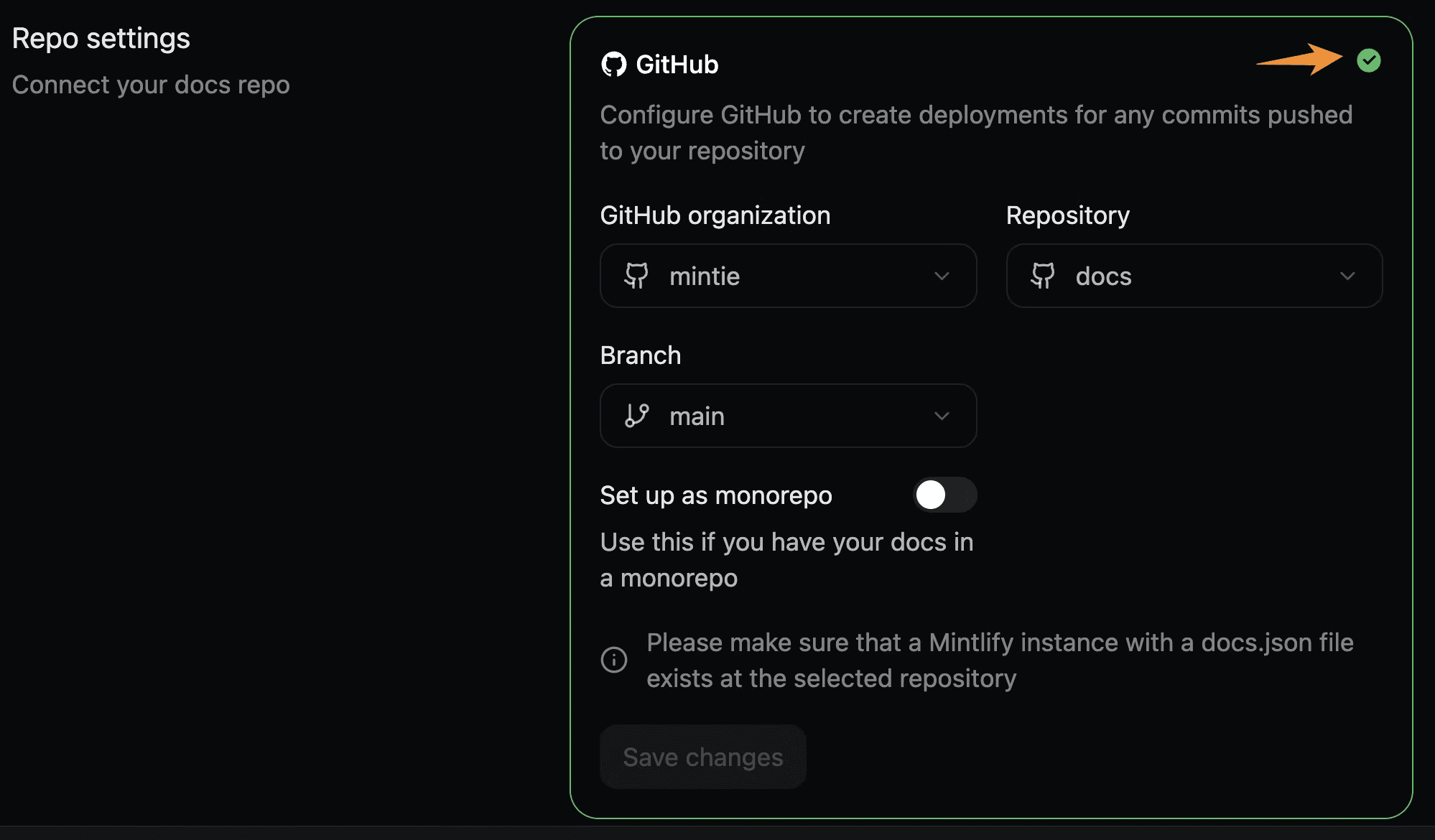
- Mintlify's native ingestion detects the schema change, auto-generates a PR preview of the updated documentation, and automatically updates the parameter's type from string to integer in the live documentation after merge, preserving the multi-language code samples and interactive "Try-It-Out" consoles.
What is Gitbook?
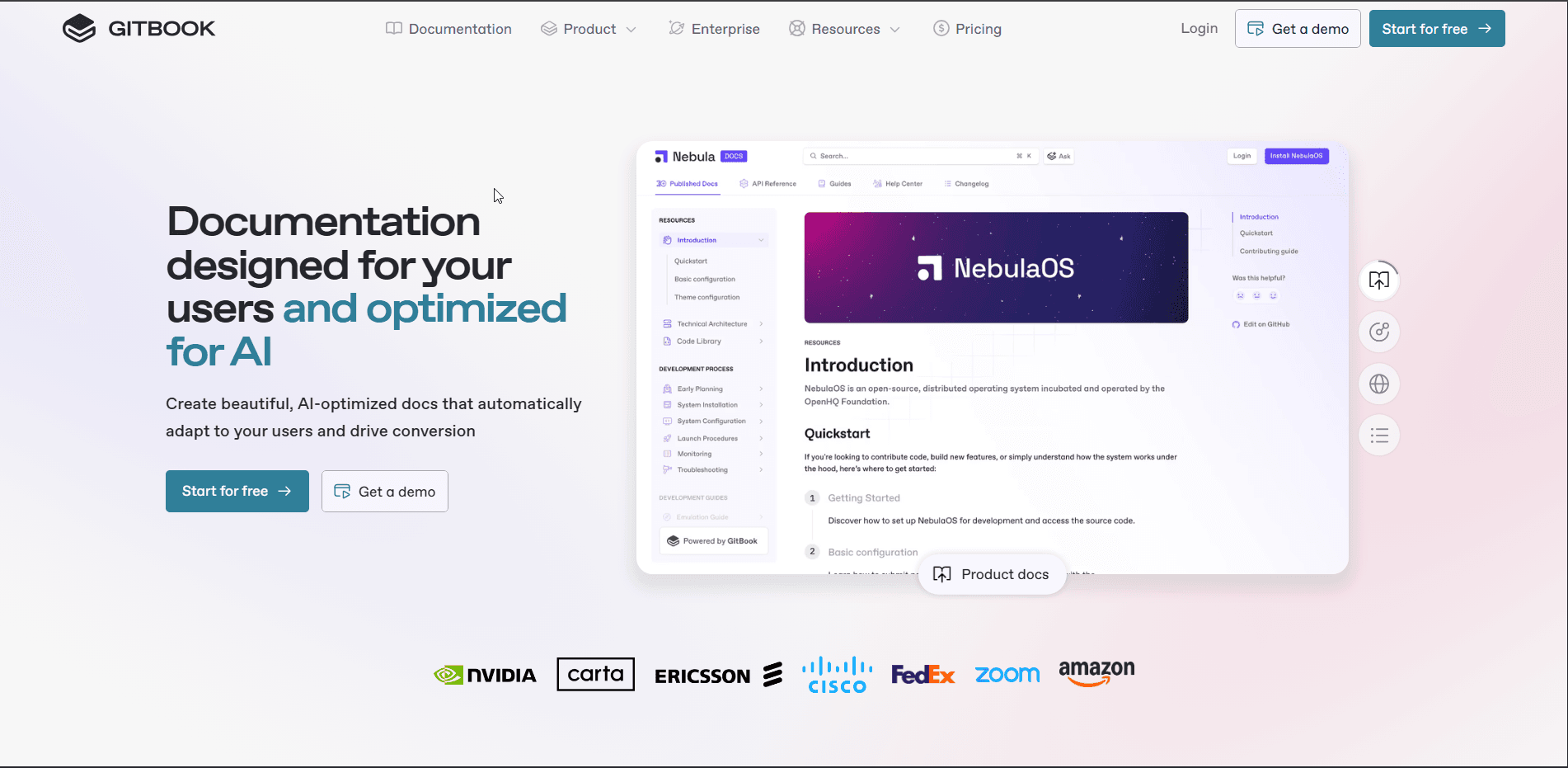
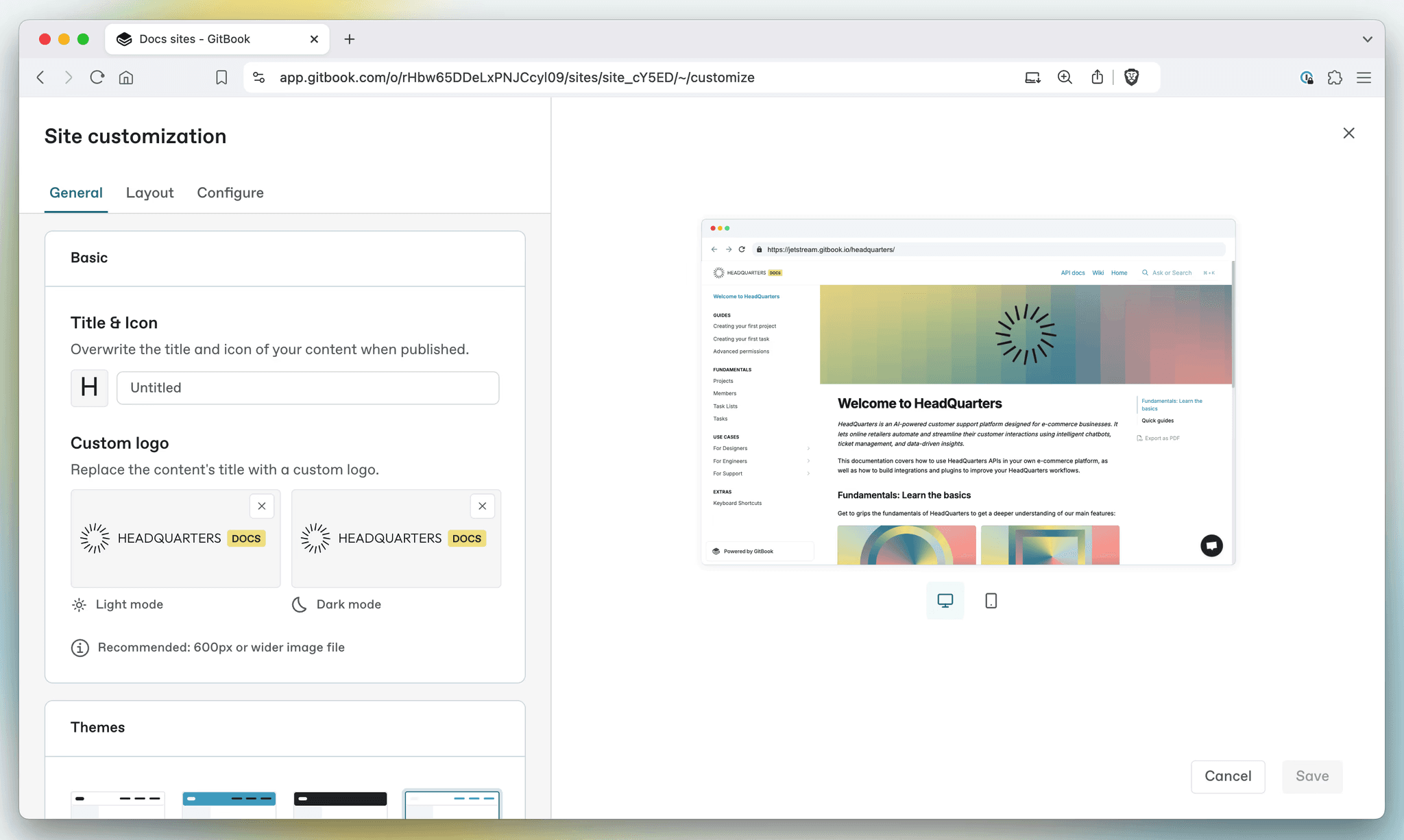
GitBook is a content-first documentation platform designed to provide a collaborative, block-based writing experience for both technical and non-technical teams. It abstracts away the need for deep code knowledge by prioritizing an intuitive, rich-text editor, offering a familiar, Notion-like UI that makes content creation, team collaboration, and version control simple and accessible to all roles (Writers, PMs, Support).
With GitBook:
- A Product Manager or Technical Writer logs into the platform's WYSIWYG editor and creates a new branch (a Change Request).
- They use the block editor to create engaging, reusable content (like feature callouts or FAQs) and collaborate in real-time with inline comments.
- For the API sample, they manually insert and format the new parameter details into a static Code Block or an OpenAPI Block.
- They submit the Change Request for review. A final content QA team member can easily review the changes in a dedicated UI before publishing.
The Real Test: OpenAPI Handling, Codegen Quality & SDK Stability
For DevTools founders, the editor is irrelevant. The critical metric is the API $\rightarrow$ Docs $\rightarrow$ SDK pipeline.
The core questions:
- Can the platform parse large OpenAPI schemas accurately?
- Does it auto-generate multi-language code samples?
- Does it maintain schema accuracy across versions?
- Does it support pagination, enums, union types, polymorphic responses?
- Can SDK references update automatically when backend changes?
Mintlify: Native Schema Ingestion & Zero-Touch API Reference
1. Native OpenAPI ingestion
Mintlify's Native OpenAPI ingestion automatically reads your OpenAPI/Swagger file and converts it into clean, structured API docs without manual writing.
2. Auto-generated endpoint references
Mintlify auto-generates endpoint references, meaning every API endpoint is documented automatically from your schema, no manual writing needed.
3. Real-time multi-language code samples
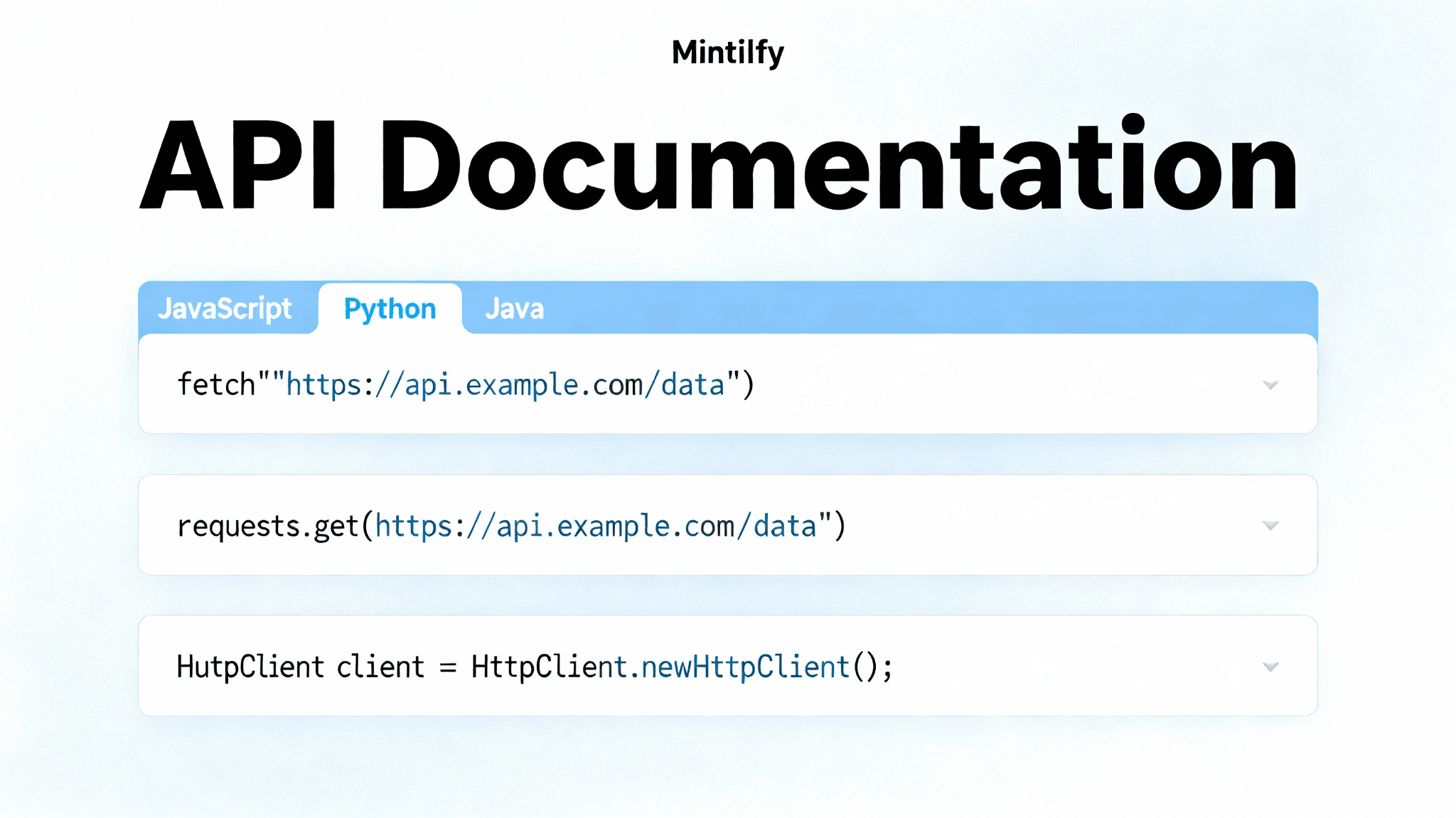
Mintlify generates real-time multi-language code samples, instantly converting your API schema into code snippets for languages like JS, Python, Go, and more.
4. Schema-level diffs across versions
Mintlify shows schema-level diffs across versions, highlighting exactly what changed between API versions (fields added, removed, or modified).
5. Automatic linking to JS/Python/Go/TS SDKs
Mintlify provides automatic linking to JS/Python/Go/TS SDKs, connecting each API endpoint directly to the corresponding SDK method without manual setup.
6. Handles complex surfaces like nested objects, unions, enums, polymorphism
Mintlify handles complex API structures like nested objects, unions, enums, and polymorphic responses, ensuring even advanced schemas render correctly in docs.
GitBook: Manual Schema Ingestion & Static, High-Maintenance API Docs
1. Does not ingest OpenAPI
Because GitBook can't import OpenAPI files, it doesn't auto-generate API references—you have to document every endpoint yourself.
2. All endpoint docs must be manually written
Since GitBook doesn't auto-generate API references, you need to write every endpoint's documentation manually, including code samples and schema details.
3. No automatic sample generation
GitBook offers no automatic sample generation, so developers must manually create and update all code examples for each API endpoint.
4. No schema-level sync
GitBook has no schema-level sync, meaning your API docs won't update automatically when your backend or OpenAPI spec changes.
5. No SDK-aware workflow
GitBook has no SDK-aware workflow, so it can't link API endpoints to SDK methods or auto-update docs when SDKs change.
Documentation Should Deploy Like Code.
Instead of "how to deploy docs," your ICP cares about:
- PR-level doc previews - With PR-level doc previews, each pull request automatically builds a temporary docs site, making it easy to validate content and catch issues early.
- Automatic build artifacts - With automatic build artifacts, the system generates updated documentation bundles on each commit so your docs always stay in sync with code.
- Version snapshotting - Version snapshotting captures a frozen copy of your documentation for each branch or release, preserving exactly how the docs looked at that point in time.
- Auto-deploys on merge - Auto-deploys on merge push your updated documentation live the moment a pull request is merged—no manual deployment steps needed.
- Versioned API references - Versioned API references let you maintain separate API docs for v1, v2, v3, etc., so developers can always access the correct version of your API.
Mintlify: CI/CD-Native Workflow & Atomic Deployment
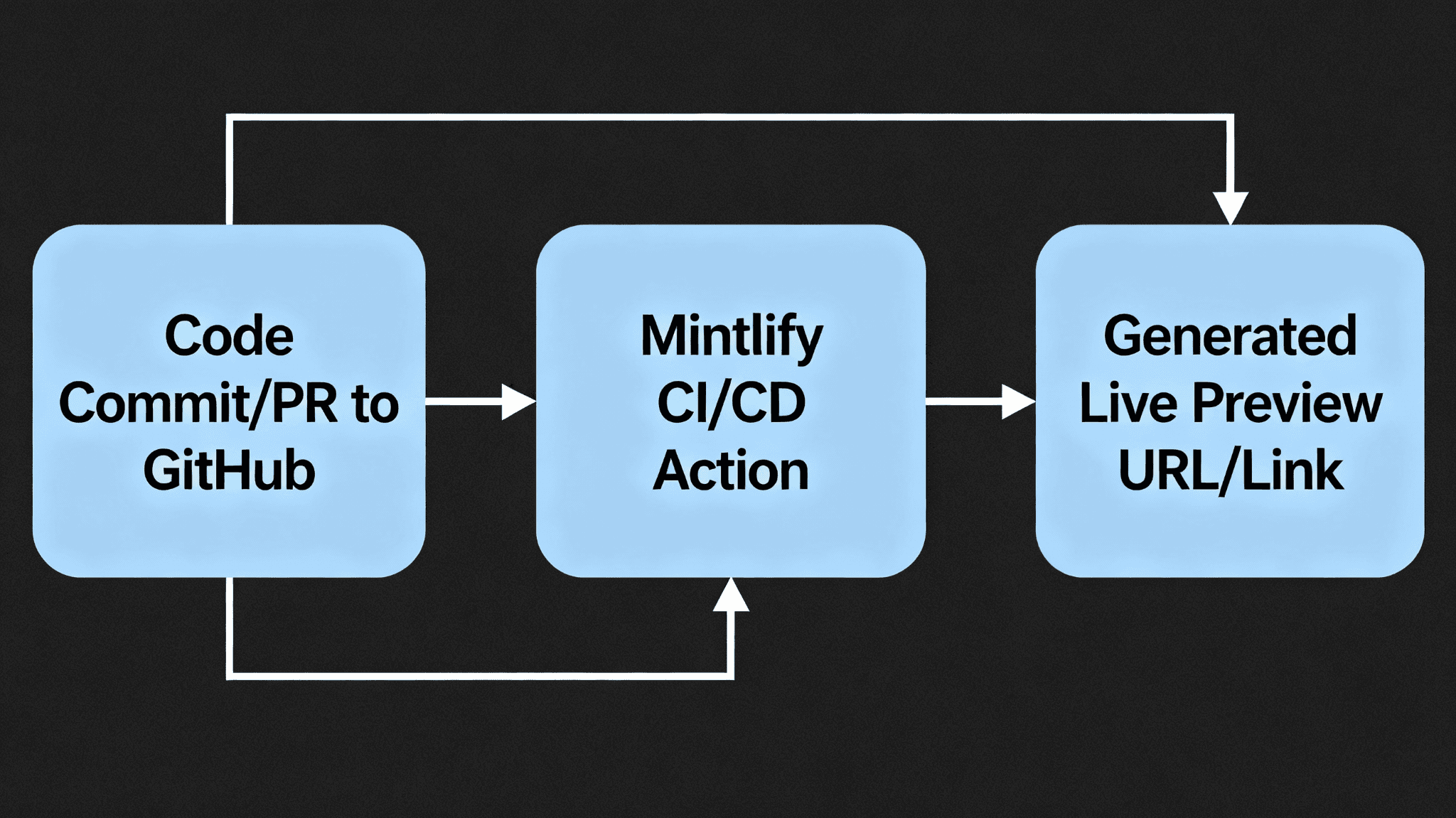
1. Every PR auto-generates a live doc preview
Mintlify auto-generates a live doc preview for every PR, letting you review documentation updates exactly as they'll appear before merging.
2. Docs update automatically through CI
With Mintlify, CI pipelines keep your docs in sync, triggering automatic updates on every commit or merge, no manual edits or deployments needed.
3. Stable versioning for API v1, v2, v3...etc
Mintlify supports versioned API docs, letting you publish and maintain clean snapshots for API v1, v2, v3, and beyond.
4. Branch-based docs snapshots
With branch-based docs snapshots, Mintlify builds separate doc environments for every branch, making it easy to test, compare, and validate updates before merging.
5. Release notes tie directly to code changes
Mintlify links release notes directly to code changes, automatically pulling commit and PR data so your documentation mirrors your development history.
GitBook: UI-Driven Manual Versioning & Build Opacity
1. PR previews not native
GitBook offers PR previews, but they aren't native, meaning they rely on external integrations or GitHub Actions rather than being built directly into the platform.
2. Versioning is manual and UI-driven
GitBook's versioning is manual and UI-driven, requiring you to create and manage versions yourself through the dashboard instead of automating it through code.
3. Build behavior is opaque
Because GitBook hides most of its build process, teams get limited visibility into what triggers a rebuild or why something broke, slowing down troubleshooting.
4. No automatic sync with OpenAPI or SDK releases
GitBook offers no automatic sync with OpenAPI or SDK releases, so your docs won't update when schemas or client libraries change—you must maintain everything manually.
Static Code Blocks Are Dead - SDK-Aware Docs Win.
For DevTools companies, onboarding success depends on how quickly developers can go from reading the docs to running real code. The journey always follows the same path: Docs $\rightarrow$ Code Samples $\rightarrow$ SDK $\rightarrow$ Successful Integration—and the quality of your code block system determines how smooth that path is. If code samples are accurate, multi-language, and always in sync with your API and SDKs, developers ship faster. If they're static or outdated, the entire onboarding experience breaks.
Mintlify: Executable DX with MDX Components
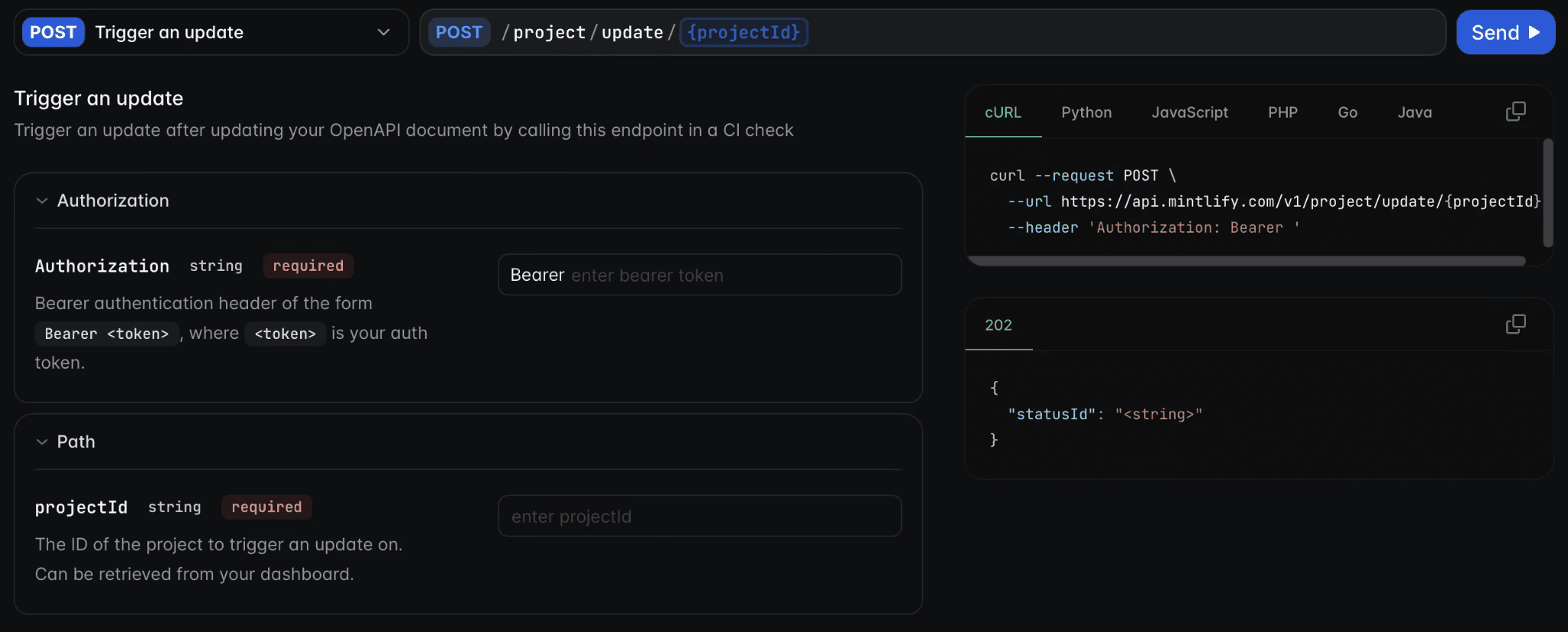
1. MDX-based interactive code tabs
With MDX-powered interactive tabs, Mintlify turns code samples into flexible, multi-language components instead of static, copy-paste blocks.
2. Node, Python, Go, Java, Ruby snippets in one canonical component
Mintlify lets you show Node, Python, Go, Java, and Ruby snippets in one unified component, giving developers instant multi-language examples without duplication.
3. Auto-generated from schema
With Mintlify, code blocks are generated automatically from your OpenAPI spec, eliminating manual updates and preventing code drift.
4. Syntax-linked examples
Mintlify provides syntax-linked examples, meaning code samples update dynamically based on parameters, endpoints, and schemas defined in your API spec.
5. Error surfaces, retry examples, pagination blocks
With Mintlify, you get built-in examples for errors, retries, and pagination, so your docs teach developers exactly how to handle common API scenarios.
6. Custom components like "Copy & Run"
Mintlify supports custom components like "Copy & Run", letting developers copy, execute, or test code instantly for a smoother onboarding experience.
GitBook: Static Code Blocks & High-Friction Developer DX
1. Static code blocks only
GitBook uses static code blocks only, so snippets are plain text with no interactivity, language switching, or dynamic behavior.
2. No multi-language sync
GitBook offers no multi-language sync, so you must manually maintain separate code examples for every language you support.
3. No generated samples
With GitBook, there's no automatic sample generation, so code examples won't update when your API or SDK changes—you have to maintain everything yourself.
4. No SDK integration awareness
GitBook has no SDK integration awareness, so it can't link endpoints to SDK methods or update docs when SDKs change.
5. No logic-aware code linking
GitBook has no logic-aware code linking, meaning code samples don't adapt to parameters, schemas, or endpoint logic—they stay static and disconnected.
DX Performance at Scale: Beyond Load Speed
For DevTools founders, DX Performance at Scale extends far beyond simple page load speed. It refers to the architectural resilience of the documentation platform when handling massive API surface areas and complex organizational structures (like microservices). The choice between Mintlify and GitBook determines whether your documentation becomes a reliable system of record or a scaling bottleneck.
1. Handling 1000s of Endpoints
- Mintlify (Code-Driven Advantage): Scaling is managed through Programmatic Generation. Documentation updates are automatic upon schema changes.
- GitBook (Content-Driven Challenge): Scaling requires Manual Page Creation. Scaling involves massive content creation and maintenance, leading to high overhead and significant doc drift.
2. Search Behavior
- Mintlify (Code-Driven Advantage): Offers Semantic & API-Aware Search. It integrates vector search to understand contextual queries.
- GitBook (Content-Driven Challenge): Relies on Keyword-Centric Search. While robust for narrative guides, it struggles to accurately handle complex API schema terms.
3. Navigation for 200+ Pages
- Mintlify (Code-Driven Advantage): Uses Git-Based Structure & Versioning. Navigation hierarchy is defined by the file and folder structure in Git.
- GitBook (Content-Driven Challenge): Requires Manual UI Management. Complex hierarchy changes require manual clicking and organization, which becomes cumbersome and error-prone at scale.
4. Microservices Architecture
- Mintlify (Code-Driven Advantage): Enables Distributed Docs-as-Code. Documentation can be sourced from multiple repositories and aggregated into a single site via a build configuration.
- GitBook (Content-Driven Challenge): Centers on a Centralized Content Space. Integrating documentation from dozens of decoupled microservices typically requires custom integrations or complex, rigid linking strategies.
Mintlify vs. GitBook: Which Architecture Should You Practice?
In the evolving landscape of developer products, both Mintlify and GitBook are essential, but their importance depends entirely on your product's architecture, your team's workflow, and how you define developer success.
Mintlify is Essential for API Activation Velocity
The goal of DevTool documentation is to get a user from reading to running code successfully in the shortest amount of time. This is where Mintlify's focus on Automation and SDK Awareness is non-negotiable.
- Eliminate Manual Doc Maintenance: Automated syncing between OpenAPI and documentation means zero latency between code deployment and doc publication.
- Decentralize Documentation: Engineers can manage documentation updates via Git PRs, removing bottlenecks from technical writers or content teams.
- Accelerate Time-to-Hello-World: Interactive, multi-language code samples and "Try-It-Out" consoles reduce developer activation time from hours to minutes.
- Maintain Version Stability: Git-native versioning ensures that API v1, v2, and v3 documentation remain accurate and stable, tied directly to code branches.
GitBook Remains Vital for Product Narrative and Content Authority
While Mintlify dominates the zero-friction, code-driven space, GitBook remains the superior tool for building a comprehensive, user-friendly product narrative.
- Building Cohesive Guides: Its strong, centralized editor is perfect for long-form tutorials, onboarding guides, and company-internal knowledge bases where the focus is on narrative flow.
- Driving Content Velocity: Non-technical contributors (Product Managers, Support, Sales Enablement) can easily create and update rich, block-based content without ever touching Markdown or Git.
- Optimizing Readability: Its clean, editor-driven UI is highly effective for delivering general product information and knowledge base articles.
- Team Collaboration: Real-time, centralized editing and change requests streamline collaboration across non-engineering teams.
Conclusion: The Platform of Choice for Developer Velocity
Mintlify and GitBook represent two valid, but fundamentally different, approaches to documentation. The ultimate decision for a DevTool founder rests on one priority: Maximizing Developer Velocity and Minimizing Engineering Friction.
While GitBook excels at ease-of-use for non-technical collaboration and long-form guides, Mintlify is engineered to integrate deeply with the modern software development lifecycle, treating documentation as a compile-time artifact.
The Developer's Final Scorecard:
- For Accuracy and Scale: Mintlify wins by automating endpoint generation, versioning, and code samples directly from the OpenAPI source, making Mintlify the platform that scales with your code.
- For Friction and Manual Work: GitBook relies on manual updates, static code blocks, and UI-driven versioning, making GitBook the platform that scales with your writing team's time.
- For Onboarding DX: Mintlify's MDX-powered interactive code samples and API Playgrounds turn documentation into an executable environment, accelerating time-to-first-call from hours to minutes.
By combining Git-synced, schema-accurate API documentation (Mintlify) with narrative-focused, collaborative guides (GitBook), you can ensure your developer experience (DX) is optimized for both engineers who demand automation and writers who prioritize narrative—maximizing accuracy, velocity, and user trust.
Frequently Asked Questions
Q) Is Mintlify free to use?
Yes, Mintlify offers a free Hobby plan that includes the full platform with custom domain, web editor, API playground, and analytics. This plan is perfect for individual developers, students, and open-source projects trying to turn a public repo into real adoption. Paid Pro plans start around $250-300/month with team collaboration and advanced AI features.
Q) How is Mintlify different from other documentation tools?
Mintlify stands out with its AI-native approach, offering built-in writing assistance and chat that understands your documentation. It provides beautiful templates that work immediately, unlike tools that require extensive coding. The platform also includes interactive API playgrounds and real-time analytics to improve user experience. As AI answer engines increasingly pull straight from documentation to answer developer questions, that same AI-readiness is why teams are starting to track brand visibility across ChatGPT, Perplexity, and Gemini alongside their docs strategy.
Q) Is GitBook free to use?
Yes, GitBook offers a free plan that includes one free user per site with access to core features like the block-based editor, GitHub/GitLab sync, and interactive API documentation. You can publish with a gitbook.io subdomain. For custom domains, branding, and advanced features, paid plans start at $79 per site monthly.
Q) How does GitBook integrate with GitHub?
GitBook offers a two-way synchronization with GitHub and GitLab. This means you can make changes in GitBook's visual editor or directly in your GitHub repository, and both stay automatically synchronized. Developers can write documentation in their code editor while content teams work in GitBook's interface.