
TL;DR
- Community led growth, or CLG is a model where customers and user communities influence acquisition, retention, and expansion. Instead of relying purely on paid channels, businesses tap into real conversations, advocacy, and shared learning to drive sustainable growth.
- Paid growth is a strategy that uses paid channels like Google Ads, LinkedIn Ads, Reddit Ads, etc. This is to drive rapid, top-of-funnel visibility, and it’s effective for quick wins, product launches, and competitive positioning.
- Modern B2B SaaS buyers trust peers more than ads, as strong communities on Reddit, GitHub, Slack, Discord, or Quora have become extensions of the GTM engine.
- What are the best practices of community led growth strategy? A high-performing CLG motion depends on the right channels, a dedicated CLG team, member-first engagement, consistent value delivery, and clear KPIs. When community growth is healthy, it fuels the business flywheel.
- Paid growth supports rapid top-of-funnel expansion, product launches, and competitive positioning. But unlike CLG, it doesn’t create deep trust or long-term advocacy. The most effective teams blend both approaches.
Around 92% of people trust their peers more than any paid campaigns. Traditional growth levers are losing their relevance as buyers are increasingly conducting their own research, leaning on peers, community voices, and honest feedback long before engaging with sales.
At the same time, word-of-mouth marketing influences 20% - 50% of purchasing decisions. This isn’t a coincidence and what the data shows is that authenticity and trust are rapidly becoming the new currency.
That’s why the concept of Community-Led Growth has become a strategic growth engine built on peer validation, user-generated value, and sustained engagement. When you weave a community-led growth strategy into your GTM motion, you tap into a reservoir of credibility that paid ads can’t match.
Moreover, B2B SaaS startups investing in communities see real returns and startups with active communities report a 46% higher Customer Lifetime Value (CLV), their customers spend 24% more per purchase, and community-driven word-of-mouth alone can lift conversions by 22%.
Want growth that’s scalable and trust-driven? Keep reading this blog to know everything about community led growth, its best practices, paid growth and how it is different from community-led growth. By the end of this guide, you’ll have a clear understanding of how CLG can complement and, in some cases, outperform traditional growth levers, helping you build a scalable, trust-driven engine that compounds over time.
What is Community Lead Growth?
B2B community-led growth is not limited to owned community platforms. Reddit is one of the most active and trusted peer-review environments on the internet, and the best subreddits for your niche can be some of the highest-intent audiences your brand will ever encounter — buyers who are actively seeking peer recommendations rather than vendor marketing.
Community led growth is the process of leveraging communities to impact business outcomes like increasing customer acquisition, improving retention, or boosting brand visibility.
Throughout the years, community led growth has become an integral part of several startups’ go-to-market strategy. While Community-led growth is fueled by community success, it’s not the same as community growth.
Community growth focuses on building and strengthening the community itself, engagement, participation, and member value. When this foundation is strong, it becomes the engine that powers CLG.
Example: Lovable maintains an active community across channels, including a subreddit, a public Discord server, community forums, and other social platforms such as LinkedIn, X, YouTube, etc. Their official Community page invites “builders, entrepreneurs, and developers” to join Discord, participate in global events, share projects, and connect with others.
Through these channels, Lovable runs community-oriented programs. For example, a “Ambassadors” program, allowing engaged users to help moderate, mentor, run events, or host meetups.
The community is positioned as the core of their growth engine as members share builds, help each other, give feedback, and publicly showcase their creations. That visibility helps convert community activity into social proof, organic referrals, and real-world growth.
Additionally, generating organic traffic through communities like Reddit offers increased visibility across major LLM platforms such as ChatGPT, Gemini, and Perplexity, all of which now index Reddit content. Applying AI and machine learning introduces intelligent community growth, leveraging insights that help identify opportunities, predict member needs, and scale impact far beyond manual efforts. This allows a clearer view of how community activity translates into business outcomes and how growth in the community drives growth.
What is Paid Growth?
Paid growth refers to the use of paid acquisition channels such as Google Ads, Reddit Ads, LinkedIn Ads, etc. This is to generate immediate visibility and accelerate top-of-funnel demand.
Paid growth operates on deliberate budget allocation and controlled targeting to deliver predictable reach. Its primary value lies in speed, helping devtool startups quickly introduce new products, test messaging, enter competitive categories, and capture short-term demand that community channels may take longer to surface.
Before moving forward, it’s important to understand how paid growth fits into modern B2B SaaS.
It is especially useful for new product launches, rapid top-of-funnel expansion, or accelerating traction in competitive categories.
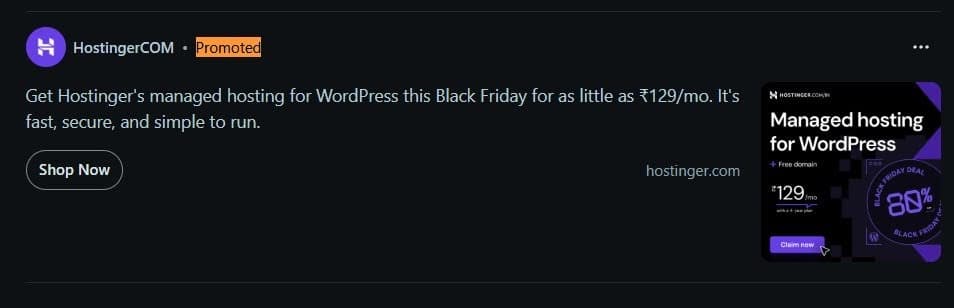
But while paid growth can produce immediate visibility, it doesn’t inherently build trust, retention, or advocacy the way a strong community led growth engine does. The image below is an example of a campaign on Reddit.
This is why most high-performing marketing agencies can now combine both approaches: using paid channels for speed, and Community-Led Growth for long-term, defensible impact.
What are the Key Components of a Community Led Growth Strategy?
Community-led growth is most effective when it is architected around how B2B buyers naturally progress toward a purchase. Aligning community content and engagement to the B2B buyer journey — from awareness threads and comparison discussions to onboarding communities and customer advocacy — turns a passive community into an active conversion engine.
A community led growth strategy centers on building and scaling a community of users, with the aim of boosting customer acquisition, retention, satisfaction, and long-term engagement.
For example, Replit, a cloud-based platform for coding, collaboration, and deployment, offers a “Community Hub” where users can connect, join Replit’s virtual events, access tutorials, join forums, and showcase projects. This makes collaboration, discovery, and visibility central to their growth strategy.
Here are key components any effective community led growth strategy should include:
- A lively, member-centric online community: A community must feel like a peer space for sharing, learning, and collaboration, and not simply a channel for marketing or sales.
Example: Rocket.new, a vibe coding platform, created its own channel on Discord, a space for direct communication between the leadership team and the community. These platforms allow users to report bugs, share projects, ask questions, and provide general feedback. This open dialogue helps cultivate an active, engaged user base, which, in turn, drives word-of-mouth promotion and contributes to Rocket’s organic growth. The referral traffic can be monitored through GA4 to better understand growth sources. - Careful choice of channels/platforms based on the industry: For a developer-focused dev tool startups like Cursor, Replit, Lovable, etc, for example, channels like Reddit, Discord, GitHub, or even Quora should be the prioritized channels. While for marketing, content, platforms like Slack or X might be more fitting. Getting this channel mix right is easier with a structured Marketing to Developers Plan that maps community, content, and outreach efforts to where developers actually spend their time.
- Consistent delivery of high-value content is the best way to show value: Whether in-depth guides, best practices, case studies, or playbooks, providing value encourages engagement, builds trust, and reinforces why being part of the community matters.
- A dedicated CLG team: You need a team that plans, executes, monitors, and evolves community efforts; coordinates between product, marketing, support, and customer success; and most importantly, ensures the community remains active and aligned with business goals.
Pro tip: Your CLG team must possess deep engineering credibility and cultural fluency in developer communities like Reddit or GitHub. Hiring for this niche can be difficult and Community Manager often lacks the technical depth, while a Developer Advocate rarely focuses on pure GTM execution.
If hiring, training, and retaining a technical CLG team for niche communities like r/devops or r/LLMops is a blocker for growth, a specialized developer marketing agency like Infrasity that also offers Reddit marketing services. Along with a fully operational solution, a specialized team will act as your CLG execution arm, providing the deep technical content strategy and karma-rich account engagement necessary to win credibility instantly.
This will save you months of recruitment and training while de-risking your investment in high-signal communities. Partnering with a team that has already codified a repeatable Developer Marketing Strategy means you inherit proven playbooks for technical content, community engagement, and credibility-building instead of building them from scratch.
- A community-to-business “flywheel” effect: As community members engage, learn, and succeed, they often become advocates, which then draws in new members. These new members adopt and learn more about why they should adopt the product, hence promoting the product, creating a self-reinforcing loop of growth, usage, and referral.
- Defined KPIs and metrics: To measure the success of the community led growth approach, you need both “community health” metrics, which are the engagement levels, activity, and retention; and “business impact” metrics, which include new sign-ups, conversion rate, customer retention, expansion, and advocacy-driven referrals.
What are Best Practices for Community-Led Growth Strategies?
Community-led growth does not happen exclusively online. Developer conferences are one of the most powerful catalysts for community formation — they bring together practitioners with shared interests and create the social bonds that sustain long-term engagement and peer advocacy far beyond the event itself.
Community led growth strategy will depend on the size and goals of a startup. However, there are a few best practices to make a note of when developing your plan. The best practices for community-led growth strategies are:
- Create your community: If you're starting out, create a subreddit or a channel in Discord where people can genuinely connect, a place where members exchange ideas, network, and interact on their own terms.
- Supporting the community members: For dev tool startups like Rocket, for example, implementing a clear code of conduct and Community Guidelines or Rules is important as it ensures the community remains a safe, respectful, and valuable environment for all members. Key components include the community purpose, guidelines, and values, and putting enforcement mechanisms in place.
The image below shows the Community Guidelines or Rules in a Reddit subreddit of r/webdev that the community members must follow to keep the community safe and valuable.
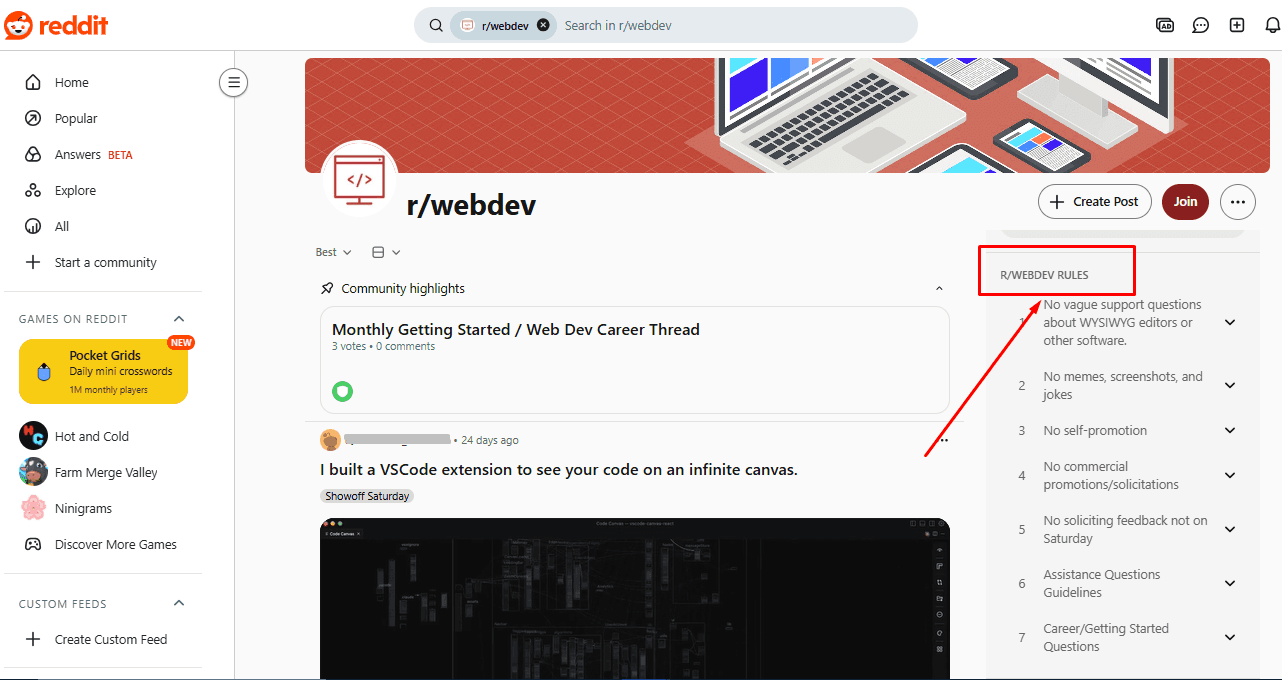
Following the Rules and Guidelines of a subreddit is essential, as shown in the image below, because if not followed, the post or the account can:
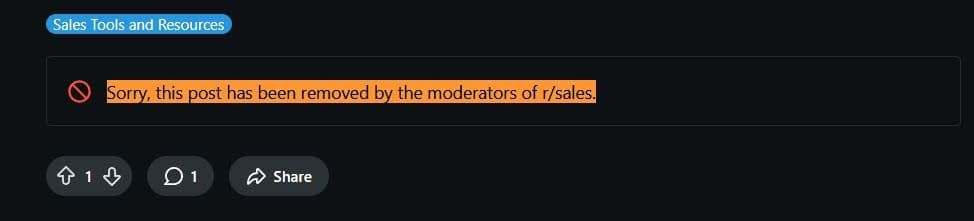
- Get removed
- Get locked, which means no user can upvote or share the locked post.
- Get banned from the community
- Get banned or shadow-banned from Reddit
Put the community in the center: Instead of leading with product or revenue, focus on member needs first, like peer support, shared learning, and collaboration. While community led growth can help acquisition and retention, it works best when the community’s value to members is prioritized over overtly pushing product or sales.
Encourage member interactions: Design your community so members can talk to each other: ask questions, share tips, swap use-cases, and most importantly, network. An engaging member-to-member ecosystem often becomes self-sustaining.
Example: Figma lets its users publish templates, plugins, design files, and discuss them in its Figma community, making the community a living, collaborative space rather than just a one-way feed. This collaborative interface design tool even has a Figma community where customers can access plugins, design systems, icons, illustrations, and wireframes.
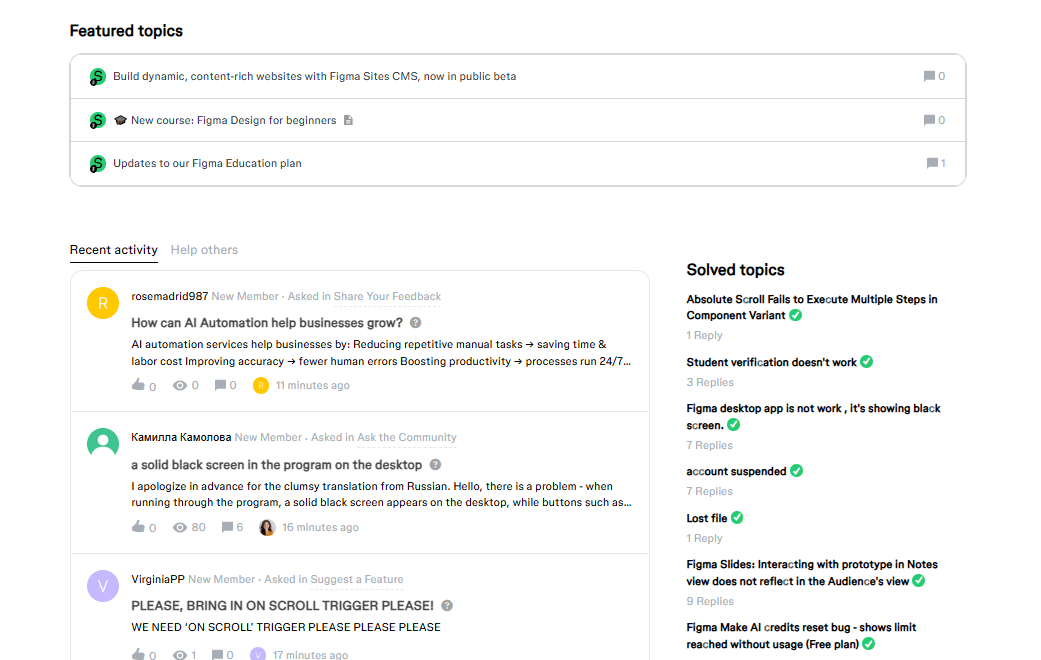
Measure your community: If it‘s possible to collect data from different sources, perform an analysis on analysis platforms like Google Analytics 4.
Track the metrics such as engagement, activity levels, retention, referral rate, conversion from community to paying customers, etc. This will allow you or your team to monitor if the community efforts are paying off and spot where to improve.
Reinvest in your community: Use data and feedback from your community to iterate: run events, produce more content, build programs or tools that help members. For instance, several startups hosting forums or groups in Slack or Discord eventually launch structured community programs or ambassador initiatives as they scale.
Example: LinkedIN applied this practice at launch as the founding team personally invited their own professional networks, ensuring they started with about 1,000 members on day one. Director of Corporate Development Lee Hower explained:
“Reid [Hoffman] and the rest of the founding team all sent invites to our professional contacts on launch day. We asked all those folks to try the v1 product and invite their professional contacts. In total, that was maybe a couple thousand individuals.”
This resulted in reaching 12,000 members in the first week, passing 50,000 users within four months, and growing to 500,000 users in under a year, despite early limitations like a lack of public profiles or non-member visibility.
One key insight from LinkedIn’s approach is that the first wave of members shouldn’t be random. Seeding the community with the right people matters a lot.
Recognize and reward the contributors: Acknowledge the most active or helpful members via public praise, special roles, early feature access, or branded perks. This builds loyalty and turns top contributors into advocates without heavy incentives.
Example: Notion has developed a formal Ambassador Program, which was designed to recognize and empower its most passionate users. Ambassadors receive rewards like early access to new features, priority support, exclusive community spaces, official swag, and even grants to run local events.
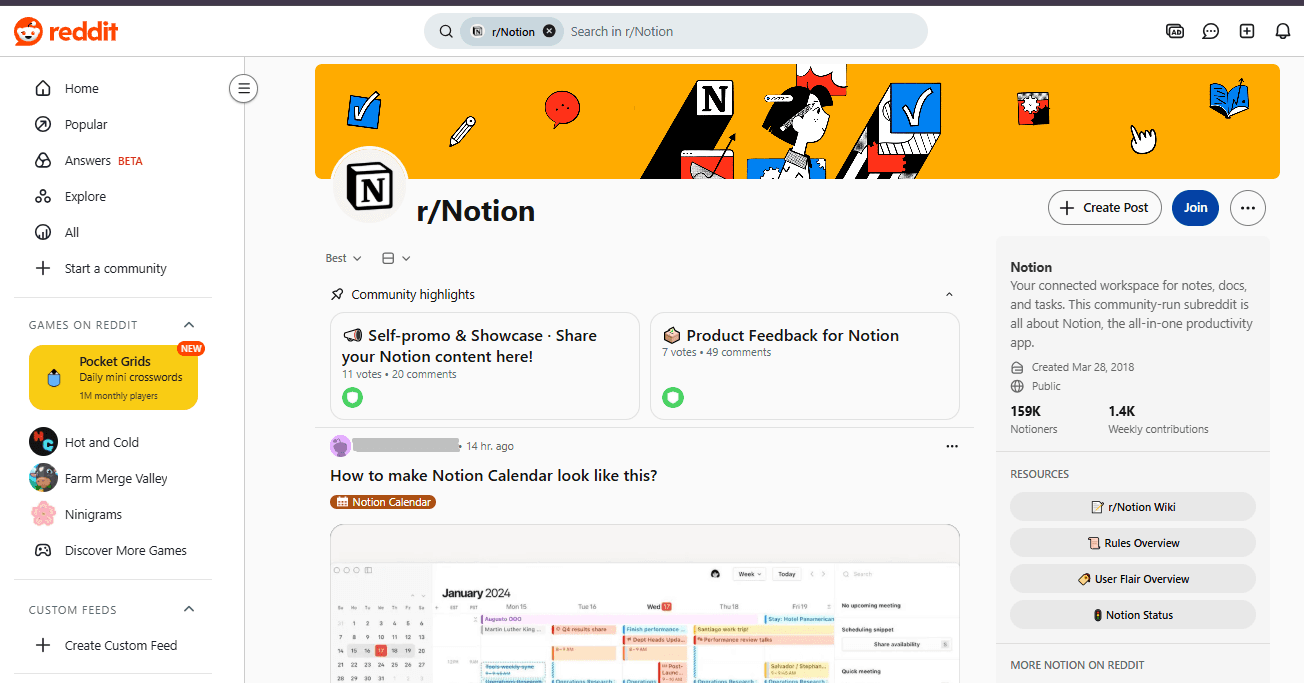 In exchange, Notion encourages these contributors to help grow the ecosystem by hosting meetups, creating tutorials, designing templates, teaching courses, and leading niche sub-communities across the world. Notion also carefully vets applicants and limits cohort size to preserve contributor quality and ensure ambassadors feel truly valued and supported.
By giving top contributors public recognition, special access, and a sense of ownership, Notion successfully turns community power users into product champions and visible representatives of the brand.
Community Lead Growth Vs Paid Growth
The table below breaks down how community led growth and paid growth compares in practice.
| Criteria | Community-Led Growth | Paid Growth |
|---|---|---|
| Growth Philosophy | Builds credibility through peer-to-peer validation, conversations, and shared learning. Members become the engine of expansion. | Operates on budget allocation, targeting, and ad optimization to push users down the funnel. |
| Time to Impact | Slower initial ramp but compounds: trust, advocacy, and engagement increase over time. Strong fit for long sales cycles in B2B SaaS. | Faster early impact ideal for short-term spikes, new launches, or demand generation pushes. |
| Cost Efficiency | Cost-effective in the long term. Once a CLG flywheel forms, acquisition costs decrease significantly. | High and rising CAC. Scales only with increasing budget and constant optimization. |
| Scalability | Scales organically through active communities on GitHub, Reddit, Discord, Slack, etc. Requires consistent best practices for community-led growth strategies. | Scales linearly with spend. More budget = more reach. Limited by platform saturation and diminishing returns. |
| Type of Relationship Built | Deep, trust-based, long-term. Ideal for B2B SaaS buyers who rely on peer opinions and expert communities. | Shallow, transactional, and dependent on campaign performance. Limited emotional or loyalty. |
| Impact on Retention & Expansion | High. Members learn, teach, share use-cases, and adopt features faster, boosting product stickiness. | Moderate. Paid channels rarely influence product mastery, retention, or customer success. |
| Data & Insights | Community conversations reveal product gaps, emerging use-cases, and customer needs and is important for GTM and product teams. | Provides quantitative insights (CTR, CPL, CAC) but limited qualitative understanding of user sentiment. |
| Budget Dependency | Success depends more on engagement and value delivery. | Completely budget-dependent. Growth slows immediately when campaigns pause. |
Final Thoughts
For emerging B2B SaaS startups, Community Led Growth can become a strategic advantage as CAC increases and buyer journeys become more trust-driven. CLG enables startups to grow through authentic conversations, peer validation, and shared expertise. Paid growth will always have a place, especially for quick wins and launch momentum, but it cannot replace the credibility and compounding impact of a thriving community.
Marketing leaders who invest in a scalable community-led growth strategy, build the right channels, and follow best practices for community-led growth strategies are able to unlock a competitive flywheel that improves product adoption, retention, and advocacy. For developer-first products specifically, pairing CLG with a broader Developer Growth Strategy ensures community efforts are reinforced by product-led signals, technical content, and activation loops that compound together.
The future of B2B SaaS growth will belong to startups that empower their communities to speak, share, teach, and lead the expansion on their behalf.
Frequently Asked Questions
1. What platforms should a B2B SaaS startup prioritize for community building?
Choose platforms based on where your ICPs naturally gather: GitHub and Discord for developers, Slack or LinkedIn for marketers, Reddit or Quora for general SaaS discussions. A good community led growth strategy always starts with the right channel selection.
2. How long does it take to see results from Community Led Growth?
CLG is a compounding motion, not a quick fix. Early signals like engagement, repeated participation, or user-generated content may appear in weeks, while retention and acquisition impact often show within 3 - 6 months. It’s slower than paid growth initially but outperforms it long term.
3. Can community led growth replace paid growth completely?
Not in most cases. Paid growth is still essential for top-of-funnel acceleration, new product launches, and targeted campaigns. However, CLG builds trust, deepens retention, and lowers CAC sustainably. The strongest SaaS GTM motions blend both.
4. What internal resources are needed to build a CLG program?
You need a community manager or CLG lead, cross-functional alignment (marketing, product, CS), clear guidelines, and analytics tools to measure community health and business impact. As the startup scales, they add programs like ambassadors, champions, or content creator networks.