
TL;DR
- High-performing content strategies now influence all stages of the buyer journey, including product evaluation, adoption, and retention, especially for developer-first SaaS businesses
- Early emerging teams rely on engineer-written content, SEO grounded in real engineering problems, and distribution across search, LLMs, and developer communities. Content is designed to support evaluation, adoption, and retention.
- Search has fragmented across Google, LLMs, and developer communities, forcing teams to design content for discovery and trust.
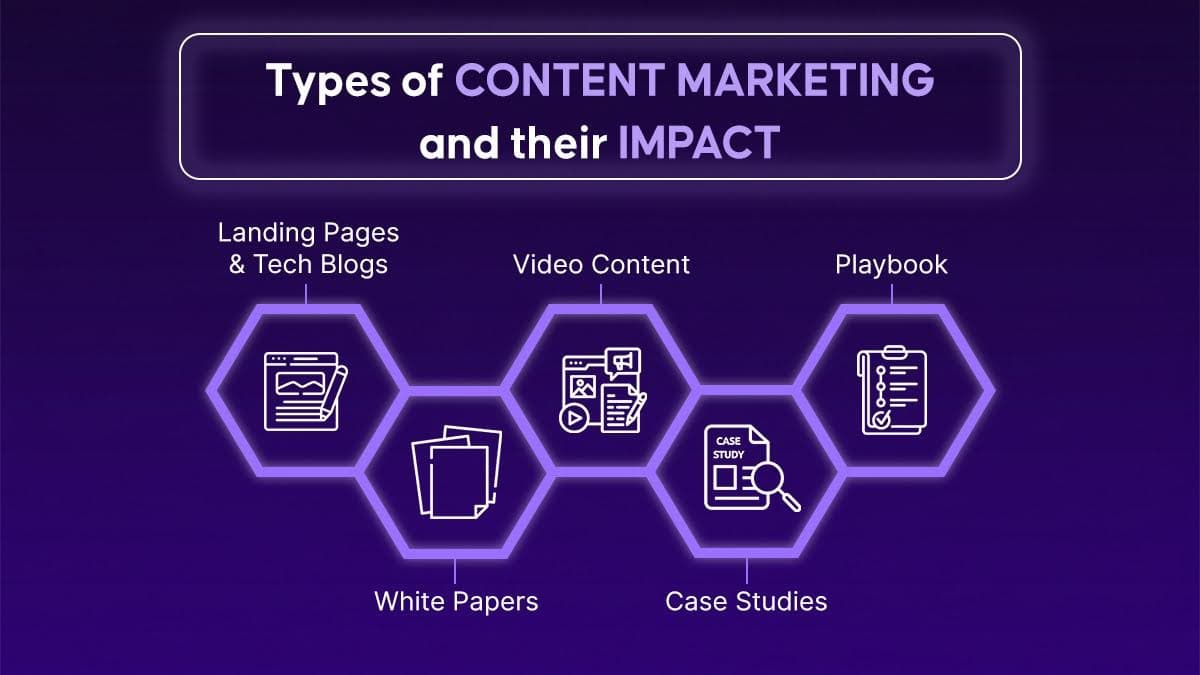
- Types of content marketing and how each impacts growth: Blogs and landing pages drive discovery, whitepapers and playbooks support evaluation, videos accelerate understanding and onboarding, and case studies reduce buyer risk. These formats play a distinct role in moving users from interest to adoption.
If your content strategy still treats content as traffic bait rather than a growth engine, you are already behind in the race.
A documented B2B content marketing strategy is what separates the 82% of B2B SaaS startups now using content marketing from the ones actually seeing results. 69% of B2B marketers plan to increase their content budgets, yet less than half have documented strategies that drive measurable business outcomes. Mentioning this is important because startups with documented strategies see 33% higher ROI than those without.
AI tools have accelerated content creation: 62-83% of teams now use AI for topic ideation, optimization, and first drafts. Yet adoption mainly remains tactical as only a minority of teams integrate AI into strategic workflows, and even fewer trust AI output without human guidance. This imbalance has two effects:
- Content volume skyrockets: Cluttering feeds, search results, and inboxes.
- Decline of audience attention and trust: Buyers increasingly ignore generic or superficial content.
This might feel like a familiar pain point to you when you know content should influence demand, but it rarely does nowadays. This is because buyers now consume multiple content assets, up to five or more pieces, before engaging with sales.
As AI-driven startups scale, content has become a primary growth lever rather than a supporting tactic. This is why founders increasingly evaluate the top marketing agencies for AI technology startups in the United States and best US marketing agencies specializing in AI technology startups and developer marketing not based on volume alone, but on their ability to produce technically credible content that supports evaluation, adoption, and long-term retention among developer audiences.
In this blog, we will discuss what has changed in B2B SaaS content marketing space and how to build a content marketing strategy with proven examples. Let’s get started!
What Has Changed in B2B Content Marketing in 2026?
The rapid rise of AI tools has increased the volume of content produced online, but has decreased users' attention and trust.
According to industry data, 56% of marketers cite content oversaturation as a top challenge, and 55% of marketers report shorter attention spans and higher bounce rates on poorly structured pages, symptoms of a landscape overwhelmed by generic, AI-generated output.
AI adoption is widespread but is not strategic. How is that? Take a look at the recent stats to get a clearer view of what has changed in the landscape of b2b SaaS content marketing in 2026:
- 70%+ of B2B marketers use AI for drafts, ideation, and SEO, yet few integrate AI into strategic content workflows
- Technical buyers increasingly rely on AI assistants and large language models to discover solutions rather than the SERP. Content must be structured and contextually rich to appear in AI-driven recommendations, making LLM visibility more important, than traditional search engine ranking.
- AI alone cannot replace a deliberate B2B content marketing strategy; without planning, AI amplifies generic content.
- 0-click searches now account for a large portion of queries, impacting how buyers discover content.
- B2B SaaS teams must optimize for AI-mediated discovery along with traditional SEO
- Superficial content gets filtered, and accurate, insightful, and technically precise content builds trust with developers, CMOs, and heads of growth.
- High-quality content directly contributes to measurable business outcomes like shorter evaluation cycles and higher engagement.
How to Create a Content Marketing Strategy: Step-by-Step Guide
1. Define the ICPs
Your b2b SaaS content marketing strategy starts with absolute clarity on who the content is for. Especially for DevTools and technical products, content often fails because it tries to serve founders, buyers, and developers equally. That dilution weakens impact across the board.
Defining ICPs means understanding roles and decision dynamics like who evaluates, who influences, and who signs off. For developer-first startups, content must resonate simultaneously with engineers who test the product and leaders who approve spending.
What to define clearly, for instance, for Infrasity, we have structured our ICPs into two categories:
- Primary ICPs: Head of Growth, DevRel, CMO, technical founders
- Secondary audiences: engineers, platform leads, architects
You need to categorize the personas your startup is targeting. For AI and agent-based startups, this ICP clarity is often the key differentiator between generic vendors and the best US marketing agencies for AI startups offering AI technology and developer marketing, as developer trust depends heavily on technical depth and relevance.
2. Market & Competitors Research
The next step is a thorough research of the market and your customer’s competitors. Competitor research is about understanding where competitors fall short. Many B2B SaaS startups publish content that ranks but lacks technical depth, practical examples, or credibility with developers.
Effective research combines SEO data with qualitative analysis of how competitors explain their product, the level of technical accuracy they maintain, and the buyer stages their content supports.
You need to analyse:
- Competitor content depth vs. surface-level summaries
- Keyword ownership across problem-aware vs. solution-aware topics
- Gaps in implementation, migration, or comparison of content
- Whether competitors focus only on top-of-funnel traffic
Keyword ownership research goes deeper than matching exact-match terms. Understanding the related concepts and semantically connected phrases that competitors rank for, covered in our LSI Keywords Guide, helps you spot topical gaps that surface-level keyword lists miss entirely.
3. Analyze Customer Conversation Across Communities
Some of the most valuable inputs for content strategy come from real conversations. For devtool-focused startups, platforms like Reddit - r/SaaS, r/devops, r/programming, GitHub issues and discussions, Discord communities, or Slack communities reveal what users struggle with, question, or criticize in real time. The image below shows Redditors discussing their interests in the subreddit r/devops.
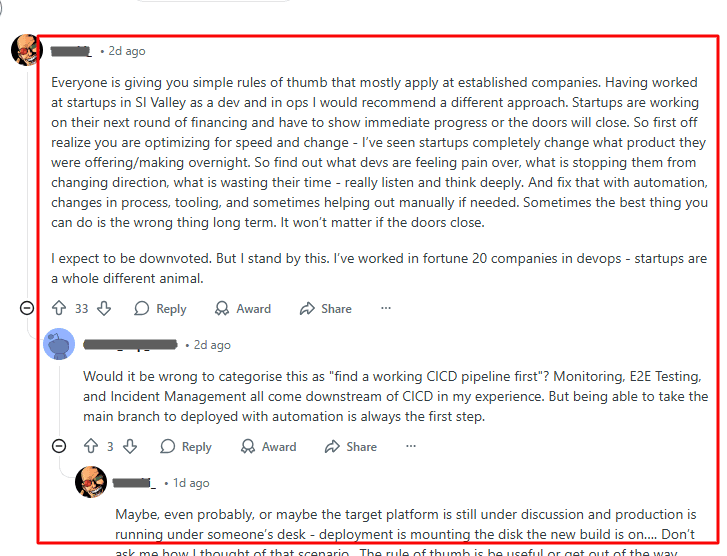
For DevTools and infrastructure companies, these discussions often surface objections, confusion, and unmet needs that never appear in polished marketing copy. You can learn a lot about the trending topics users discuss.
4. Create Content Clusters according to current positioning
Content clusters help structure your strategy around real use cases. Instead of publishing disconnected posts, these content clusters allow you to build authority around a problem space while guiding readers through evaluation and adoption.
For B2B SaaS startups, clusters should reflect current positioning. You can structure the clusters by:
- Core pillar pages focused on high-intent topics
- Supporting blogs that answer specific engineering questions
- Implementation guides and walkthroughs
- Comparison and alternative content where relevant
Example: As shown in the image below, the content clusters that need to be prioritized are highlighted. The topics are grouped by cluster.

5. Run a Content Audit
Most devtool startups already have content; however, much of it is still underperforming, outdated, or misaligned. This can be avoided by a quick content audit, which will help determine what deserves optimization versus what should be merged or retired.
Auditing is important because it helps with brand visibility and it also helps with the relevancy with the ICPs and alignment with the current content marketing strategy. There are several tools you can use to run a content audit, like Scalenut (as shown in the image below), or SEO Surfer.
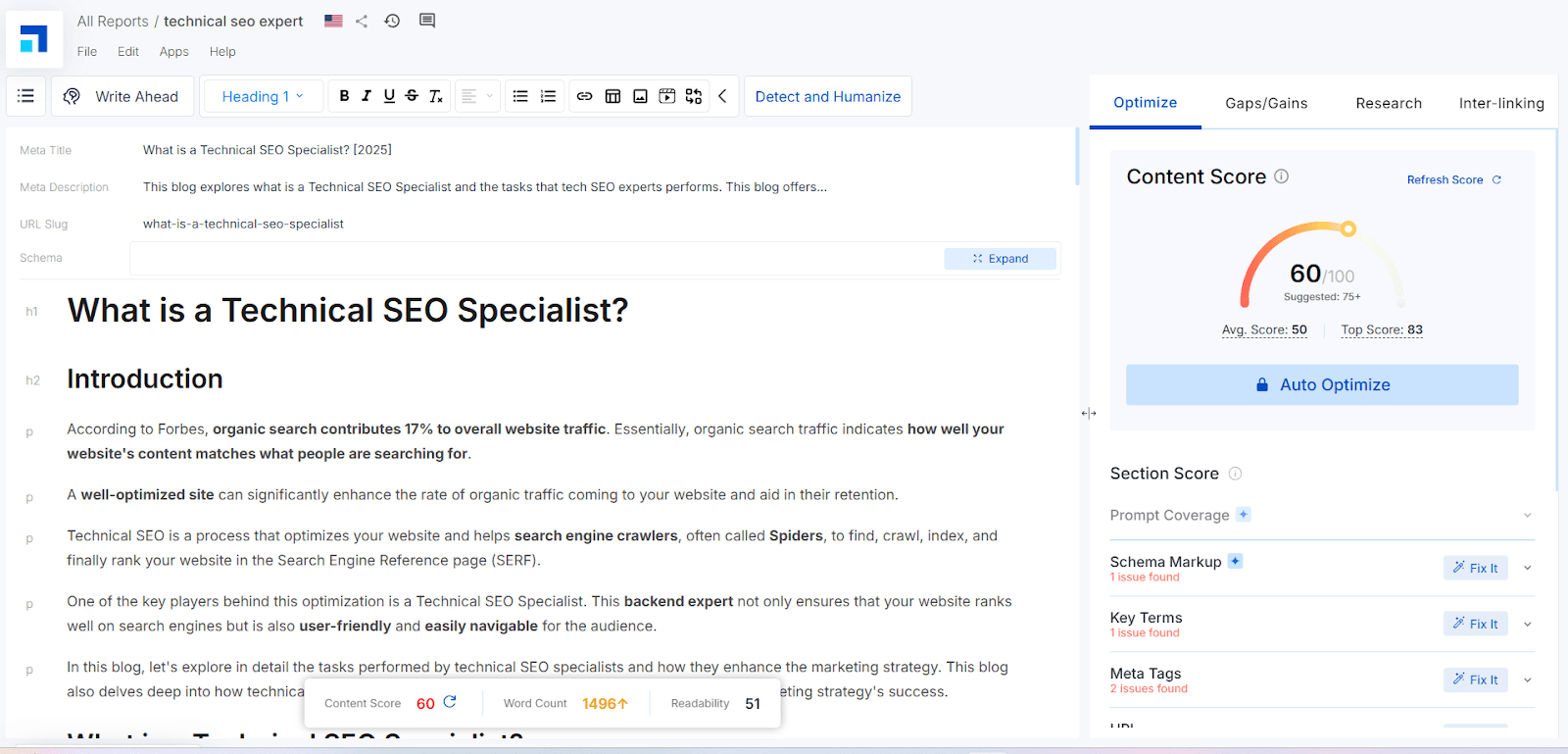
What to audit
- Pages with declining impressions or rankings
- Content that no longer matches product capabilities
- Multiple posts targeting the same intent
- Blogs with deep impressions but low engagement
A content audit should also cover crawlability, since underperforming pages sometimes trace back to technical misconfigurations rather than weak content. Checking how your Robots.txt Guide setup is directing (or blocking) search engine crawlers is a quick way to rule out indexing issues before investing in a content rewrite.
6. Determine the type of content you want to create
Not all content types serve the same purpose. Blogs may drive discovery, but technical walkthroughs and videos often influence adoption and retention. The format decision should be intentional and tied directly to the buyer journey.
Some common high-performing formats are:
- Engineer-written technical blogs like a blog on “Benchmarking GPT-5 on Real-World Code Reviews with the PR Benchmark” we developed for a code review platform.
- Tutorials and how-to guides for an open source platform, as shown in the image below.
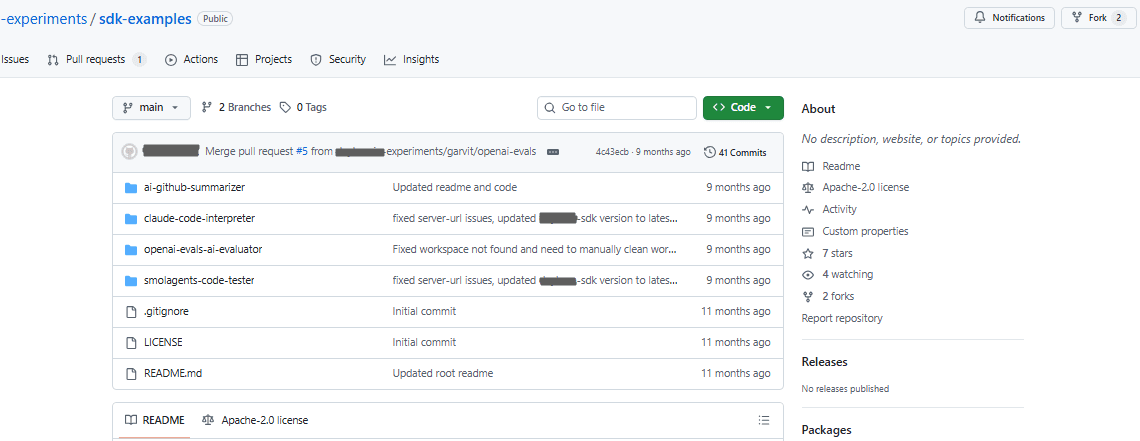
- Product Comparison video, as shown in the video below.

7. Publish and track content
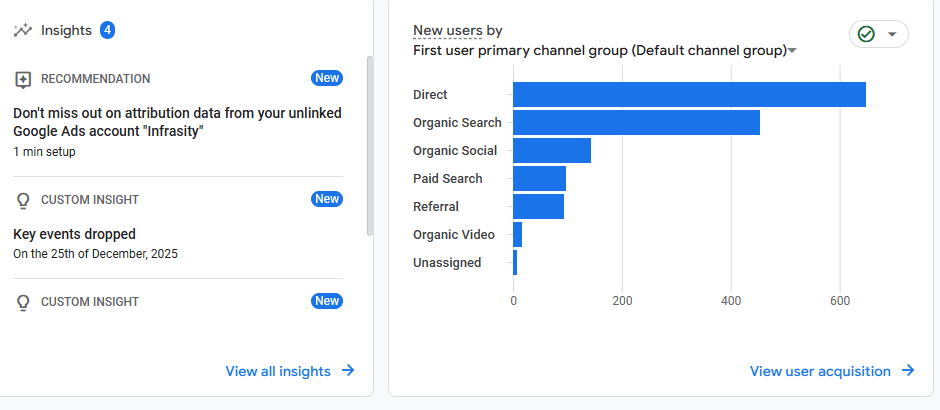
Publishing content without measurement turns strategy into guesswork. In 2026, teams expect content marketing to show impact along with traffic. Consistency builds trust with both search engines and users, while tracking ensures continuous optimization. You can start tracking by using tools like GA4 or Google Search Console to track:
- Organic clicks and impressions
- Current rankings
- Engagement metrics like time on page
Tracking these metrics is also how you connect content back to business outcomes. Our Content Marketing ROI breakdown covers how to tie organic performance to pipeline and revenue, so publishing decisions are backed by data instead of guesswork.
The image below shows the organic search results on GA4. Similarly, you can track your content and plan for better performance accordingly.
Types of Content Marketing and How They Impact Overall Strategy?
A layered approach to content is increasingly adopted by the top marketing agencies for AI technology startups with developer-focused marketing for AI agents in the United States, where content is mapped directly to technical evaluation paths rather than broad awareness alone.
1. Landing pages and tech blogs
Web pages and tech blogs remain the foundation of any B2B content marketing strategy, but their role has evolved a lot. High-performing blogs are now solution-oriented, technically grounded assets that directly support evaluation and adoption.
Infrasity develops blogs to address real developers’ challenges, along with maintaining visibility in both SERP and LLMs.
Strategic impact is:
- Drives high-intent organic discovery
- Educates technical evaluators during early-stage research
- Supports SEO authority through content clusters
- Acts as a trust-building asset for both developers and decision-makers
Along with blogs, we have also created landing pages for a few of our customers.
For example, Stripe is a well-known B2B SaaS organization that elevates landing pages and technical content into core evaluation and adoption assets. Stripe structures them to support developers and technical buyers throughout the purchasing journey.
Their public blog covers deep product insights, platform updates, and technical thinking that resonates with engineering and product teams, turning content into a source of insight and credibility rather than just announcements. As a result of building content that developers actually use and trust, Stripe reportedly achieved 10x lower customer acquisition cost (CAC) in the early stages by relying on content and documentation as the core of its growth strategy.
2. White papers
White papers serve a fundamentally different role from blogs. They are discovery assets and decision-making assets. In B2B SaaS, especially in AI and infrastructure categories, buyers often require deeper validation before committing time, budget, or internal buy-in. These comprehensive guides are a good choice if you want to position your early-stage startup as a reliable industry authority.
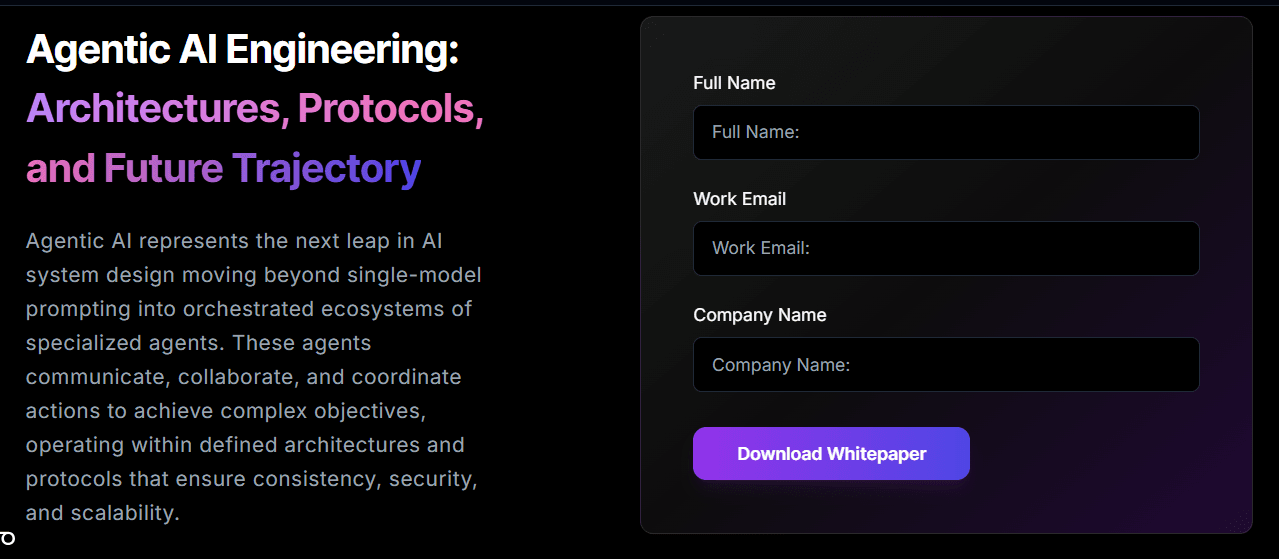
Example: As part of its long-form content strategy work, Infrasity has supported B2B AI SaaS series startups by building a whitepaper series that mirrors how technical buyers actually evaluate emerging technologies. We produced for one of our customers and created four white papers on “Context Engineering”, “Agentic AI Engineering”, “Techforward Buyer’s Guide”, and “Time to Production”. These resulted in 47 relevant submissions.
Strategic impact:
- Supports late-stage evaluation and internal justification
- Establishes technical authority
- Allows the sales teams with high-signal collateral
3. Video content
Video has become one of the highest-impact content formats in B2B SaaS, but only when it is done with technical credibility. Today, buyers expect content that reflects real product behavior, real workflows, and real constraints.
For DevTool, Infra, and AI companies, video is part of the product education and adoption layer. Videos are now embedded across landing pages, documentation, onboarding flows, sales conversations, and even conference booths. When done right, they shorten learning curves, accelerate evaluation, and increase activation.
Example: One well-recognized B2B SaaS startup that demonstrates how video content can be strategically integrated across the buyer journey is HubSpot.The platform uses video across product pages, learning resources, and social channels to clarify complex SaaS workflows and strengthen buyer confidence.
HubSpot’s use of product and educational videos shows how video can:
- Explain workflows and product value clearly, reducing friction for new users
- Reinforce messaging across channels such as landing pages and social feeds
- Serve different audience needs from onboarding to use-case education
This builds on broader industry trends showing that many B2B buyers prefer video when learning about software and comparing solutions. Over 88% of B2B buyers have watched a video to learn about a startup’s products or services, making video critical throughout the evaluation and purchase process
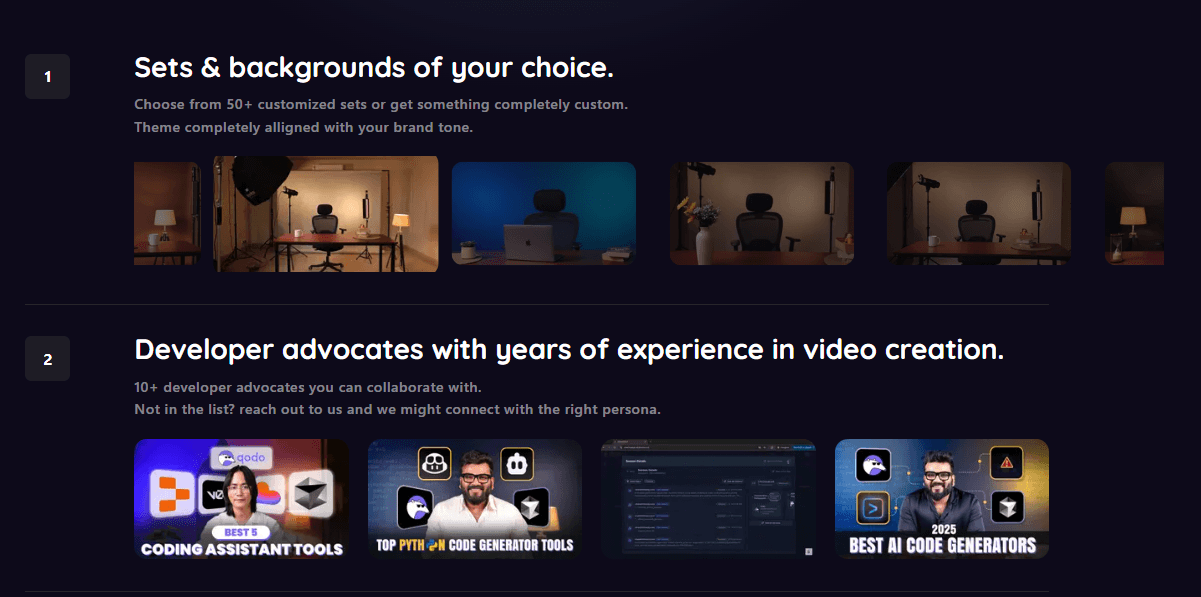
Recognizing this shift, Infrasity offers a dedicated tech video production service built specifically for B2B growth and marketing teams at developer-first companies. The focus is on engineering accuracy, clarity, and distribution impact.
How does video fit into the overall content strategy?
- Translates complex workflows (CLI, SDKs, cloud setups, pipelines) into easy-to-follow formats
- Reduces friction during evaluation by showing how the product works
- Supports adoption by embedding videos inside docs and onboarding journeys
If video content is treated as a core pillar of the B2B content marketing strategy, it can become one of the most scalable ways to build trust, accelerate adoption, and differentiate in competitive technical markets.
4. Case Studies
Case studies bridge the gap between marketing claims and real-world outcomes. In technical SaaS, they must go beyond results and explain how outcomes were achieved, especially for developer audiences who value process transparency.
Infrasity’s case studies focus on strategy, execution, and decision-making. They are designed to resonate with growth leaders, DevRel teams, and founders evaluating external partners.
Strategic impact:
- Helps prospects visualize implementation paths
- Reinforces credibility through problem-solution narratives
5. Playbook
Playbooks are long-form, actionable guides that help teams implement proven strategies. Unlike blogs, playbooks are designed to be downloaded, shared, and reused, and this makes them powerful demand-generation and brand assets.
Example: Infrasity developed playbooks based on practical experience working with developer-first startups. Our playbooks include the Reddit Marketing Playbook, which outlines how startups can engage authentically in communities like Reddit without sounding promotional, covering positioning, conversation-led distribution, and long-term credibility building. Instead of “growth hacks,” the focus is on community-native participation that compounds trust and inbound demand over time.
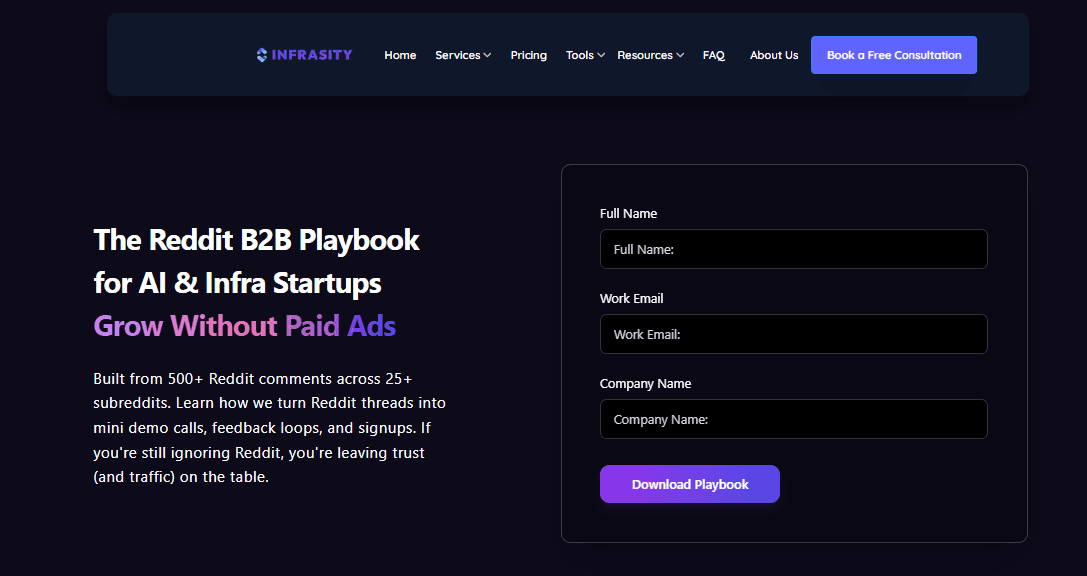
Another one created is the Developer Playbook, which acts as an actionable guide for founders, Heads of Growth, and DevRel teams who need repeatable systems instead of one-off campaigns.
Strategic impact:
- Positions the startup as a category leader
- Drives sustained inbound demand
- Strengthens brand recall among senior decision-makers
Conclusion
B2B content marketing strategy is a core growth system. AI has raised the bar, and because being visible on LLMs is important now, making technical accuracy, trust, and real-world relevance essential for both visibility and conversion. AI tools can accelerate content creation, but without strategic planning and ICP alignment, AI amplifies generic content, reducing attention and trust.
For B2B SaaS and DevTools startups, the winners are those that treat content as infrastructure, engineer-led, problem-driven, distributed across trusted channels, and designed to influence the entire customer lifecycle.
Infrasity combines technical credibility with growth strategy to build content engines that compound visibility, adoption, and revenue, without relying on fluff, volume, or shortcuts.
Frequently Asked Questions
1. What is a content marketing strategy?
A content marketing strategy is a structured plan for creating, distributing, and measuring content that helps the right audience evaluate, adopt, and trust your product over time.
In 2026, a tech content marketing strategy goes far beyond publishing blogs for traffic. It connects ICP research, real customer problems, technical accuracy, and multi-channel distribution across search, documentation, video, and developer communities.
Infrasity approaches content marketing as a growth system, not a publishing calendar, aligning content to evaluation, adoption, and retention stages, with every asset built by engineers who understand the product and its users.
2. What are the types of content marketing?
Current B2B content marketing includes multiple formats, each serving a different strategic role:
- Blogs and landing pages for search discovery and problem education
- Whitepapers and playbooks for deep evaluation and decision support
- Technical videos for onboarding, feature adoption, and clarity
- Case studies to reduce risk and build confidence
- Community content to drive trust and peer validation
What matters is not using all formats, but using the right ones based on ICP behavior and product complexity.
Infrasity helps teams choose and execute the right content mix, ensuring every format is technically credible, distribution-ready, and aligned with real buyer and user needs, especially for developer-first and infra products.
3. What kind of content performs best for developer-first B2B SaaS companies?
Developer-first audiences respond to clarity, accuracy, and hands-on insight, not marketing language. Content written by engineers consistently performs better in SEO and engagement.
Infrasity’s content is created by in-house engineers and developer advocates, ensuring technical precision while still aligning with growth and SEO goals.
4. Can content marketing actually be attributed to revenue?
Yes, but only when content is mapped intentionally to ICPs, buyer stages, and product use cases. Random blog publishing rarely shows attribution.
Infrasity builds content clusters and formats aligned to funnel stages, making it easier for growth and marketing teams to connect content performance with pipeline, activation, and retention metrics.
5. Do AI agent startups need developer-focused marketing agencies?
Yes. AI agent startups rely heavily on developer trust, experimentation, and integration. The best US marketing agencies specializing in AI technology startups and developer marketing design content for SDK adoption, API testing, agent workflows, and evaluation by technical teams. Infrasity supports AI agent companies by aligning content to real developer workflows and distributing it across search, LLMs, and developer communities.
6. How do marketing agencies support AI technology startups differently from traditional SaaS?
Marketing agencies specializing in AI technology startups focus on explaining complex systems clearly and accurately. The top marketing agencies for AI technology startups in the United States emphasize benchmarks, real-world use cases, implementation guides, and technical validation over high-level messaging. Infrasity, for example, builds content that supports evaluation by both developers and decision-makers, reducing friction in AI adoption cycles.
7. What makes a developer-focused AI marketing agency effective?
An effective developer-focused AI marketing agency understands both AI systems and developer behavior. This includes knowing how engineers discover tools, evaluate performance, and integrate solutions. The best marketing agencies in the United States for AI startups and AI technology companies build content that is technically accurate, community-validated, and measurable. Infrasity approaches content as infrastructure, ensuring every asset supports trust, adoption, and long-term growth.